


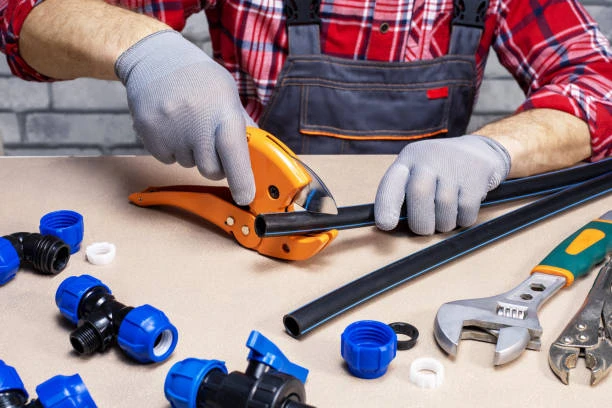
Tube cutters Cortadores de tubos são usados para cortar diversos tipos de tubos, incluindo plástico, metal e borracha. O método de corte afeta a qualidade e a facilidade do corte. Diferentes cortadores de tubos utilizam técnicas distintas, como métodos rotativos, tipo tesoura, catraca e compressão. Cada método tem seus pontos fortes e é adequado para materiais e aplicações específicos. Corte Rotativo
Rotary Cutting
Rotary cutters use a rotating cutting wheel to slice through the tube. The user tightens the tool around the tube. The cutting wheel gradually scores and cuts the material. This method works best for thin-walled pipes made of PVC, copper, and soft metals. The cutter’s rotating motion creates clean, even cuts.
Vantagens
Rotary cutters provide smooth cuts without jagged edges. They work well for smaller diameter pipes. The tool is easy to use and portable. They are ideal for DIY and professional use. They create precise cuts in a variety of materials. The rotary method is quick and efficient.
Limitações
Rotary cutters are not ideal for larger tubes. They may struggle with thicker materials. The user needs to apply consistent pressure. The tool can be less effective for very hard materials.
Scissor-like Cutting
Scissor-like cutters apply a shearing motion to cut the tube. The user squeezes the handles to bring the blades together. This method is effective for soft materials like rubber and plastic. It works well for smaller pipes and quick cuts. These cutters are commonly used for low-pressure systems.
Vantagens
Scissor-like cutters offer fast cutting with minimal effort. The design is simple and easy to use. These cutters create clean, smooth cuts. They are lightweight and portable. The cutting action is direct and requires little adjustment.
Limitações
These cutters are ineffective for thick, hard materials. The blades may dull quickly with heavy use. They are typically suited for smaller diameter pipes.
Ratchet Cutting
Ratchet cutters use a ratcheting mechanism to apply incremental pressure. The user squeezes the handles, and the ratchet advances the cutting wheel. This method is effective for tough materials, like steel and thick plastic. It reduces the effort needed to cut through hard materials.
Vantagens
Ratchet cutters can handle thick, tough materials. They reduce the effort needed for cutting. The ratcheting mechanism ensures consistent pressure. They are ideal for heavy-duty cutting tasks. The tool produces clean cuts even in hard materials.
Limitações
Ratchet cutters are bulkier and heavier than other types. They are not suitable for small tubes. They may take longer to cut through smaller materials.
Compression Cutting
Compression cutters use a squeezing motion to cut the tube. The tool tightens around the tube, applying compressive force. This method is effective for tough materials like metal and thick plastic. It is often used for pipes with thick walls.
Vantagens
Compression cutters are ideal for hard materials. They ensure a clean, straight cut. The tool can handle larger diameter pipes. It works well for thick-walled tubes. Compression cutters provide precise cuts in tough materials.
Limitações
Compression cutters require more physical effort. They are typically larger and heavier. The tool is not suitable for smaller pipes. It may be difficult to use in tight spaces.
Conclusão
Tube cutters use various methods to cut through pipes, each suitable for different materials and tasks. Rotary cutters are efficient for thin-walled pipes. Scissor-like cutters are best for soft materials and small pipes. Ratchet cutters handle tougher materials and reduce effort. Compression cutters work well for thick, hard materials. Each method offers unique benefits and limitations. The right cutter ensures a clean, precise cut for the job.
Principais fornecedores de cortadores de tubos
| nome da empresa | Sede/Localização | Ano de fundação |
| IFAN | ZhuJi,China | 1993 |
| Corporação Celanese | Irving, Texas, nos Estados Unidos | 1921 |
| Dow | Midland, Michigan, nos Estados Unidos | 1897 |
| JM Águia | Livingston, Nova Jersey | 1982 |
| Cresline Plastic Pipe Co. Inc. | Mechanicsburg, Pensilvânia, Council Bluffs, Iowa, Corsicana, Texas | 1949 |
Norma internacional IFAN
Os produtos IFAN atendem a uma série de normas reconhecidas internacionalmente, garantindo qualidade e desempenho em diversas aplicações. Entre elas, estão as normas da série ISO 15874, que descrevem as especificações para sistemas de tubulação de plástico; as normas da série EN 15874, que abrangem os requisitos para tubos e conexões de polietileno (PE) em sistemas de distribuição de água; a ASTM F2389, que define as normas para sistemas de tubulação de polietileno reticulado (PEX); a DIN 8077/8078, que abordam as dimensões e os testes de tubos de plástico; as normas da série GB/T 18742, que são as normas nacionais chinesas para tubos e conexões de plástico; e a NBR 15884, uma norma brasileira para sistemas de tubulação de PE e PEX. Essas certificações demonstram o compromisso da IFAN em fornecer produtos confiáveis e de alta qualidade em conformidade com os padrões globais da indústria.
Contato
A IFAN é uma fabricante profissional com 30 anos de experiência, dedicada à produção de tubos, conexões e válvulas de plástico de alta qualidade. Nossos produtos incluem válvulas de latão, válvulas de PPR, além de diversos tubos e conexões para atender às diferentes necessidades dos clientes. Seja para tubos de encanamento e drenagem ou válvulas, a IFAN oferece uma gama diversificada de produtos de alta qualidade e custo-benefício para apoiar seus projetos. Abaixo, você encontra nossos dados de contato.
Responderemos seu e-mail ou fax em até 24 horas.
Você pode nos ligar a qualquer momento caso tenha alguma dúvida sobre nossa produção.
Para mais informações, visite nosso site https://www.ifanplus.com/
Por favor, envie um e-mail para: [email protected]
Whatsapp: + 86 19857948982























