


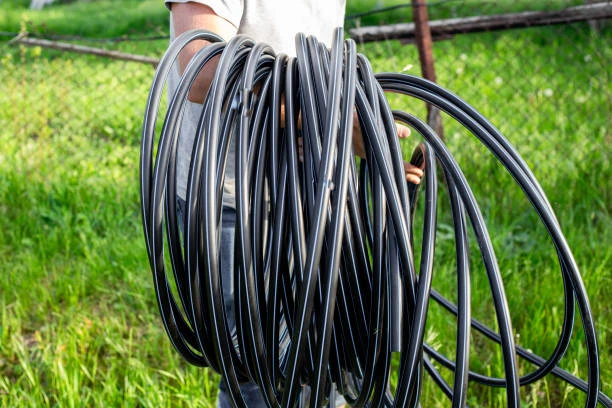
Polyéthylène haute densité (HDPE) is a durable, versatile plastic. It is widely used for various applications due to its excellent thermal stability. HDPE offers significant heat resistance, which makes it suitable for high-temperature environments. This article explores HDPE’s thermal stability, key properties, and its benefits in different applications.
Thermal Stability Overview
Thermal stability refers to a material’s ability to maintain its properties under heat exposure. HDPE can resist high temperatures effectively, maintaining its structural integrity. Unlike many other plastics, Plastic HDPE doesn’t degrade under moderate heat. It stays stable and retains strength in demanding conditions.
Key Thermal Properties of HDPE
HDPE’s thermal stability depends on several factors like melting point, conductivity, and expansion rate. These properties ensure its high performance in various applications.
Point de fusion
Plastic HDPE has a high melting point, ranging from 120°C to 130°C (248°F to 266°F). This feature allows HDPE to handle moderate heat without softening. Its high melting point makes it suitable for applications exposed to heat.
Conductivité thermique
Plastic HDPE has low thermal conductivity, approximately 0.45 W/m·K. It doesn’t transfer heat easily, offering insulation properties. This reduces the risk of heat damage in applications requiring thermal stability.
Coefficient of Thermal Expansion
HDPE has a moderate coefficient of thermal expansion. It expands and contracts with temperature changes, but it doesn’t deform easily. This property ensures HDPE maintains its shape under thermal stress.
Factors Affecting HDPE’s Thermal Stability
Several factors influence HDPE’s ability to resist heat. These include molecular structure, additives, fillers, and processing conditions.
Structure moléculaire
HDPE consists of long, crystalline polyethylene chains. These chains contribute to its high strength and heat resistance. The crystalline structure provides stability under thermal stress, allowing HDPE to endure heat without deforming.
Additifs et stabilisants
Manufacturers often add stabilizers like antioxidants to enhance HDPE’s thermal resistance. These stabilizers prevent heat degradation. They also extend the material’s lifespan, making it more suitable for high-temperature applications.
Fillers and Reinforcements
HDPE can be reinforced with fillers like glass fibers. These fillers improve strength and heat resistance. They allow HDPE to perform better in extreme thermal conditions, offering more durability in demanding environments.
Processing Conditions
Processing temperature and pressure impact HDPE’s thermal stability. Proper processing ensures HDPE maintains its properties. Inadequate processing may lead to defects that reduce its thermal resistance.
Benefits of HDPE’s Thermal Stability
HDPE’s excellent thermal stability provides numerous benefits across different industries. These benefits make it ideal for various high-temperature applications.
Systèmes de plomberie
HDPE is commonly used for water pipes, sewage, and gas distribution systems. Its heat resistance makes it reliable for hot water applications. HDPE pipes maintain strength at temperatures up to 80°C (176°F), ensuring long-term performance.
Packaging and Food Storage
HDPE is also used in food and beverage packaging. Its heat resistance ensures containers withstand exposure to high temperatures. HDPE packaging keeps contents safe, preventing degradation during storage or processing.
Construction and Insulation
In construction, HDPE is used as an insulating material. Its thermal stability helps maintain structural integrity in fluctuating temperatures. HDPE contributes to energy efficiency by minimizing heat loss or gain in buildings.
Industrie automobile
In automotive applications, HDPE is used for parts exposed to high temperatures. Components like fuel tanks and bumpers benefit from HDPE’s heat resistance. It ensures the reliability of parts even in hot environments, enhancing vehicle safety.
Electrical and Electronics
HDPE is used in electrical insulation materials. Its thermal stability prevents heat damage to sensitive electronic components. HDPE ensures the durability of cables and other electrical systems exposed to heat.
Limitations of HDPE’s Thermal Stability
While HDPE performs well in many applications, it has limitations. Its melting point is lower than that of metals, restricting its use in extreme heat conditions. In some high-temperature environments, HDPE may degrade over time.
Conclusion
HDPE offers excellent thermal stability, making it ideal for applications in various industries. Its high melting point, low thermal conductivity, and resistance to heat degradation make it a reliable material. Whether used in plumbing, construction, packaging, or automotive applications, HDPE continues to perform well in heat-resistant applications. By understanding the factors affecting HDPE’s thermal stability, manufacturers can optimize its performance and extend its lifespan.
Norme internationale IFAN
Les produits en PEHD d'IFAN sont conformes à diverses normes internationales, garantissant qualité, durabilité et fiabilité. Parmi ces normes figurent les normes ASTM D3035 et ASTM D3350, qui définissent les spécifications des tubes et matériaux en polyéthylène (PE). Les normes ISO 4427 et EN 12201 établissent des références mondiales pour les tubes en PE utilisés dans les réseaux d'approvisionnement en eau. De plus, les normes DIN 8074/8075 et GB/T 13663 établissent les exigences de performance et de dimension des tubes en PEHD sur les marchés européen et chinois. D'autres normes reconnues, telles que AS/NZS 4130 (Australie/Nouvelle-Zélande), JIS K6760 (Japon), BS 6572 (Royaume-Uni) et CSA B137.1 (Canada), témoignent de l'engagement d'IFAN à respecter les réglementations industrielles mondiales.
Contact
IFAN est un fabricant professionnel fort de 30 ans d'expérience, spécialisé dans la production de tuyaux, raccords et vannes en plastique de haute qualité. Nos produits comprennent des vannes en laiton, des vannes en PPR, ainsi que divers tuyaux et raccords pour répondre aux différents besoins de nos clients. Que vous ayez besoin de tuyaux de plomberie et d'évacuation ou de vannes, IFAN propose une gamme diversifiée de produits de haute qualité et économiques pour vos projets. Vous trouverez nos coordonnées ci-dessous.
Nous répondrons à votre e-mail ou fax dans les 24 heures.
Vous pouvez nous appeler à tout moment si vous avez des questions sur notre production.
Pour plus d'informations, veuillez visiter notre site Web https://www.ifanplus.com/
Veuillez envoyer un mail à : [email protected]
WhatsApp : + 86 19857948982























