


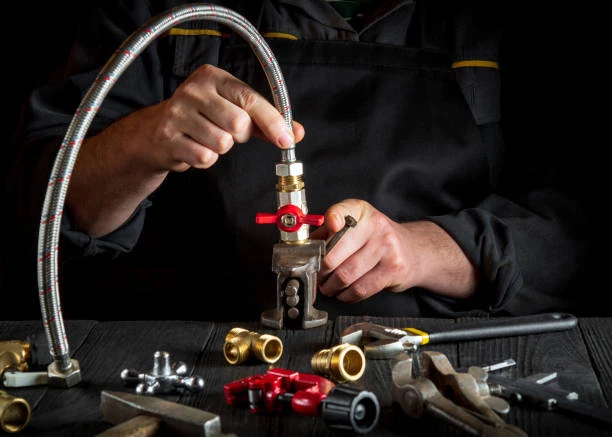
Tuyaux flexibles play an essential role in diverse industries due to their adaptability, durability, and efficiency. Their unique properties make them suitable for environments and situations where rigid pipes cannot perform effectively. From residential plumbing to industrial systems,meet the demands of various applications with ease and reliability.
Systèmes de plomberie résidentiels
Flexible pipes streamline residential plumbing installations by navigating tight spaces and complex layouts. Homeowners benefit from faster installations, reduced costs, and enhanced system performance. These pipes handle water supply, drainage, and even radiant heating systems with efficiency.
- Approvisionnement en eau: Such as PEX tubing, distribute hot and cold water throughout homes. Their ability to bend reduces the need for multiple fittings, minimizing leak points.
- Chauffage radiant: Underfloor heating systems use flexible pipes to circulate warm water. Their adaptability ensures even heat distribution, enhancing comfort and energy efficiency.
- Systèmes de drainage: Flexible pipes handle residential drainage challenges, including compact layouts and irregular pathways. Their resilience ensures effective waste removal without frequent repairs.
Irrigation agricole
Farmers rely on them to improve irrigation efficiency and reduce water wastage. These pipes adapt to uneven terrain and extend easily across large fields, delivering water precisely where needed.
- Irrigation goutte à goutte:They connect to drip systems, ensuring consistent water flow to plants. Their ability to maneuver around crops and obstacles enhances agricultural productivity.
- Systèmes d'arrosage: Flexible pipes simplify sprinkler installations by connecting to multiple outlets across fields. Their lightweight design allows easy repositioning to cover new areas.
- Solutions de drainage: Farms use them for field drainage, preventing waterlogging and maintaining soil health. Their durability ensures long-lasting performance under varying conditions.
Industrie pétrolière et gazière
The oil and gas industry depends heavily on them for offshore and onshore operations. These pipes handle the challenges of transporting hydrocarbons, maintaining performance under extreme pressure and temperature fluctuations.
- Offshore Drilling: Flexible risers connect subsea wells to production platforms, accommodating ocean currents and wave movements. Their flexibility ensures safety and efficiency.
- Onshore Applications: Flexible pipes transport crude oil and natural gas over long distances. Their corrosion resistance reduces maintenance needs and enhances operational reliability.
- Chemical Injection: The industry uses them for injecting chemicals into pipelines to prevent blockages or corrosion, ensuring uninterrupted flow.
Applications industrielles
Flexible pipes meet the demands of various industrial sectors, providing efficient solutions for fluid and gas transport. Their ability to handle extreme conditions and dynamic environments makes them indispensable in manufacturing, mining, and processing facilities.
- Systèmes de refroidissement: Industries use them to circulate cooling fluids in machinery and production lines. Their adaptability supports complex layouts and space-saving designs.
- Systèmes d'air comprimé: They transport compressed air to tools and equipment. Their lightweight design and resistance to pressure ensure consistent performance.
- Traitement chimique: Flexible pipes transfer aggressive chemicals safely, resisting corrosion and maintaining structural integrity in harsh environments.
Systèmes CVC
Flexible pipes enhance the efficiency and flexibility of heating, ventilation, and air conditioning (HVAC) systems. They simplify installations and support optimal airflow or fluid circulation in residential, commercial, and industrial spaces.
- Air Ducts: Flexible ducts connect HVAC units to vents, navigating tight spaces with ease. Their lightweight design reduces installation time and costs.
- Chilled Water Systems: HVAC systems use them to transport chilled water, ensuring consistent cooling in large buildings. Their insulation properties minimize energy loss.
- Steam and Hot Water Systems:They handle the transport of steam or hot water in heating systems, providing durability and efficiency under high temperatures.
Construction et infrastructures
The construction industry benefits significantly from the versatility of them. These pipes simplify installations in new buildings, retrofitting projects, and large-scale infrastructure developments.
- Water Supply Networks: Flexible pipes connect municipal water mains to buildings, navigating challenging terrains and reducing installation time.
- Systèmes de drainage: Construction sites use them for temporary drainage solutions, ensuring proper water management during building phases.
- Approvisionnement en gaz: Flexible pipes distribute natural gas to residential and commercial buildings, maintaining safety and reliability in urban infrastructure.
Systèmes d'énergie renouvelable
Renewable energy technologies leverage flexible pipes for efficient fluid or gas transfer. Their adaptability supports innovative designs in solar, geothermal, and wind energy systems.
- Systèmes solaires thermiques: Flexible pipes transport heated fluids in solar collectors, connecting to storage tanks and distribution systems. Their insulation ensures minimal heat loss.
- Systèmes géothermiques: Flexible pipes facilitate heat exchange in geothermal systems, withstanding underground conditions and temperature fluctuations.
- Hydropower: Flexible pipes channel water in small-scale hydropower systems, supporting energy generation in remote locations.
Transport and Automotive Industries
Flexible pipes serve various functions in the transport and automotive sectors, supporting fuel transfer, cooling systems, and hydraulic operations.
- Fuel Lines: Vehicles use them to transport fuel from tanks to engines, ensuring consistent flow and safety.
- Coolant Systems: Flexible pipes connect engine components to radiators, maintaining optimal operating temperatures.
- Hydraulics: Heavy machinery and vehicles use them in hydraulic systems, handling high pressures and dynamic movements.
Applications marines
The marine industry employs flexible pipes for water supply, waste management, and fuel transfer on ships and offshore structures. Their resistance to saltwater and mechanical stress ensures long-lasting performance.
- Ballast Systems: Flexible pipes regulate water levels in ballast tanks, maintaining vessel stability.
- Gestion des eaux usées: Ships use them to transport and treat wastewater, ensuring compliance with environmental standards.
- Fuel Lines: Flexible pipes deliver fuel to engines and generators, providing safety and efficiency in marine environments.
Emerging Applications
As industries innovate, flexible pipes find new applications that capitalize on their adaptability and resilience.
- Smart Cities: Flexible pipes integrate with smart city infrastructure, connecting sensors and data systems for water, gas, and energy management.
- Robotics: Flexible pipes enable fluid or gas transfer in robotic systems, supporting dynamic movements and compact designs.
- 3D Printing: Flexible pipes supply materials in advanced manufacturing processes, enhancing precision and efficiency.
Conclusion
The applications of them span countless industries, demonstrating their versatility and value. Their adaptability, ease of installation, and ability to handle dynamic conditions make them essential for modern infrastructure and technology. As innovations continue, flexible pipes will expand their role, meeting the demands of emerging industries and driving progress.
Norme internationale IFAN
Les normes IFAN incluent un ensemble de certifications et de spécifications internationales, telles que les normes ASTM 2846, DIN 8079/8080, ASTM F441/F441M SCH80, DIN, GB/T série 18993, AS/NZS 1477, CSA B137.6, NSF/ANSI 14 et TIS 17-2532/1131-2535, entre autres. Ces normes garantissent la qualité, la sécurité et la fiabilité des produits, conformément aux exigences mondiales de fabrication et de performance. En adhérant à ces normes, l'IFAN garantit que ses produits répondent aux normes industrielles les plus strictes, garantissant ainsi la satisfaction de ses clients et le respect des réglementations en vigueur dans différentes régions.
Contact
IFAN est un fabricant professionnel fort de 30 ans d'expérience, spécialisé dans la production de tuyaux, raccords et vannes en plastique de haute qualité. Nos produits comprennent des vannes en laiton, des vannes en PPR, ainsi que divers tuyaux et raccords pour répondre aux différents besoins de nos clients. Que vous ayez besoin de tuyaux de plomberie et d'évacuation ou de vannes, IFAN propose une gamme diversifiée de produits de haute qualité et économiques pour vos projets. Vous trouverez nos coordonnées ci-dessous.
Nous répondrons à votre e-mail ou fax dans les 24 heures.
Vous pouvez nous appeler à tout moment si vous avez des questions sur notre production.
Pour plus d'informations, veuillez visiter notre site Web https://www.ifanplus.com/
Veuillez envoyer un mail à : [email protected]
WhatsApp : + 86 19857948982























