


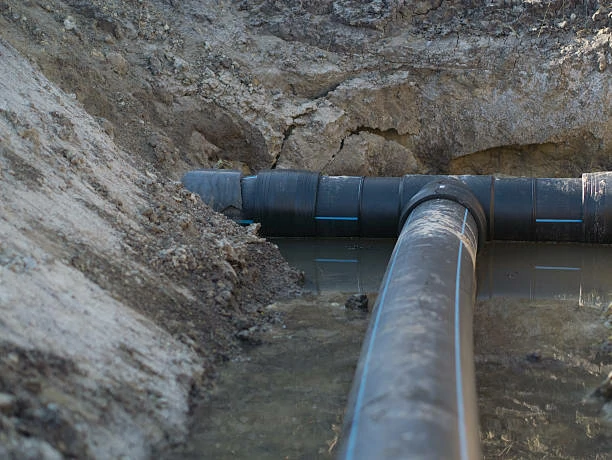
High-Density Polyethylene (HDPE) pipes are known for their exceptional aging resistance, making them a preferred choice in various applications where long-term durability is critical. This essay explores the factors contributing to the aging resistance of HDPE pipes, their performance under different environmental conditions, and their implications for various industries.
Fundamentals of Aging Resistance
Aging resistance refers to a material’s ability to maintain its physical and chemical properties over time, despite exposure to environmental stressors such as ultraviolet (UV) radiation, temperature fluctuations, moisture, and chemicals. HDPE pipes excel in this regard, retaining their strength, flexibility, and integrity even after prolonged exposure to harsh conditions. This durability is crucial for applications that require reliable, long-lasting performance.
Estrutura molecular do PEAD
The aging resistance of HDPE pipes begins with their molecular structure. HDPE consists of long chains of ethylene molecules with minimal branching, resulting in a dense, tightly packed structure. This high density gives HDPE its excellent mechanical strength and chemical stability. The material’s non-polar nature and hydrophobic characteristics further enhance its resistance to water absorption and chemical attack, both of which can accelerate aging in other materials.
UV Radiation Resistance
One of the most significant environmental stressors for outdoor materials is UV radiation from the sun. Prolonged exposure to UV light can degrade polymers, causing them to become brittle and lose their mechanical properties. HDPE pipes exhibit remarkable resistance to UV radiation due to the addition of stabilizers during the manufacturing process. These stabilizers, often in the form of carbon black or other UV inhibitors, absorb or reflect UV light, preventing it from penetrating the material and breaking down the polymer chains. As a result, HDPE pipes can endure extended exposure to sunlight without significant degradation.
Resistência à temperatura
HDPE pipes perform well across a wide temperature range, maintaining their properties in both hot and cold environments. They remain flexible at low temperatures, avoiding the brittleness that some plastics exhibit in cold conditions. This flexibility ensures that HDPE pipes can be used in freezing environments without cracking. At high temperatures, HDPE retains its structural integrity, making it suitable for applications where exposure to heat is common. The material’s ability to withstand thermal cycling—repeated heating and cooling—also contributes to its aging resistance, as it does not experience the same thermal fatigue that can weaken other materials over time.
Moisture and Chemical Resistance
HDPE’s hydrophobic nature means it does not readily absorb water, preventing the material from swelling, warping, or losing strength when exposed to moisture. This property is particularly advantageous for applications such as underground piping and agricultural irrigation systems, where constant exposure to water and soil moisture is inevitable. HDPE also resists a wide range of chemicals, including acids, alkalis, and solvents. This chemical resistance ensures that HDPE pipes remain stable and do not degrade when in contact with various substances, further enhancing their aging resistance.
Mechanical Strength and Flexibility
The combination of mechanical strength and flexibility in HDPE pipes contributes to their longevity. The material can absorb impacts and resist cracking or breaking under stress. This resilience is particularly important for applications like piping, where HDPE must withstand internal pressure from fluids as well as external forces from the surrounding environment. The material’s flexibility also allows it to expand and contract with temperature changes and ground movement, reducing the risk of failure due to mechanical stress.
Additives and Compounding
Manufacturers often enhance the aging resistance of HDPE pipes by incorporating additives during the production process. These additives include antioxidants, UV stabilizers, and thermal stabilizers. Antioxidants prevent the oxidation of the polymer chains, which can occur due to exposure to oxygen and heat. UV stabilizers protect the material from UV radiation, while thermal stabilizers ensure that HDPE maintains its properties under varying temperature conditions. By carefully selecting and blending these additives, manufacturers can tailor the performance of HDPE pipes to meet specific requirements, further improving their aging resistance.
Applications Benefiting from HDPE’s Aging Resistance
Several industries rely on HDPE’s aging resistance for long-term performance:
1.Construção: HDPE is used in building and infrastructure projects for pipes, geomembranes, and barrier layers. Its resistance to aging ensures that these components remain functional and safe over decades.
2.Agricultura: HDPE irrigation pipes and fittings are exposed to harsh environmental conditions, including sunlight, water, and soil chemicals. The material’s aging resistance guarantees the reliability of irrigation systems, contributing to consistent crop yields.
3.Water and Gas Distribution: Municipal water and gas distribution networks use HDPE pipes for their longevity and resistance to environmental stressors. These pipes reduce maintenance costs and provide reliable service over long periods.
4.Aplicações Marítimas: HDPE’s resistance to saltwater and UV radiation makes it ideal for marine applications, such as floating docks, pipelines, and buoys. The material performs well in the challenging conditions of marine environments.
Research and Development
Ongoing research and development efforts continue to enhance the aging resistance of HDPE. Innovations in polymer chemistry and the development of new additives and stabilizers aim to extend the material’s lifespan even further. Researchers also study the performance of HDPE in various environments to better understand its long-term behavior and identify opportunities for improvement.
Conclusão
HDPE pipes are renowned for their exceptional aging resistance, stemming from their intrinsic properties and the incorporation of advanced additives during production. Their ability to withstand UV radiation, temperature fluctuations, moisture, and chemical exposure makes them a reliable choice for a wide range of applications. The durability, flexibility, and long lifespan of HDPE pipes translate into significant cost savings and improved performance in industries such as construction, agriculture, and infrastructure. As research and development continue to advance, HDPE pipes will likely see even greater improvements in aging resistance, solidifying their position as a versatile and resilient material for the future.
Contato
IFAN é um fabricante profissional com 30 anos de experiência, dedicado à produção de tubos, conexões e válvulas de plástico de alta qualidade. Nossos produtos incluem válvulas de latão, válvulas PPR, além de diversos tubos e conexões para atender às diferentes necessidades dos clientes. Seja para encanamento e drenagem, tubos ou válvulas, IFAN Podemos fornecer uma gama diversificada de produtos de alta qualidade e custo-benefício para apoiar seus projetos. Abaixo estão nossas informações de contato.
Responderemos seu e-mail ou fax em até 24 horas.
Você pode nos ligar a qualquer momento caso tenha alguma dúvida sobre nossa produção.
Para mais informações, visite nosso site https://www.ifanplus.com/
Por favor, envie um e-mail para: [email protected]























