


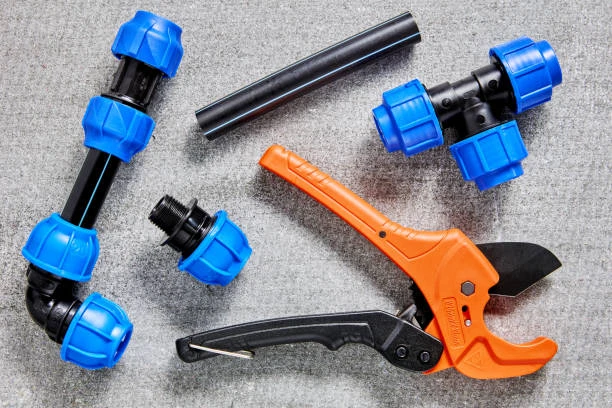
Pipe cutters serve as essential tools for cutting various types of pipes in plumbing, construction, and industrial applications. Choosing the right pipe cutter based on the material is crucial for making clean, accurate cuts. Different pipe materials vary in hardness, thickness, and structural properties. These factors influence cutter performance. This article explores the compatibility of pipe cutters with different materials, how these materials affect cutting performance, and how to select the best cutter for each pipe type.
1. Tubos de PVC
Polyvinyl chloride (PVC) pipes are lightweight, durable, and resistant to corrosion, making them popular in both residential and commercial plumbing systems.
- Pipe Cutter Compatibility
PVC pipes do not require high cutting power since they are relatively soft. Rotary cutters or PVC-specific cutters work well with these pipes. The cutting wheels or blades in these tools provide smooth, clean cuts without cracking or chipping the pipe. - Why PVC Requires Special Tools
Improper cutting can deform or damage PVC pipes. Standard cutters may crush the pipe, causing inaccurate cuts. Specialized PVC cutters feature sharp, hardened blades that cut smoothly without harming the pipe.
2. CPVC Pipes
Chlorinated polyvinyl chloride (CPVC) pipes resemble PVC pipes but can handle higher temperatures, making them suitable for hot water systems.
- Pipe Cutter Compatibility
Like PVC, CPVC pipes require a cutter with a sharp blade or rotating cutting wheel. CPVC pipes are slightly more rigid, but a standard PVC cutter works effectively on these pipes. For larger-diameter pipes, a heavy-duty cutter with a stronger mechanism is ideal. - Why CPVC Needs Precision
CPVC pipes are more rigid than PVC and can crack if the wrong tool is used. A specialized cutter ensures a clean, accurate cut, which prevents pipe damage.
3. Tubos de cobre
Copper pipes are strong, corrosion-resistant, and widely used in water supply systems. They have high durability and handle high pressure well.
- Pipe Cutter Compatibility
Copper pipes are tougher than PVC or CPVC, so they require stronger cutters. Manual cutters often struggle with thick copper pipes. A pipe cutter with hardened steel blades, such as a rotary cutter, can handle the toughness of copper without crushing or deforming the pipe. - Why Copper Requires Strong Tools
Copper pipes need more force to cut than PVC or CPVC. Using a specialized cutter helps achieve smooth cuts and prevents damage. Sharp blades are necessary to prevent scratching or denting the copper surface.
4. Tubos de aço
Steel pipes, often used in industrial and commercial applications, provide excellent strength and durability. They are harder than copper and other common materials.
- Pipe Cutter Compatibility
Steel pipes require pipe cutters with much greater power. Regular manual cutters won’t work efficiently. Heavy-duty pipe cutters or specialized cutting tools like saws or ratcheting cutters are ideal for cutting steel. The blade must be durable enough to slice through hard steel without wearing down quickly. - Why Steel Needs Special Tools
Steel is significantly harder than materials like PVC or copper. A standard cutter won’t generate enough cutting force, and using one can cause jagged edges or damage. A heavy-duty cutter provides the necessary power and precision for cutting through steel pipes.
5. Aluminum Pipes
Aluminum pipes are lightweight, corrosion-resistant, and often used in HVAC systems, plumbing, and industrial applications. These pipes strike a balance between strength and weight.
- Pipe Cutter Compatibility
Aluminum is softer than steel but harder than PVC. Therefore, pipe cutters designed for soft metals are best for aluminum. A rotary pipe cutter with a sharp blade works well, providing smooth cuts without damaging the pipe. - Why Aluminum Requires a Good Cutter
While aluminum is easier to cut than steel, using an inappropriate cutter can cause the pipe to deform or get scratched. A cutter designed for soft metals ensures clean cuts without damaging the material.
6. Cast Iron Pipes
Cast iron pipes are strong and durable, often used in older plumbing systems or for sewer systems. They are resistant to damage but tend to be brittle.
- Pipe Cutter Compatibility
Cutting cast iron pipes requires specialized tools. Manual cutters typically cannot handle cast iron’s hardness and brittleness. A cutter with reinforced blades or a cutting saw designed for heavy-duty materials works best. The tool must have enough power to handle the pressure needed to cut cast iron without cracking it. - Why Cast Iron Requires Special Handling
Cast iron is brittle and can crack under excessive force. Therefore, cutters must apply force evenly and precisely. Cast iron also tends to heat up during cutting, which can cause the material to become even more brittle. Proper cutters ensure clean, safe cuts without compromising the pipe.
7. Tubos PEX
Cross-linked polyethylene (PEX) pipes are commonly used in modern plumbing systems. They are flexible, resistant to scaling, and easy to install.
- Pipe Cutter Compatibility
PEX pipes are easier to cut than materials like copper or steel. Specialized PEX cutters, including scissor-type or rotary cutters, are designed for PEX’s flexible nature. These tools provide smooth cuts without putting too much pressure on the material. - Why PEX is Easy to Cut
PEX is soft and flexible, making it simpler to cut than rigid pipes. Pipe cutters designed specifically for PEX ensure precision and ease. These tools are typically small and portable, making them ideal for tight spaces and quick jobs.
8. Tubos de PEAD
High-density polyethylene (HDPE) pipes are used in water supply, gas distribution, and sewage systems. They offer high resistance to chemicals and are extremely durable.
- Pipe Cutter Compatibility
HDPE pipes require pipe cutters designed for thick plastics. A rotary cutter works well, but for larger diameter HDPE pipes, a more powerful cutting tool may be necessary. Heavy-duty cutters with sharp, durable blades are ideal for cutting through the thick walls of HDPE pipes. - Why HDPE Requires Specialized Tools
HDPE pipes are tough and resistant to cracking. A proper cutter applies the necessary cutting force without deforming the material. The right cutter prevents damage during the cutting process and ensures a clean, precise cut.
Conclusão
Selecting the correct pipe cutter for each material ensures smooth, clean cuts and reduces the risk of damaging the pipe. Materials like PVC, CPVC, copper, steel, aluminum, cast iron, PEX, and HDPE each require specialized cutters to handle their unique properties. By using the right cutter for each material, users can improve their work efficiency, avoid costly mistakes, and achieve professional results every time. Whether working with soft plastics or tough metals, choosing the correct cutter based on the material’s characteristics is critical for successful pipe cutting.
Norma internacional IFAN
Os produtos IFAN atendem a uma série de normas reconhecidas internacionalmente, garantindo qualidade e desempenho em diversas aplicações. Entre elas, estão as normas da série ISO 15874, que descrevem as especificações para sistemas de tubulação de plástico; as normas da série EN 15874, que abrangem os requisitos para tubos e conexões de polietileno (PE) em sistemas de distribuição de água; a ASTM F2389, que define as normas para sistemas de tubulação de polietileno reticulado (PEX); a DIN 8077/8078, que abordam as dimensões e os testes de tubos de plástico; as normas da série GB/T 18742, que são as normas nacionais chinesas para tubos e conexões de plástico; e a NBR 15884, uma norma brasileira para sistemas de tubulação de PE e PEX. Essas certificações demonstram o compromisso da IFAN em fornecer produtos confiáveis e de alta qualidade em conformidade com os padrões globais da indústria.
Contato
A IFAN é uma fabricante profissional com 30 anos de experiência, dedicada à produção de tubos, conexões e válvulas de plástico de alta qualidade. Nossos produtos incluem válvulas de latão, válvulas de PPR, além de diversos tubos e conexões para atender às diferentes necessidades dos clientes. Seja para tubos de encanamento e drenagem ou válvulas, a IFAN oferece uma gama diversificada de produtos de alta qualidade e custo-benefício para apoiar seus projetos. Abaixo, você encontra nossos dados de contato.
Responderemos seu e-mail ou fax em até 24 horas.
Você pode nos ligar a qualquer momento caso tenha alguma dúvida sobre nossa produção.
Para mais informações, visite nosso site https://www.ifanplus.com/
Por favor, envie um e-mail para: [email protected]
Whatsapp: + 86 19857948982























