


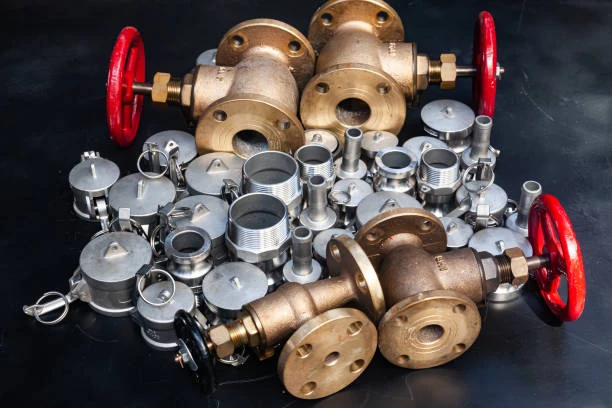
Compression ball valves play a vital role in modern plumbing and fluid control systems. These valves provide a dependable method for managing water, gas, and other fluid flows without the need for soldering, threading, or complex installation tools. As plumbing and mechanical systems continue to evolve, compression ball valves have become increasingly important due to their ease of use, reliability, and compatibility with various pipe types.
This article explains how compression ball valves work, explores their main features, outlines common applications, and offers a useful comparison with other types of valves. Additionally, it presents a buyer’s guide to help you choose the right compression ball valve for your specific needs.
Let’s begin with some common questions users often ask about compression ball valves.
Perguntas Frequentes (FAQ)
1. O que é uma válvula de esfera de compressão?
A compression ball valve is a shut-off valve that uses a rotating ball and compression fittings to control flow in a piping system.
2. Do compression ball valves require special tools?
No, these valves only require basic wrenches for tightening, which makes installation simple and fast.
3. Can compression ball valves be reused?
Yes, as long as the fittings and internal components remain intact, they can be reinstalled and reused.
4. Are compression ball valves leak-proof?
When installed properly, they offer excellent sealing performance, making them ideal for leak-sensitive systems.
5. In what systems are compression ball valves most commonly used?
They are frequently found in residential plumbing, heating systems, refrigeration, and industrial fluid control setups.
What Is a Compression Ball Valve? Key Definition and Features
UM válvula de esfera de compressão is a type of shut-off valve that combines two functions: it controls flow using a ball with a central bore and connects to pipes through compression fittings. These fittings compress a ferrule or ring around the pipe as the nut tightens, forming a tight seal.
Several key features make compression ball valves especially popular:
- Ball Mechanism: A central ball inside the valve has a hole through it. Turning the handle aligns or blocks the flow.
- Compression Ends: These ends grip the pipe by compressing a brass or stainless-steel ferrule around it.
- Quarter-Turn Operation: Only a 90-degree turn of the handle is needed to open or close the valve fully.
- Full-Port Design: Many models offer full-port flow, allowing maximum water throughput with minimal pressure drop.
- Durable Materials: Most valves are made from solid brass or stainless steel, which resists corrosion and wear.
- Compact Design: The valve body is relatively small, making it easy to install in tight spaces.
- Tool-Free Pipe Preparation: Pipes don’t require soldering or threading, saving time and reducing risk.
These features make compression ball valves a convenient and efficient solution for fluid management across various systems.
Aplicações e indústrias comuns
Because of their practical benefits, compression ball valves are widely used across many sectors. Below are some of the most common applications:
Encanamento Residencial
Homeowners often rely on compression ball valves to shut off water to sinks, toilets, dishwashers, and washing machines. Their ease of use and quick installation make them ideal for DIY projects.
Edifícios comerciais
In commercial spaces, these valves control water and gas supply lines in kitchens, bathrooms, and mechanical rooms. Their compactness and leak-proof design make them suitable for complex piping networks.
HVAC and Heating Systems
Heating systems use compression ball valves to regulate hot water flow to radiators, boilers, or heat exchangers. Their heat-resistant components ensure long-lasting reliability.
Refrigeration and Cooling
Compression ball valves help isolate and control the flow of refrigerants and coolants in HVAC and industrial refrigeration systems.
Light Industrial Use
Small factories and workshops use these valves to manage non-corrosive fluids, lubricants, and compressed air in process lines.
In all these settings, compression ball valves help ensure safety, efficiency, and serviceability.
Buyer’s Guide: How to Choose a Compression Ball Valve
When selecting a compression ball valve, several factors must be considered to ensure long-term performance:
Compatibilidade de tubos
Make sure the valve’s compression ends match your pipe material and outer diameter. Compression ball valves are typically compatible with copper, PEX, and sometimes CPVC.
Material Selection
Brass is the most common material for compression valves due to its balance of strength and corrosion resistance. Stainless steel versions offer superior durability in harsh environments.
Classificações de pressão e temperatura
Check that the valve meets your system’s operating conditions. Most residential compression valves can handle up to 600 psi and 200°F.
Port Type
Full-port valves allow maximum flow and reduce turbulence, especially important for high-volume systems. Standard-port models may restrict flow slightly.
Tipo de alça
Look for a robust handle that’s easy to grip and turns smoothly. Chrome-plated steel or aluminum handles resist rust and wear.
Certificações e Normas
Choose valves certified by NSF, CSA, or ANSI for water and gas applications. This ensures safety and regulatory compliance.
Warranty and Brand Reputation
Buy from reputable manufacturers that offer warranties or technical support. A good brand typically reflects higher production standards.
Considering these aspects helps you find a compression ball valve that fits your application and delivers reliable performance.
How Compression Ball Valves Work
As the title suggests, let’s take a closer look at how these valves function in practice:
Internal Operation
At the core of the valve is a precision-drilled metal ball. When you turn the handle, the ball rotates inside the valve body. In the open position, the bore inside the ball aligns with the flow path, allowing fluid to pass through. In the closed position, the solid side of the ball blocks the passage, stopping the flow completely.
External Sealing
The compression ends function by compressing a ring (ferrule) between the nut and the valve body. As the nut tightens, it squeezes the ferrule around the pipe’s outer surface, creating a tight, leak-proof seal.
Processo de instalação
To install a compression ball valve:
- Slide the compression nut and ferrule onto the pipe.
- Insert the pipe into the valve body.
- Tighten the compression nut using a wrench until snug.
- Do not over-tighten, as it may damage the ferrule or the pipe.
This process eliminates the need for soldering, threading, or glue, which also minimizes potential fire hazards or long curing times.
Reliability Over Time
Since the valve only requires a quarter-turn to operate, internal wear is minimal. The durable construction materials ensure that the valve holds up well even with frequent use.
Altogether, these mechanics make compression ball valves a highly effective and low-maintenance option.
Comparison: Compression Ball Valves vs Other Valve Types
| Recurso | Válvula de esfera de compressão | Válvula de gaveta | Válvula globo | Push-Fit Ball Valve |
|---|---|---|---|---|
| Método de instalação | Compression fitting | Threaded/soldered | Threaded/soldered | Push-fit connection |
| Operação | Quarto de volta | Multi-voltas | Multi-voltas | Quarto de volta |
| Restrição de fluxo | Minimal (full port) | Baixo | Moderado | Mínimo |
| Requisitos de ferramentas | Wrenches only | Soldering/tools | Soldering/tools | Sem ferramentas |
| Suitable for Reuse | Sim | Não | Não | Sim |
| Resistência a vazamentos | Alto | Moderado | Moderado | Alto |
| Piping Compatibility | Copper, PEX | Copper, iron | Copper, iron | PEX, copper |
| Custo | Moderado | Baixo | Moderado | Moderado a alto |
This comparison shows that compression ball valves strike a good balance between ease of installation, durability, and performance.
Conclusão
Para resumir, válvulas de esfera de compressão offer a reliable, user-friendly solution for controlling flow in residential, commercial, and light industrial plumbing systems. Thanks to their quarter-turn mechanism, leak-resistant compression fittings, and durable construction, they provide years of trouble-free operation with minimal maintenance.
Because they require no soldering, threading, or specialized tools, they also reduce installation time and complexity. These advantages make compression ball valves especially popular among both DIY homeowners and professional plumbers.
If you’re planning to install or upgrade a plumbing system, consider using a compression ball valve to ensure efficient performance, long-term durability, and easy maintenance. By selecting the right valve based on application needs and installation requirements, you’ll gain both confidence and control over your piping system.
Contate o IFAN para catálogos e amostras
Precisa de documentos técnicos, catálogos ou amostras de produtos? Entre em contato com a IFAN hoje mesmo.
📧 E-mail: [email protected]
📱 Whatsapp: +86 19857948982
Nossa equipe responde rapidamente e fornece suporte profissional para todas as suas necessidades de pipeline.
Norma internacional IFAN
Os sistemas de tubulação da IFAN atendem a uma ampla gama de normas internacionais para garantir alta qualidade e desempenho. Entre elas, estão a ASTM F1974 e a ASTM F1281 para sistemas de tubulação multicamadas, a CSA B137 para aplicações hidráulicas canadenses, a DIN 16836 para especificações técnicas alemãs, a GB18997 para normas chinesas e a ISO 21003, que abrange sistemas de tubulação multicamadas utilizados em instalações de água quente e fria. Este amplo escopo de certificação destaca o compromisso da IFAN com a conformidade global e a confiabilidade dos produtos.























