


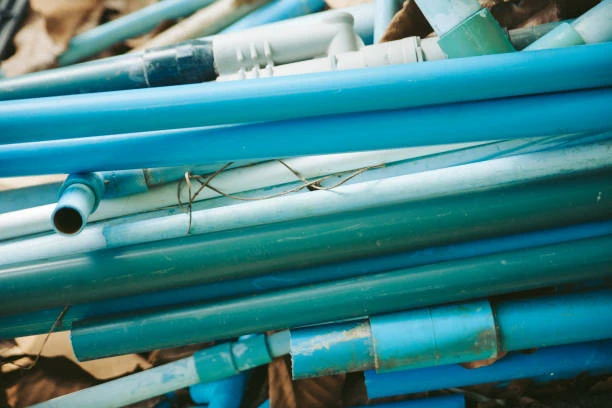
Tubos de CPVC provides excellent performance in hot water and high-temperature applications. Engineers, contractors, and plumbers choose CPVC for its superior thermal tolerance, durability, and safety. This article explores the high temperature resistance of CPVC tubing, its advantages over other materials, and the applications that benefit from its thermal properties.
Understanding CPVC
Chlorinated polyvinyl chloride (CPVC) originates from standard PVC, but manufacturers treat it with chlorine through a free radical chlorination process. This process increases the chlorine content from around 56% in PVC to about 63-69% in CPVC. As a result, CPVC withstands much higher temperatures and provides improved fire and chemical resistance.
CPVC combines the mechanical strength of plastic with enhanced heat resistance. Because of this, builders and industries across the world rely on it for hot water delivery and industrial fluid handling. CPVC retains flexibility, resists corrosion, and stands up to harsh conditions that often degrade metal and other plastic pipes.
Maximum Temperature Limits
Manufacturers rate CPVC tubing for continuous operation at temperatures up to 93°C (200°F). Some high-performance CPVC grades handle intermittent temperatures as high as 110°C (230°F). These ratings make CPVC ideal for plumbing systems that deliver hot water in residential, commercial, and industrial environments.
Most building codes recognize CPVC for hot water lines, boiler feeds, and heat exchanger connections. CPVC does not soften, deform, or melt under typical operating temperatures, and it maintains long-term structural stability. While PVC softens at temperatures above 60°C (140°F), CPVC remains rigid and dependable far beyond that threshold.
Estabilidade Térmica
CPVC maintains its shape and strength under sustained heat exposure. Unlike some plastics, it resists thermal degradation and cracking. Manufacturers design CPVC formulations to retain tensile strength and impact resistance, even when installed near heat sources like boilers or solar water heaters.
When tested over time, CPVC exhibits minimal thermal expansion or contraction. This stability prevents leaks, joint stress, and system misalignment. Installers do not need to oversize expansion loops or worry about pipe creep, which often affects polypropylene and polyethylene systems.
Thermal cycling also poses no significant threat to CPVC. It endures thousands of hot-cold cycles without loss of integrity. This makes it an excellent choice for systems that frequently experience temperature changes.
Comparação com outros materiais
PVC
PVC and CPVC share similar chemical structures, but their performance under heat differs dramatically. Soften at 60°C and loses pressure capacity as temperatures rise. CPVC, on the other hand, handles 93°C continuously and maintains pressure ratings above industry requirements. This difference allows CPVC to serve hot water and steam lines where PVC fails.
PPR (Polypropylene Random Copolymer)
PPR handles high temperatures well, but CPVC maintains higher pressure resistance at elevated temperatures. It also requires heat fusion equipment for installation, while CPVC uses solvent cement, which simplifies the process. CPVC resists more chemicals and retains a longer service life in corrosive environments.
Cobre
Copper handles heat well, but it corrodes over time. CPVC resists scale, pitting, and chemical attack. It also weighs less and installs more easily. Workers do not need to use torches or solder joints. CPVC also insulates better than copper, reducing energy losses in hot water lines.
Aço inoxidável
Stainless steel also tolerates high temperatures, but it costs significantly more than CPVC. CPVC resists many acids and bases that degrade even high-grade metals. CPVC provides a lightweight, cost-effective solution for many industrial applications that would otherwise require metal piping.
Pressure Ratings at High Temperatures
All piping materials lose pressure resistance as temperature increases. CPVC maintains strong ratings even in hot environments. For example, a typical 1-inch CPVC pipe carries the following pressure ratings:
- At 23°C (73°F): 450 psi
- At 82°C (180°F): 100 psi
- At 93°C (200°F): 75 psi
These ratings meet most building and process system needs. Installers and designers must always consult manufacturer tables and reduce working pressure according to temperature correction factors. Proper derating ensures system longevity and safety.
Resistência ao fogo
CPVC exhibits flame-retardant properties due to its high chlorine content. It does not sustain combustion and self-extinguishes when the flame source is removed. Its Limiting Oxygen Index (LOI) of around 60% means it requires a high-oxygen environment to burn. In comparison, air contains only 21% oxygen.
These properties make CPVC a safer choice in applications where fire resistance matters. Builders use CPVC in fire sprinkler systems, chemical process plants, and laboratories. Its high ignition temperature and low flame spread ratings help contain fire and reduce damage.
Chemical Resistance at High Temperatures
Many high-temperature systems also involve aggressive chemicals. CPVC resists a wide range of acids, bases, salts, and alcohols even at elevated temperatures. Industrial users rely on CPVC for transporting sodium hypochlorite, hydrochloric acid, caustic soda, and other reactive compounds.
CPVC does not corrode or weaken when exposed to hot, acidic, or alkaline fluids. This resistance allows chemical plants, wastewater treatment facilities, and power stations to maintain system integrity with less downtime and lower maintenance costs.
Applications that Require Heat Resistance
Sistemas residenciais de água quente
CPVC serves as a popular material for domestic hot water lines. It handles water heaters, kitchen taps, and bathroom fixtures with ease. Homeowners appreciate its quiet operation, low cost, and energy efficiency. It reduces heat loss and prevents scalding by maintaining water temperature without overheating.
Encanamento comercial
Hotels, hospitals, and schools need reliable hot water delivery across large distances. CPVC systems maintain flow rate and temperature under constant use. They resist scaling, microbial growth, and thermal fatigue. Maintenance teams can repair or extend CPVC lines without special tools or heat fusion equipment.
Manuseio de Fluidos Industriais
Factories and plants often deal with high-temperature fluids and aggressive chemicals. CPVC resists chemical attack and retains strength at high temperatures. It supports processes such as electroplating, chemical mixing, and thermal treatment. Engineers design CPVC piping systems for long-term reliability and low operating costs.
Sistemas HVAC
Heating, ventilation, and air conditioning systems use CPVC for chilled and hot water loops. It handles temperature changes and pressure fluctuations. CPVC resists condensation, reduces noise, and withstands UV radiation if protected with insulation or coatings.
Sistemas de sprinklers contra incêndio
Many fire suppression systems use CPVC piping for wet-pipe sprinkler networks. CPVC meets UL and FM standards for fire protection. Its heat resistance and flame-retardant properties improve safety and reduce liability. Installers find it easy to route through ceilings, walls, and floors.
Considerações sobre a instalação
CPVC installs easily with solvent cement. Workers clean and prime the pipe ends, apply cement, and assemble the joints. The chemical bonding creates a strong, leak-free connection. Installers do not use open flames, making the process safer and faster.
Support spacing must consider temperature effects. As temperature rises, the pipe becomes slightly more flexible. Installers use proper hangers and anchors to maintain alignment and prevent sagging. Insulating the pipe also helps reduce energy loss and surface temperature.
Thermal expansion remains minimal, but long runs may require expansion loops or offset joints. Manufacturers provide design guidelines to accommodate thermal movement.
Longevity Under High Temperatures
CPVC retains performance over decades of hot water use. Studies and real-world data show that CPVC systems can last more than with proper installation and operation. Heat, pressure, and chemical exposure do not significantly degrade the material within rated conditions.
Unlike metal pipes, CPVC does not form scale or rust that can restrict flow. It resists internal and external corrosion. This stability extends the service life and reduces replacement costs. Many utilities and industries choose CPVC for its low total cost of ownership.
Eficiência Energética
CPVC insulates better than metal pipes. It reduces heat loss in hot water systems, which improves energy efficiency and lowers utility bills. In chilled water systems, it prevents condensation and reduces the load on dehumidifiers. By maintaining temperature more effectively, CPVC supports sustainable building practices.
Benefícios ambientais
CPVC uses fewer resources to manufacture than metal piping. It emits lower greenhouse gases and requires less energy during production. Its light weight reduces transportation costs and fuel consumption. CPVC systems also eliminate the need for metal mining and chemical coatings.
Recycling programs recover CPVC scrap and reduce waste. Manufacturers now offer environmentally friendly CPVC formulations that meet green building standards.
Safety in Hot Environments
CPVC remains safe to handle and touch, even when conveying hot water. It does not conduct heat like metal pipes, so it reduces the risk of burns. Its smooth surface prevents microbial growth and biofilm formation, which protects public health in potable water systems.
In hospitals and food production, CPVC contributes to hygienic water delivery. It prevents contamination and withstands frequent cleaning with hot water and disinfectants.
Conclusão
CPVC tubing delivers superior performance in high-temperature applications. It handles continuous heat, resists chemical and fire damage, and provides long-term reliability. Builders, engineers, and facility managers continue to rely on CPVC for its ease of installation, safety, and cost-effectiveness.
From residential water systems to industrial processing lines, CPVC proves its value wherever heat, pressure, and performance matter. Its resistance to temperature extremes makes it one of the most dependable materials in modern plumbing and piping technology.
Norma internacional IFAN
Os produtos de PEAD da IFAN atendem a diversas normas internacionais, garantindo qualidade, durabilidade e confiabilidade. Essas normas incluem a ASTM D3035 e a ASTM D3350, que definem especificações para tubos e materiais de polietileno (PE). As séries ISO 4427 e EN 12201 estabelecem referências globais para tubos de PE utilizados em sistemas de abastecimento de água. Além disso, as normas DIN 8074/8075 e GB/T 13663 estabelecem requisitos de desempenho e dimensões para tubos de PEAD nos mercados europeu e chinês. Outras normas reconhecidas, como a AS/NZS 4130 (Austrália/Nova Zelândia), JIS K6760 (Japão), BS 6572 (Reino Unido) e CSA B137.1 (Canadá), demonstram ainda mais o compromisso da IFAN em atender às regulamentações do setor em todo o mundo.
Contato
A IFAN é uma fabricante profissional com 30 anos de experiência, dedicada à produção de tubos, conexões e válvulas de plástico de alta qualidade. Nossos produtos incluem válvulas de latão, válvulas de PPR, além de diversos tubos e conexões para atender às diferentes necessidades dos clientes. Seja para tubos de encanamento e drenagem ou válvulas, a IFAN oferece uma gama diversificada de produtos de alta qualidade e custo-benefício para apoiar seus projetos. Abaixo, você encontra nossos dados de contato.
Responderemos seu e-mail ou fax em até 24 horas.
Você pode nos ligar a qualquer momento caso tenha alguma dúvida sobre nossa produção.
Para mais informações, visite nosso site https://www.ifanplus.com/
Por favor, envie um e-mail para: [email protected]
Whatsapp: + 86 19857948982























