


Introdução
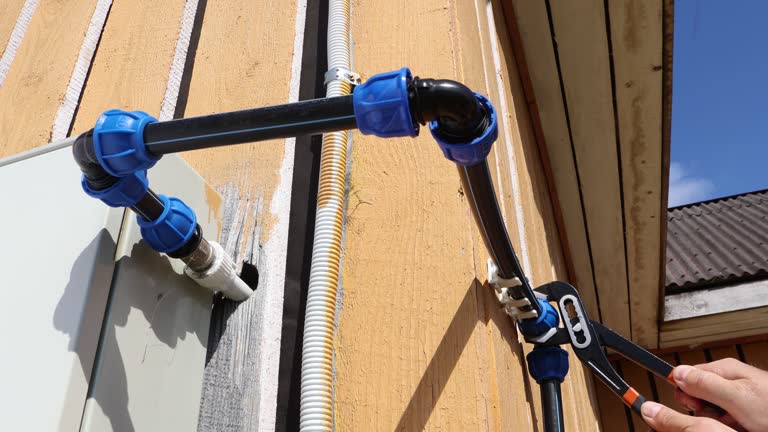
Black HDPE pipe, made from high-density polyethylene, has become a preferred choice for modern piping systems. Its popularity spans water distribution, gas supply, agriculture, drainage, and industrial applications. This growing preference comes from more than just cost-efficiency and corrosion resistance—ductility plays a major role.
Ductility refers to a material’s ability to deform under tensile stress without cracking or breaking. In the piping world, this quality proves vital. Flexible materials can handle expansion, ground movement, and mechanical stress far better than brittle alternatives. Black HDPE pipe delivers high ductility, making it one of the most adaptable piping options available today.
This article explores the ductile nature of black HDPE pipe. It highlights its molecular structure, practical performance, field advantages, and long-term reliability. Understanding this flexibility helps engineers, contractors, and decision-makers choose HDPE with confidence for demanding installations.
Understanding Ductility in Piping Materials
Ductility measures how much a material can stretch or deform before failure. Metals like copper and polyethylene-based plastics show high ductility. Materials such as PVC, clay, and concrete display low ductility and tend to crack under strain.
In piping, ductile materials can handle:
- Soil movement
- Vibration
- Changes in temperature
- Shifting loads
- Instalações sem valas
Black HDPE pipe adapts to these conditions instead of breaking. It bends and flexes without losing strength, maintaining flow and structural integrity.
The Molecular Structure Behind Flexibility
HDPE gains its ductility from its molecular makeup. During manufacturing, high-density polyethylene molecules form long, linear chains. These chains pack tightly together, creating a dense structure that resists breaking while remaining flexible.
These tightly bonded chains can move slightly under pressure, allowing the pipe to deform without fracturing. The material rebounds after temporary bending or elongation, showing both flexibility and memory.
This microscopic elasticity delivers real-world resilience. When external forces act on HDPE pipe, its molecular structure absorbs the stress, redistributes the energy, and maintains overall performance.
Performance Under Soil Movement
Underground pipes face continuous shifts. Soil expands during rainfall, contracts in drought, and freezes in winter. These movements exert pressure on buried piping. Brittle materials often crack or split under these conditions.
Black HDPE pipe bends with the soil. It stretches slightly, then returns to its original form once pressure subsides. This flexibility prevents leaks, reduces repair costs, and extends service life.
In areas with unstable ground or seismic activity, HDPE outperforms rigid pipe. It absorbs earth movements without compromising its function. Engineers favor HDPE in fault zones, flood plains, and regions with heavy clay soils.
Trenchless Technology Compatibility
Trenchless installations place extreme demands on piping. Methods such as horizontal directional drilling and pipe bursting require pipes to bend, twist, and stretch over long distances underground. Pipes must survive pulling forces, soil friction, and entry angles.
Black HDPE pipe handles these conditions easily. Its ductile nature allows it to bend during pulling without snapping. The pipe conforms to curves and terrain changes while maintaining flow and pressure capacity.
This performance makes HDPE the standard choice for trenchless methods. It simplifies complex installations, avoids road closures, and cuts down environmental disruption. Municipalities and contractors trust HDPE to finish jobs safely and efficiently.
Resistance to Water Hammer and Pressure Surges
In pressurized systems, sudden valve closures or pump failures can cause water hammer—a pressure wave that travels through the pipe at high speed. This wave can damage joints, crack rigid materials, and create loud noises.
Ductile pipes like black HDPE absorb this shock. The pipe walls expand slightly to accommodate the surge, then rebound. This elasticity reduces peak pressure and prevents long-term damage.
Water utilities, fire protection systems, and irrigation networks rely on this ability. It improves safety and avoids costly failures caused by internal fluid movement.
Performance During Cold Temperatures
Low temperatures challenge piping materials. Many plastics and metals become brittle and crack when exposed to freezing conditions. Black HDPE pipe behaves differently.
Even at temperatures below -40°F (-40°C), HDPE maintains its ductility. The pipe bends rather than breaks when handled, dropped, or installed in cold environments. Workers cut and fuse the pipe without the need for preheating or special tools.
This cold-weather toughness expands its utility in remote or mountainous regions. Cities and rural communities alike benefit from HDPE’s flexibility under frost, ice, and snow.
Vantagens da instalação
Ductility enhances every stage of the installation process. Contractors can:
- Coil long lengths of pipe
- Thread HDPE around obstacles
- Use fewer fittings
- Fit pipe into tight or uneven spaces
This adaptability speeds up installation and reduces costs. Workers spend less time measuring, cutting, or bending. Fusion joints between ductile pipe sections remain secure under pressure and movement.
In retrofit projects, HDPE slides into old pathways without major excavation. This convenience saves time, labor, and surface damage to streets or landscaping.
Segurança no Transporte e Manuseio
Rigid pipes often require special handling during shipping and unloading. Drops, strikes, or slight misalignments may cause fractures or stress cracks. Black HDPE pipe avoids these issues.
Its ductile nature allows it to absorb impacts during transportation. Even if the pipe falls or rolls, it usually shows no damage. Coils and sticks of HDPE fit easily onto trucks and forklifts without extra bracing or padding.
On job sites, crews appreciate the safety of a pipe that won’t shatter under stress. This reliability reduces material waste and avoids delays caused by broken components.
Long-Term Deformation Resistance
Over decades, external forces may try to deform a pipe. Ground pressure, shifting loads, and thermal expansion test a material’s endurance. HDPE pipe handles these challenges well.
Its ductile properties allow it to deform slightly under stress but recover afterward. This resistance to permanent deformation keeps flow consistent and systems operating as intended.
In contrast, brittle pipes may experience stress fatigue, eventually forming microcracks that grow into full failures. HDPE’s flexibility stops these problems before they start.
Seismic Resilience
Earthquakes shake and shift everything, including underground infrastructure. In seismically active zones, ductile piping becomes essential. Black HDPE pipe survives these movements through flexibility.
When the ground moves, HDPE stretches and compresses with it. The pipe rarely cracks, even during large quakes. Systems stay sealed and continue transporting vital resources like water or gas.
Cities in earthquake-prone regions use HDPE to build resilient water grids and gas networks. It offers peace of mind during both minor tremors and major seismic events.
Fusion-Welded Joint Strength
Ductility doesn’t just affect the pipe itself—it also enhances the joint system. Black HDPE pipe uses heat fusion to join sections. This process creates a continuous, monolithic pipeline without gaskets or glue.
Fusion joints retain the same ductile properties as the pipe. They stretch and flex under pressure, eliminating weak spots found in traditional coupling systems. Even at the joint, HDPE maintains full performance under bending and tension.
This strength improves overall system reliability and reduces the risk of joint leaks, especially in dynamic environments.
Ductility in Mining and Industrial Applications
Mining operations and industrial plants expose piping to heavy equipment, vibrations, and unpredictable conditions. Black HDPE pipe holds up through it all.
Its ductile structure bends around rocks, machinery, and steel frameworks. It survives being dragged, coiled, or compressed without permanent damage. When buried beneath crushers or conveyors, it endures vibrations and pressure changes with ease.
Chemical plants also value HDPE’s flexibility under stress. Ductility allows it to accommodate process fluctuations without rupturing or compromising safety.
Adaptabilidade Ambiental
Black HDPE pipe functions well in diverse settings:
- Mountain slopes
- Coastal flood zones
- Arctic tundra
- Deserts with extreme heat
In each environment, HDPE adjusts to temperature swings, soil movement, and external force. Its ductile behavior supports long-term operation in the face of nature’s challenges.
Environmental engineers often recommend HDPE for eco-sensitive areas. Its ability to flex, resist rupture, and form leak-proof joints prevents pollution and water loss.
Durability Over Decades
Ductility also contributes to HDPE pipe’s long life expectancy. Systems made from black HDPE often exceed of service. This longevity comes from its resistance to cracking, breaking, or permanent deformation.
By absorbing pressure instead of fighting it, the pipe prevents the slow accumulation of damage. It holds up year after year, requiring minimal maintenance.
Municipalities benefit from lower long-term costs and fewer service interruptions. Industries avoid costly downtime and emergency repairs.
Recyclability and Ductile Retention
Even after years of use, HDPE pipe retains ductility. Recycled HDPE still shows flexibility and strength, making it valuable for secondary applications.
This quality supports circular economy goals. Companies reuse HDPE waste for fittings, construction materials, or new pipe segments. Its ductile nature continues to provide benefits even after its first life cycle ends.
This sustainability adds to its appeal in environmentally conscious projects and green building initiatives.
Resumo
Ductility gives black HDPE pipe a unique edge over traditional piping materials. Its ability to stretch, bend, and rebound under stress improves installation, operation, and longevity. It handles environmental pressures, internal surges, and physical impact without losing strength.
From urban infrastructure to rural irrigation, HDPE pipe adapts and endures. Contractors install it faster, engineers design with confidence, and operators rely on its flexibility for decades.
When conditions demand resilience, adaptability, and long-term performance, black HDPE pipe delivers through ductility—every time.
Norma internacional IFAN
Os tubos e conexões de compressão de PEAD da IFAN atendem a uma ampla gama de normas internacionais, garantindo alto desempenho e compatibilidade global. Entre elas, estão ASTM D3035 e ASTM D3350 dos Estados Unidos, séries ISO 4427 e EN 12201 da Europa, DIN 8074/8075 da Alemanha, série GB/T 13663 da China, AS/NZS 4130 da Austrália e Nova Zelândia, JIS K6760 do Japão, BS 6572 do Reino Unido e CSA B137.1 do Canadá. A conformidade com essas normas garante excelentes propriedades mecânicas, resistência química e durabilidade a longo prazo em diversas aplicações industriais e de abastecimento de água.
Contato
A IFAN é uma fabricante profissional com 30 anos de experiência, dedicada à produção de tubos, conexões e válvulas de plástico de alta qualidade. Nossos produtos incluem válvulas de latão, válvulas de PPR, além de diversos tubos e conexões para atender às diferentes necessidades dos clientes. Seja para tubos de encanamento e drenagem ou válvulas, a IFAN oferece uma gama diversificada de produtos de alta qualidade e custo-benefício para apoiar seus projetos. Abaixo, você encontra nossos dados de contato.
Responderemos seu e-mail ou fax em até 24 horas.
Você pode nos ligar a qualquer momento caso tenha alguma dúvida sobre nossa produção.
Para mais informações, visite nosso site https://www.ifanplus.com/
Por favor, envie um e-mail para: [email protected]
Whatsapp: + 86 19857948982























