


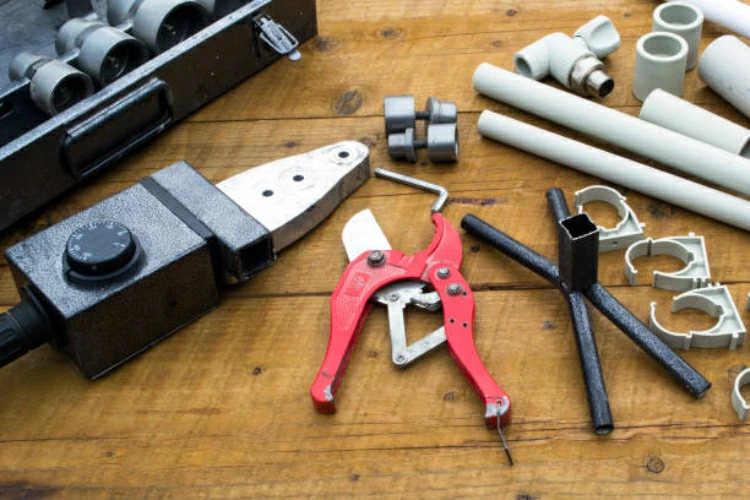
CPVC pipe fittings play a crucial role in plumbing systems, offering durability, chemical resistance, and ease of installation. Understanding the manufacturing process behind CPVC pipe fittings provides valuable insights into their quality and reliability.
1. Seleção de matéria-prima
The manufacturing process of CPVC pipe fittings starts with carefully selecting high-quality raw materials. Manufacturers choose CPVC resin, additives, and stabilizers for their purity, consistency, and desired properties. They implement quality control measures to ensure that only materials meeting stringent standards are utilized.
2. Compounding and Blending
After selecting the raw materials, manufacturers proceed with compounding and blending processes. They blend CPVC resin with additives and stabilizers in precise proportions to attain desired characteristics like heat resistance, chemical resistance, and mechanical strength. This blending process guarantees uniformity and homogeneity of the CPVC compound.
3. Extrusion and Molding
After compounding, manufacturers process the CPVC compound through extrusion or injection molding. Extrusion entails heating the CPVC compound and forcing it through a die to create pipes, fittings, or profiles of various shapes and sizes. Injection molding involves injecting the molten CPVC compound into molds to shape intricate designs.
4. Cooling and Finishing
Once the CPVC pipe fittings are formed, they undergo cooling to solidify and stabilize their shape. Cooling may involve air or water cooling methods, depending on the specific requirements of the product. After cooling, the CPVC pipe fittings may undergo finishing processes, such as cutting, drilling, or threading, to meet the final specifications.
5. Quality Control and Testing
Throughout the manufacturing process, CPVC pipe fittings undergo rigorous quality control and testing procedures. Dimensional checks, visual inspections, and mechanical tests ensure that the fittings meet the required standards for performance, reliability, and safety. Any defective fittings are identified and discarded to maintain quality standards.
6. Packaging and Distribution
After passing quality control tests, manufacturers package CPVC pipe fitting into bundles or cartons for distribution. This packaging safeguards the fittings during transportation and storage, preserving their quality until they reach end-users. Subsequently, distributors supply CPVC pipe fittings to plumbing suppliers, contractors, and construction sites for installation.
Conclusão
The manufacturing process of CPVC pipe fittings entails a series of precise steps, from selecting raw materials to conducting quality control tests. Adhering to strict quality standards and employing advanced manufacturing techniques ensures that CPVC pipe fitting meet the highest standards of performance, reliability, and durability. Understanding the manufacturing process behind CPVC pipe fittings empowers consumers to make informed decisions and ensures the successful implementation of plumbing systems.
Contato
IFAN é um fabricante profissional com 30 anos de experiência, dedicado à produção de tubos, conexões e válvulas de plástico de alta qualidade. Nossos produtos incluem válvulas de latão, válvulas PPR, além de diversos tubos e conexões para atender às diferentes necessidades dos clientes. Seja para encanamento e drenagem, tubos ou válvulas, IFAN Podemos fornecer uma gama diversificada de produtos de alta qualidade e custo-benefício para apoiar seus projetos. Abaixo estão nossas informações de contato.
Responderemos seu e-mail ou fax em até 24 horas.
Você pode nos ligar a qualquer momento caso tenha alguma dúvida sobre nossa produção.
Para mais informações, visite nosso site https://www.ifanplus.com/
Por favor, envie um e-mail para: [email protected]























