


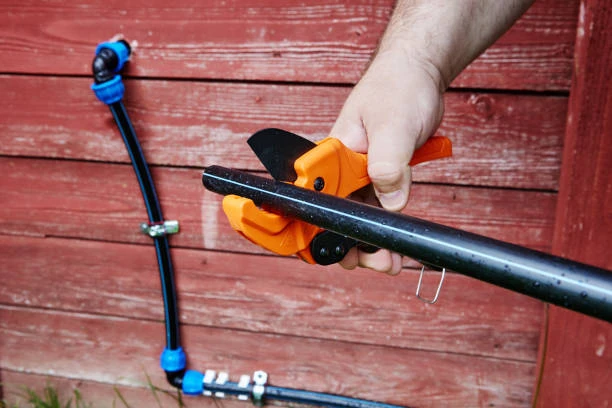
UM cortador de tubos Um cortador de tubos é uma ferramenta essencial para cortar canos ou tubos com precisão. Seus cortes eficientes e limpos simplificam tarefas de encanamento, mecânica e construção. Para projetar um cortador de tubos eficaz, os engenheiros devem considerar a funcionalidade, a ergonomia, os materiais e a durabilidade da ferramenta. Este artigo explora os aspectos essenciais do projeto de um cortador de tubos que atenda
Understanding User Requirements
Before beginning the design, understanding user needs proves essential. Users typically require a cutter that performs consistently on different tube materials like PVC, copper, or stainless steel. The tool must deliver clean cuts without leaving burrs or deforming the tube. Professionals in plumbing or manufacturing demand a durable design for frequent use, while DIY users prefer compact, easy-to-operate options. Addressing these expectations guides the design process.
Selecting the Cutting Mechanism
The cutting mechanism forms the core of the tube cutter. Options include rotary cutters, ratchet cutters, and shear-style mechanisms. Rotary cutters use a sharp circular blade that rotates around the tube to make precise cuts. These cutters work well for hard materials like metal pipes.
Ratchet cutters rely on a progressive squeezing motion to cut through tubes, proving effective for softer materials such as PVC or PEX. Shear-style cutters feature dual-blade systems that slice through the tube. This type suits small-diameter tubes where simplicity matters. Selecting the appropriate mechanism aligns the design with target materials and user requirements.
Material Selection
Materials determine the cutter’s durability, weight, and efficiency. High-carbon steel or tungsten carbide works well for the blade, providing sharpness and longevity. Aluminum alloys or hardened plastics often serve as the body material, balancing durability with lightweight construction. Corrosion-resistant coatings extend the tool’s lifespan, especially when users cut metal tubes exposed to moisture.
Ergonomic Considerations
Ergonomics enhance user comfort and safety. A well-designed handle improves grip, reduces hand fatigue, and ensures precision during use. Soft rubber grips or textured surfaces prevent slipping, even with wet or oily hands. The handle design must suit both left-handed and right-handed users, ensuring universal functionality. Compact designs improve portability and ease storage.
Designing the Blade Assembly
The blade assembly requires attention to detail for efficient cutting. Adjustable blade tension ensures consistent performance on different tube diameters and materials. Engineers often incorporate a quick-release mechanism for fast blade changes. Blade sharpness and alignment guarantee smooth cuts. For safety, including a retractable blade mechanism minimizes the risk of accidental injuries.
Mechanism for Tube Clamping
Secure clamping stabilizes the tube during cutting. Without proper stabilization, cuts become uneven or misaligned. Spring-loaded or screw-tightened clamps offer reliable tube holding. Adjustable clamps accommodate various tube diameters, increasing versatility. Engineers must ensure the clamping mechanism operates smoothly to avoid damaging the tube’s surface.
Compact and Portable Design
Portability matters for users who frequently move between job sites. A compact design reduces weight and space requirements. Foldable or retractable components contribute to a portable design. Engineers can also include integrated blade storage compartments, keeping spare blades accessible without increasing the tool’s size.
Incorporating Measurement Features
Adding measurement guides enhances precision and convenience. Laser-etched scales on the cutter body allow users to measure tube lengths directly on the tool. For higher precision, incorporating a digital display with length measurements offers a modern solution. These features minimize the need for additional measuring tools, streamlining the cutting process.
Ensuring Durability
Durability impacts the cutter’s reliability and lifespan. Reinforced blade mounts prevent deformation under heavy use. Shock-resistant body materials withstand accidental drops. Testing the design under various conditions ensures its durability meets industry standards. Regular stress tests during development help identify weak points for improvement.
Emphasizing Safety
Safety features reduce risks for users. Blade guards prevent accidental contact with sharp edges. Automatic locking mechanisms keep the blade in place when not in use. Including a safety lock on the handle ensures the cutter remains closed during storage or transport. Engineers must consider safety without compromising usability.
Aesthetic and Branding Elements
Although functionality remains the priority, an attractive design adds value. Sleek lines, vibrant colors, and distinctive branding create a visually appealing product. Customization options, such as interchangeable grips or user-specific color schemes, allow users to personalize their cutters. Branding ensures the product stands out in a competitive market.
Prototyping and Testing
Creating prototypes validates the design’s practicality. Engineers test the prototypes on various materials and under real-world conditions. Feedback from professional users identifies necessary improvements. Iterative prototyping ensures the final product balances performance, durability, and user comfort. Testing for compliance with industry safety standards guarantees a market-ready tool.
Addressing Environmental Concerns
Eco-friendly designs attract environmentally conscious consumers. Using recyclable materials for the body reduces environmental impact. Incorporating long-lasting blades minimizes waste from frequent replacements. Engineers can also consider solar-powered or battery-operated versions for sustainable operation in specific applications.
Designing for Mass Production
For commercial success, designs must suit large-scale manufacturing. Modular components simplify assembly and repair. Engineers should optimize the design for efficient material use, reducing costs. Including universal parts compatible with existing tools enhances the product’s versatility. Mass production techniques like injection molding ensure consistency across units.
Conclusão
Designing a tube cutter requires balancing functionality, durability, ergonomics, and aesthetics. Engineers must address user needs while ensuring safety and environmental responsibility. By focusing on material selection, cutting mechanisms, and user comfort, the design achieves efficiency and reliability. Prototyping and testing refine the design, paving the way for a tool that performs exceptionally in professional and DIY settings.
Norma internacional IFAN
Os produtos IFAN atendem a uma série de normas reconhecidas internacionalmente, garantindo qualidade e desempenho em diversas aplicações. Entre elas, estão as normas da série ISO 15874, que descrevem as especificações para sistemas de tubulação de plástico; as normas da série EN 15874, que abrangem os requisitos para tubos e conexões de polietileno (PE) em sistemas de distribuição de água; a ASTM F2389, que define as normas para sistemas de tubulação de polietileno reticulado (PEX); a DIN 8077/8078, que abordam as dimensões e os testes de tubos de plástico; as normas da série GB/T 18742, que são as normas nacionais chinesas para tubos e conexões de plástico; e a NBR 15884, uma norma brasileira para sistemas de tubulação de PE e PEX. Essas certificações demonstram o compromisso da IFAN em fornecer produtos confiáveis e de alta qualidade em conformidade com os padrões globais da indústria.
Contato
A IFAN é uma fabricante profissional com 30 anos de experiência, dedicada à produção de tubos, conexões e válvulas de plástico de alta qualidade. Nossos produtos incluem válvulas de latão, válvulas de PPR, além de diversos tubos e conexões para atender às diferentes necessidades dos clientes. Seja para tubos de encanamento e drenagem ou válvulas, a IFAN oferece uma gama diversificada de produtos de alta qualidade e custo-benefício para apoiar seus projetos. Abaixo, você encontra nossos dados de contato.
Responderemos seu e-mail ou fax em até 24 horas.
Você pode nos ligar a qualquer momento caso tenha alguma dúvida sobre nossa produção.
Para mais informações, visite nosso site https://www.ifanplus.com/
Por favor, envie um e-mail para: [email protected]
Whatsapp: + 86 19857948982























