


Introduction
In modern construction, the speed and efficiency of installation are essential for reducing costs, meeting deadlines, and ensuring long-term performance. Consequently, the materials and components chosen for building systems must support these objectives. Among the most widely used and appreciated solutions are PVC accessories.
PVC accessories are essential components used in plumbing, drainage, electrical conduit systems, irrigation, and various other fluid transport networks. Their primary role is to connect, redirect, or control the flow of fluids through pipes. However, beyond functionality, what truly distinguishes PVC accessories is their remarkable ease of installation.
This article explores the reasons why PVC accessories contribute to construction efficiency. It covers their physical characteristics, compatibility with tools, minimal labor requirements, adaptability to project conditions, and long-term reliability. Additionally, it compares PVC accessories with alternative materials to emphasize the distinct construction advantages they offer.
Lightweight and Easy to Handle
One of the most notable benefits of PVC accessories is their light weight. Compared to metal fittings such as brass, copper, or steel, PVC components are significantly lighter. This simple characteristic leads to several important construction benefits.
Firstly, lighter components reduce the need for heavy lifting equipment. Installers can carry and position PVC accessories manually, even when working at heights or in tight spaces. Secondly, transportation becomes more efficient, as large quantities can be moved with less energy and fuel. This not only saves time but also cuts down logistical expenses.
Moreover, the ease of handling contributes to a safer job site. Workers are less likely to suffer from injuries related to lifting or maneuvering heavy materials. As a result, the entire workflow becomes smoother and more efficient.
Simple Cutting and Shaping
PVC accessories are compatible with standard plastic cutting tools, such as pipe cutters, fine-toothed saws, and rotary tools. This compatibility greatly simplifies onsite customization.
Furthermore, if an installer needs to adjust the length of a pipe or modify a fitting to suit a unique configuration, the task can be completed within minutes. There is no need for specialized machinery or expensive workshop equipment. In addition, the process generates minimal debris, which makes jobsite cleanup faster and easier.
Such simplicity is especially advantageous in complex or time-sensitive projects where last-minute modifications are inevitable.
Quick Joining Methods
Another reason PVC accessories are preferred on construction sites is the speed of connection. There are several joining methods available for PVC systems, each offering quick and reliable assembly.
The most common method is solvent welding. This involves applying a special cement to both the pipe and fitting surfaces, then pressing them together for a few seconds. The joint forms a strong, leak-proof seal within minutes. Compared to metal systems, which often require welding, threading, or brazing, solvent welding is far faster and safer.
Additionally, PVC accessories are available with threaded or gasketed ends, which allow mechanical assembly. These options do not require curing time, making them ideal for temporary installations or applications where speed is critical.
Minimal Training Required
Installing PVC accessories does not demand advanced technical skills. While proper training and safety protocols should always be followed, the actual techniques involved are simple and intuitive.
As a result, new employees or general laborers can quickly learn to install PVC fittings with a short demonstration. This benefit reduces dependency on highly specialized tradespeople, especially in remote or developing areas where skilled labor may be scarce.
Furthermore, instructions from manufacturers are typically clear and easy to understand. Many PVC accessory suppliers also provide video tutorials or printed diagrams to assist installers. These materials contribute to faster learning and better quality control.
Time Savings on the Jobsite
Every aspect of PVC installation is designed for speed. From the initial delivery and unpacking of materials to the final pressure testing, projects involving PVC systems are often completed in record time.
Moreover, the predictable nature of PVC assembly allows for better project planning. Teams can estimate timelines more accurately and avoid delays caused by slow-fitting installation or material constraints. In addition, fewer mistakes occur during installation due to the user-friendly nature of PVC accessories.
As a result, construction companies often report lower labor costs and higher profit margins when using PVC systems.
Compatibility with a Wide Range of Applications
PVC accessories are suitable for a broad spectrum of projects. Whether the job involves residential plumbing, commercial irrigation, industrial fluid handling, or electrical conduit systems, PVC offers unmatched versatility.
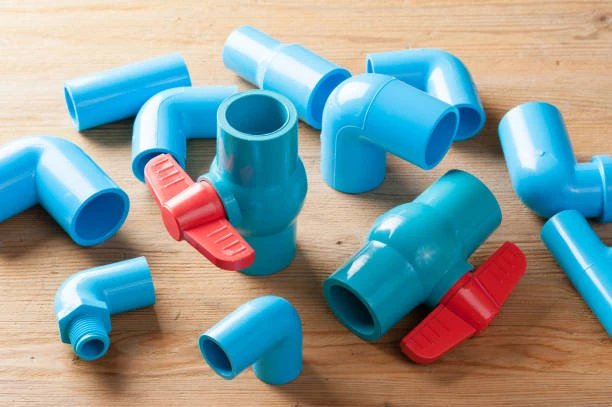
Because of their standard sizing and universal compatibility, PVC accessories integrate easily with existing components. There is no need for custom fabrication or on-site adaptation when the correct fittings are selected. Furthermore, manufacturers often produce an extensive catalog of accessory types, including:
- Elbows
- Tees
- Crosses
- Unions
- Caps
- Reducers
- Valves
- Couplings
With such a wide variety, installers can quickly find exactly what they need for virtually any configuration.
No Welding, Flames, or Electricity Needed
Traditional metal piping systems often require hot work—such as soldering or welding—which demands special permits and increases the risk of fire. In contrast, PVC systems eliminate this concern.
Because no flames or electricity are needed for joining PVC accessories, installation can proceed more safely and with fewer interruptions. Furthermore, in environments where sparks are hazardous—such as chemical plants or gas lines—PVC provides a far safer alternative.
This advantage not only speeds up work but also improves overall site safety and reduces the need for additional supervision or certification.
Easy Inspection and Maintenance Access
Construction doesn’t end with installation. Maintenance and inspection are critical for ensuring long-term performance. PVC accessories simplify this process considerably.
Many PVC systems include removable components such as unions or threaded fittings. These parts can be disconnected quickly, allowing access to internal piping without damaging the system. Furthermore, the light weight of PVC makes removal and reinstallation easier during routine maintenance or repairs.
In addition, because PVC does not rust or corrode, inspections are straightforward. Discoloration, blockage, or other damage is easy to identify without the interference of rust flakes or metal deterioration.
Durable and Consistent Quality
PVC accessories are manufactured under strict quality control standards. As a result, each fitting is uniform in shape, size, and performance. This consistency is vital in construction, where variability can cause alignment problems or fitting failures.
Furthermore, PVC is inherently resistant to corrosion, scaling, and chemical attack. This durability contributes to lower failure rates during and after installation. Moreover, systems made with PVC accessories tend to have a longer service life with minimal need for replacement.
All of these factors reduce the amount of time spent on troubleshooting and fixing installation issues, thus accelerating overall project timelines.
Adaptable to Environmental Conditions
Construction projects often face environmental challenges such as heat, cold, rain, or dust. Fortunately, PVC accessories can be installed in a wide range of conditions. For example, in hot climates, PVC remains stable and does not expand excessively. In colder regions, proper precautions allow PVC fittings to be installed without risk of cracking.
Furthermore, unlike some materials that react negatively to moisture or chemicals, PVC remains inert. This resistance allows installation near pools, industrial plants, and agricultural zones without compromising quality.
Additionally, since PVC fittings are non-conductive, they are ideal for environments with electrical hazards, reducing the risk of accidental shocks during installation.
Lower Equipment and Overhead Costs
Because PVC installation requires only basic tools, contractors can significantly reduce their equipment overhead. There is no need for welding gear, gas tanks, power threaders, or specialized safety apparatus.
Moreover, PVC does not require extensive prep work, special storage conditions, or high insurance premiums associated with metal work. These savings add up across multiple projects, making PVC an economically advantageous choice.
In addition, manufacturers often offer pre-assembled kits or modular PVC systems that arrive ready to install. This feature further reduces jobsite time and complexity.
Conclusion
In summary, the construction benefits of PVC accessories are both practical and strategic. Their lightweight design, ease of cutting, simple joining methods, and broad compatibility all contribute to faster and more efficient installations. Furthermore, PVC accessories require minimal training, enhance jobsite safety, and adapt well to a wide variety of environments.
From a project management perspective, these advantages translate into significant time and cost savings. More importantly, they ensure that installations are reliable, maintainable, and long-lasting.
As construction technologies continue to evolve, the need for efficient, dependable materials will only grow. In this context, PVC accessories remain a smart, forward-looking choice for professionals who value both performance and practicality.
IFAN international standard
IFAN adheres to a comprehensive range of standards to ensure quality and performance across various applications. These include BS 3505 and BS 4346, along with ASTM standards such as D1785 SCH40, D1785 SCH80, D2665, D2241, D2729, and F441/F441M. The portfolio is further strengthened by international standards from DIN, GB, and DWV, as well as the ISO 1452 Series and its equivalent EN ISO 1452. Additionally, specific standards such as DIN 8061/8062, GB/T 10002 Series, AS/NZS 1477, JIS K6741, CSA B137.3, NSF/ANSI 14, and TIS 17-2532/1131-2535 are incorporated. Collectively, these standards ensure that IFAN’s products and processes adhere to rigorous performance criteria and quality benchmarks, thereby promoting safety, reliability, and interoperability on a global scale.
Contact
IFAN is a professional manufacturer with of experience, dedicated to producing high-quality plastic pipes, fittings, and valves. Our products include brass valves, PPR valves, as well as various pipes and fittings to meet different customer needs. Whether you need plumbing and drainage pipes or valve products, IFAN can provide a diverse range of high-quality, cost-effective products to support your projects. Below is our contact information.
We will reply your email or fax within 24 hours.
You can call us at any time if there is any question on our production.
For more information,pls visit our webside https://www.ifanplus.com/
Pls Mailto: [email protected]
Whatsapp: + 86 19857948982























