


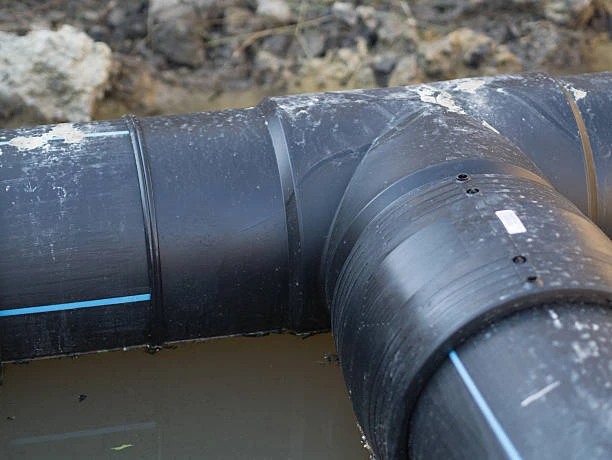
In the world of modern infrastructure, durability and resilience are more important than ever. Drainage systems, in particular, must withstand a variety of physical stresses, from heavy machinery during installation to environmental forces after they are buried underground. Among all the materials used in drainage applications, High-Density Polyethylene (HDPE) pipe has gained widespread popularity for its outstanding mechanical properties—especially its superior impact resistance.
This article delves into the exceptional impact resistance of HDPE drainage pipes. We will explore what makes HDPE unique, why its impact strength matters in drainage applications, and how it performs under different conditions. In doing so, we’ll uncover why HDPE pipe is the top choice for engineers, contractors, and developers seeking reliable, long-lasting drainage solutions.
What Is HDPE and Why It Matters
To begin with, HDPE stands for High-Density Polyethylene, a thermoplastic polymer made from petroleum. It is well known for its high strength-to-density ratio and flexibility. These characteristics make HDPE suitable for a wide range of applications, from packaging to piping systems.
However, in drainage applications, HDPE stands out for one critical reason: it can absorb and disperse external forces without cracking or breaking. This is particularly important because drainage pipes are often buried under roads, railways, or large structures where high mechanical stresses are common.
Therefore, understanding the impact resistance of HDPE is key to appreciating its value in modern civil engineering.
Why Impact Resistance Is Crucial for Drainage Pipes
Before we delve deeper, it is important to understand why impact resistance plays such a pivotal role in drainage systems. In both construction and operation, pipes are exposed to a multitude of potential hazards. For example, they may be dropped during handling, struck by heavy equipment, or subject to pressure changes caused by shifting soil or freeze-thaw cycles.
If a pipe cannot resist such impacts, it will likely crack, deform, or fail altogether. This not only results in costly repairs but may also lead to flooding, soil erosion, or even structural damage. Consequently, choosing a material that can withstand sudden and repeated shocks is vital to ensuring the longevity of a drainage system.
HDPE’s Molecular Structure Enables Impact Resistance
One of the most compelling reasons for HDPE’s excellent impact resistance lies in its molecular structure. The long polymer chains in HDPE are tightly packed, giving the material its high density and strength. Additionally, HDPE maintains a degree of flexibility, which allows it to bend slightly under pressure rather than cracking.
As a result, when HDPE pipe is struck—either intentionally or accidentally—it absorbs the energy of the impact and disperses it throughout its structure. This minimizes localized stress points and prevents sudden fractures.
Moreover, HDPE does not become brittle at low temperatures, which is often a major cause of impact-related failures in other materials like PVC or concrete.
Laboratory Testing Confirms Superior Performance
Numerous laboratory tests have confirmed HDPE’s high impact resistance. For instance, the Notched Izod Impact Test, a common method used to measure a material’s ability to absorb energy during fracture, has shown HDPE to perform far better than alternative pipe materials.
In one such test, HDPE samples were subjected to controlled impacts at varying temperatures. Even at sub-zero temperatures, the HDPE pipe resisted cracking, demonstrating its suitability for harsh environments.
Additionally, drop-weight tests simulating installation conditions—such as dropping heavy objects on buried pipe—have confirmed HDPE’s resilience in real-world scenarios. Pipes made from less flexible materials often fractured under the same conditions where HDPE remained intact.
Performance in Cold and Variable Climates
As mentioned earlier, HDPE’s ability to perform well at low temperatures is another key advantage. While many materials become brittle and prone to cracking when exposed to freezing conditions, HDPE remains flexible and impact-resistant.
This makes HDPE an ideal choice for drainage systems in cold climates, where pipes must not only manage water flow but also survive seasonal freezing and thawing cycles. When water inside or around a pipe freezes, it can create substantial internal and external pressures. HDPE can absorb these forces, whereas other materials often break or split.
Thus, HDPE provides peace of mind to engineers and contractors working in northern or mountainous regions where environmental stresses are intense and unpredictable.
Resistance to Installation Damage
Another area where HDPE’s impact resistance proves invaluable is during installation. Unlike metal or concrete pipes, HDPE can handle the rigors of handling, transportation, and backfilling without damage.
Contractors often work in environments where precision is difficult to maintain. Heavy machinery may accidentally drop or drag pipe sections. Rocks or debris in the trench may collide with the pipe during burial. HDPE’s resilience helps it withstand these situations without compromising its structural integrity.
Moreover, because HDPE pipe is flexible and can be coiled, it requires fewer joints and fittings—another area where failures often originate. This not only speeds up installation but also reduces potential points of impact-related failure.
Long-Term Reliability in Harsh Conditions
In the long run, HDPE’s impact resistance contributes to the durability of the entire drainage system. It’s not just about surviving initial installation. Over decades of use, underground pipes are exposed to soil movement, vehicular vibrations, and changes in hydrostatic pressure.
Because HDPE retains its mechanical properties over time, it remains reliable even under cyclical loading conditions. This means fewer failures, less maintenance, and lower total cost of ownership. In addition, HDPE is resistant to corrosion, chemical attack, and biological growth—factors that further enhance its long-term performance.
Consequently, HDPE pipes offer an ideal combination of strength and resilience, ensuring that the system remains safe and functional for decades.
Case Studies: Real-World Applications
To illustrate HDPE’s impact resistance in real-world conditions, consider several documented case studies. In one example, a stormwater management system in Alaska faced extreme freeze-thaw cycles and heavy snow loads. HDPE pipes were chosen due to their flexibility and ability to resist damage from shifting ice. After ten years in operation, the system required no repairs—a testament to HDPE’s durability.
In another case, a construction project in an urban area faced the challenge of installing drainage under heavy traffic. Concrete pipes began to show stress cracks during early backfilling, while HDPE pipes remained intact. The contractor ultimately switched entirely to HDPE, citing better performance and easier handling.
These examples underscore the importance of impact resistance—not just as a theoretical advantage, but as a proven benefit in the field.
Environmental and Economic Advantages
While impact resistance is a mechanical property, it also leads to indirect benefits. Economically, fewer breakages mean fewer replacements and repairs. This reduces not only direct costs but also delays, downtime, and disruptions to public infrastructure.
Environmentally, using a durable material like HDPE reduces waste and minimizes the environmental footprint of infrastructure projects. Because HDPE pipes last longer and rarely fail, fewer resources are needed over time. Moreover, HDPE is recyclable, adding to its sustainability credentials.
Thus, choosing HDPE for its impact resistance also supports broader goals related to environmental protection and responsible resource use.
Comparing HDPE to Alternative Materials
When compared to other drainage pipe materials, HDPE clearly outperforms in impact resistance. For example:
- PVC: While lighter and cheaper, PVC is significantly more brittle and prone to cracking under impact, especially in cold temperatures.
- Concrete: Extremely strong under compression but heavy and brittle. Cracks easily if dropped or stressed by shifting ground.
- Steel: Tough but susceptible to corrosion and difficult to handle due to weight. It also transmits impact forces rather than absorbing them.
In contrast, HDPE combines strength, flexibility, and chemical resistance in a single material. This combination makes it uniquely suited for applications where impact risk is high.
Conclusion: A Material Built to Endure
In conclusion, the impact resistance of drainage HDPE pipe makes it an ideal choice for today’s demanding infrastructure needs. Its unique combination of strength, flexibility, and long-term reliability ensures that it can handle both the expected and the unexpected.
Whether the challenge is a frozen trench in the Arctic, a bustling city street, or a remote construction site, HDPE stands strong. It resists impact during installation, survives mechanical stresses during operation, and lasts for decades with minimal maintenance.
For engineers, builders, and municipalities seeking a drainage solution that balances performance, safety, and sustainability, HDPE is clearly the superior option. In a world where infrastructure must do more with less, investing in HDPE drainage pipe is not only smart—it’s essential.
IFAN international standard
IFAN’s poly pipe products comply with a wide range of international standards to ensure quality, safety, and compatibility across global markets. These include ASTM D3035, ASTM D3350, the ISO 4427 series, EN 12201 series, DIN 8074/8075, GB/T 13663 series, AS/NZS 4130, JIS K6760, BS 6572, and CSA B137.1, among others. This comprehensive compliance reflects IFAN’s commitment to delivering reliable piping solutions that meet the diverse technical requirements of water supply, gas distribution, and industrial applications worldwide.
Contact
IFAN is a professional manufacturer with of experience, dedicated to producing high-quality plastic pipes, fittings, and valves. Our products include brass valves, PPR valves, as well as various pipes and fittings to meet different customer needs. Whether you need plumbing and drainage pipes or valve products, IFAN can provide a diverse range of high-quality, cost-effective products to support your projects. Below is our contact information.
We will reply your email or fax within 24 hours.
You can call us at any time if there is any question on our production.
For more information,pls visit our webside https://www.ifanplus.com/
Pls Mailto: [email protected]
Whatsapp: + 86 19857948982























