


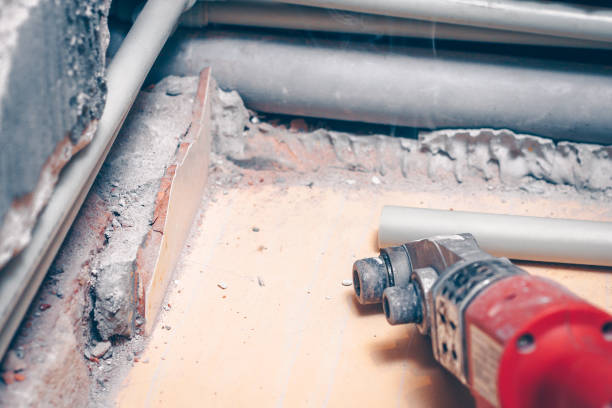
Introduction to Perforated Drainage Technology
Perforated UPVC pipe works in many modern engineering fields. It supports water control, environmental stability, and land optimization. Engineers select it because it resists corrosion and offers long service life. Its perforations allow efficient fluid movement. Many cities use this pipe in long drainage corridors. Cost control and easy installation add more benefits. Its smooth inner wall keeps debris away. Builders use this system in many underground plans today.
Groundwater Control in Construction
Construction teams use perforated UPVC pipe to manage groundwater. The pipe collects subsurface water and delivers it to safe zones. This reduces soil movement and prevents structural damage. Workers place the pipe along building foundations. For example, a factory project in Florida used this method to stop basement flooding. Its consistent performance supports many large projects. Urban constructors rely on it for safety.
Soil Stabilization in Agriculture
Farmers use perforated UPVC pipe to improve soil ventilation. Too much moisture harms crops and root growth. This pipe removes excess water from farmland layers. Example farms in lowland regions use it during rainy seasons. The pipe increases oxygen near plant roots. Long-term usage supports steady crop yields. Agricultural planners use it to boost profitability.
Landscape Drainage for Parks
Park designers install perforated UPVC pipe under grass fields. Rainwater flows into underground channels smoothly. The pipe avoids puddles on footpaths and playgrounds. For example, a city park project managed seasonal floods. Visitors enjoy cleaner and safer spaces. The pipe adapts easily to park geometry. Maintenance teams also save work hours.
Road Infrastructure Management
Road builders rely on perforated UPVC pipe for ditch stability. Water collects near road shoulders and damages asphalt. Engineers install this pipe to transfer moisture away. A hillside highway section used this solution to stop erosion. Vehicle safety improved after installation. Road planners trust its long-term durability. It prevents structural weakening.
Wastewater and Filtration Fields
Water treatment plants use perforated UPVC pipe in filtration beds. The pipe distributes water evenly through sand layers. Clean water leaves the system faster. For example, resort properties use it for greywater recycling. This supports environmental goals. Filtration continues without clogging risks. Many treatment industries rely on it.
Large Procurement Event
We now open a large purchasing event for perforated UPVC pipe. Customers visit 4125 Hillside Street, Mesa, Arizona. Buyers select many product sizes on site. Bulk orders receive large discounts. Technical experts answer installation questions. Supply teams support delivery planning. Many companies join this annual event. Stock remains plentiful and stable.
Environmental Engineering Projects
Scientists use perforated UPVC pipe to protect wetlands. The pipe controls water depth and prevents swamp spread. Research centers install it under sensitive vegetation. Eco teams track water movement weekly. It supports balanced ecological cycles. A nature reserve project improved bird nesting areas. Conservation managers reported stable habitats. This pipe became a helpful environmental tool.
Conclusion
Perforated UPVC pipe continues to influence many fields. Engineers value its reliable water movement. Farmers increase production with controlled moisture. Construction projects remain safe under heavy rain. Parks and roads gain stable ground layers. Environmental teams protect sensitive land. Its usage spreads across many regions today. Future development trends will grow stronger use.
Contact IFAN for Catalogs and Samples
Need technical documents, catalogs, or sample products? Reach out to IFAN today.
📧 Email: [email protected]
📱 Whatsapp: +86 19857948982
Our team responds quickly and provides professional support for all your pipeline needs.
IFAN international standard
IFAN piping systems comply with a wide range of international standards to ensure high quality and performance. These include ASTM F1974 and ASTM F1281 for multilayer piping systems, CSA B137 for Canadian plumbing applications, DIN 16836 for German technical specifications, GB18997 for Chinese standards, and ISO 21003, which covers multilayer piping systems used for hot and cold water installations. This broad certification scope highlights IFAN’s commitment to global compliance and product reliability.























