


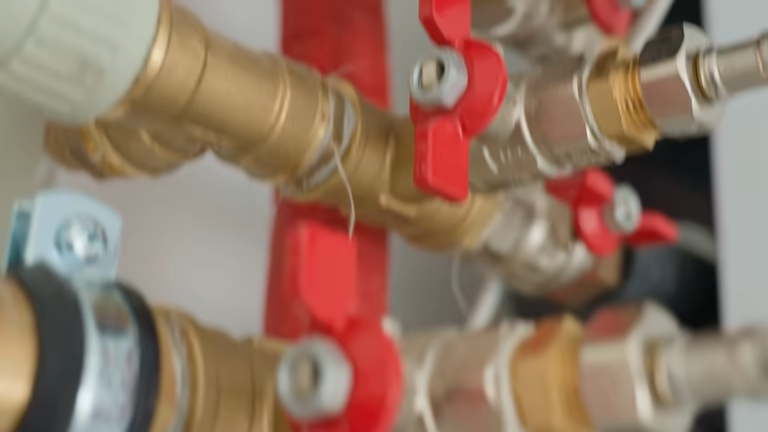
Copper globe valves are essential components in various plumbing and industrial systems, known for their durability, precise flow control, and resistance to corrosion. These valves are a reliable choice for controlling the flow of liquids and gases in residential, commercial, and industrial settings. This article explores everything you need to know about copper globe valves—from their basic definition to installation tips, usage comparisons, and buying advice.
Frequently Asked Questions (FAQ)
Q1: What is a copper globe valve used for?
A: It is mainly used to regulate flow in pipelines, especially where throttling is required.
Q2: Are copper globe valves suitable for hot water systems?
A: Yes, copper’s excellent thermal resistance makes these valves ideal for hot water applications.
Q3: Do copper globe valves prevent backflow?
A: Not directly. Globe valves control flow but are not designed to stop backflow; a check valve is needed for that purpose.
Q4: How long does a copper globe valve typically last?
A: With proper installation and maintenance, they can last for decades due to copper’s corrosion resistance.
Q5: Can copper globe valves be used outdoors?
A: Yes, though it is advisable to use weather-resistant variants or protective covers to extend their lifespan.
Basic Definition and Features of Copper Globe Valves
A copper globe valve is a type of control valve designed to regulate flow in a pipeline. The valve body is usually made of copper or a copper alloy like brass or bronze, which offers high corrosion resistance and thermal conductivity.
Key Features:
- Precision Flow Control: The globe-shaped valve body and linear motion of the plug allow for accurate throttling.
- Durability: Copper and its alloys resist corrosion, scaling, and temperature extremes.
- Ease of Maintenance: These valves often feature a simple design, making them easy to clean and repair.
- Versatile Design: Available in multiple sizes and configurations, they suit various applications.
The valve operates by moving a disc or plug against the flow stream, allowing the user to fine-tune the volume of liquid or gas passing through.
Common Uses and Application Industries
Copper globe valves are used in many settings due to their versatility and reliability. Below are some of the most common application areas:
Residential Applications
- Water supply systems
- Heating systems
- Garden irrigation
- Faucet and sink installations
Commercial Settings
- HVAC systems in hotels and office buildings
- Plumbing in restaurants and commercial kitchens
- Pressure control in water fountains and pools
Industrial Use
- Chemical processing
- Oil and gas flow regulation
- Pharmaceutical and food processing plants
- Fire suppression systems
In each of these sectors, copper globe valves provide reliable, long-lasting performance with minimal maintenance.
Buying Guide: What to Look For
Choosing the right copper globe valve requires attention to several key factors. Below are the most important aspects to consider:
1. Material Composition
Ensure the valve is made from high-quality copper or an appropriate alloy like brass. Check for lead-free certifications if used for potable water.
2. Valve Size
Sizes usually range from 1/2 inch to 2 inches or more. Choose a size compatible with your existing pipeline system.
3. Pressure Rating
Verify the pressure rating, especially for industrial or high-pressure uses. Most residential applications require valves rated around 150–200 psi.
4. Temperature Range
Check the operating temperature limits. Copper valves are generally heat-resistant, but it’s best to confirm the range specified by the manufacturer.
5. Certifications
Look for products certified by standards like NSF, ANSI, or ISO to ensure safety and quality compliance.
6. Color and Finish
While function is more important than form, color-coding or specific finishes may be required for industrial or aesthetic reasons.
7. Brand Reputation
Stick with trusted manufacturers that offer warranties and accessible customer support.
Installation Tips and Best Practices
Proper installation is essential to the performance and longevity of copper globe valves. Here are some tips to ensure a smooth process:
1. Choose the Right Orientation
Install the valve so that the flow direction aligns with the arrow marked on the valve body.
2. Use Proper Tools
Avoid over-tightening, which can damage the valve or threads. Use plumbing tools appropriate for copper fittings.
3. Clean the Pipes
Debris can damage the valve seat or cause leaks. Flush the system before installation.
4. Seal Properly
Use thread seal tape or a suitable sealant for threaded connections. For soldered connections, ensure high-quality, lead-free solder is used.
5. Test After Installation
Once installed, open and close the valve several times under pressure to confirm smooth operation and leak-free connections.
Copper Globe Valves vs Other Valve Materials
When choosing a globe valve, it’s important to consider how copper compares to other common valve materials like stainless steel, plastic (PVC), or cast iron.
| Feature | Copper Globe Valves | Stainless Steel Valves | PVC Valves | Cast Iron Valves |
|---|---|---|---|---|
| Corrosion Resistance | Excellent | Excellent | Moderate (chemical-specific) | Moderate |
| Temperature Tolerance | High | Very High | Low to Moderate | High |
| Weight | Light | Heavy | Very Light | Very Heavy |
| Cost | Moderate | High | Low | Moderate |
| Durability | Long-lasting | Extremely Durable | Less Durable | Durable |
| Installation Ease | Easy | Moderate | Very Easy | Difficult |
Copper valves strike a good balance between performance and ease of installation, especially for residential and medium-duty industrial use.
Conclusion
Copper globe valves remain a reliable, efficient, and cost-effective choice for a wide range of applications. From home plumbing to industrial processing, their durability and excellent flow control make them a top option. When selecting a valve, it’s essential to consider factors like size, pressure rating, and certifications. Proper installation further enhances their lifespan and performance. Compared to other materials, copper offers an ideal middle ground—strong, lightweight, and corrosion-resistant.
Whether you’re a homeowner, plumber, or project manager, copper globe valves deliver reliable results that stand the test of time.
Contact IFAN for Catalogs and Samples
Need technical documents, catalogs, or sample products? Reach out to IFAN today.
📧 Email: [email protected]
📱 Whatsapp: +86 19857948982
Our team responds quickly and provides professional support for all your pipeline needs.
IFAN international standard
IFAN’s HDPE compression fittings and pipes comply with a wide range of international standards, ensuring high performance and global compatibility. These include ASTM D3035 and ASTM D3350 from the United States, ISO 4427 series and EN 12201 series from Europe, DIN 8074/8075 from Germany, GB/T 13663 series from China, AS/NZS 4130 from Australia and New Zealand, JIS K6760 from Japan, BS 6572 from the United Kingdom, and CSA B137.1 from Canada. Adherence to these standards guarantees excellent mechanical properties, chemical resistance, and long-term durability across diverse water supply and industrial applications.























