


Introduction
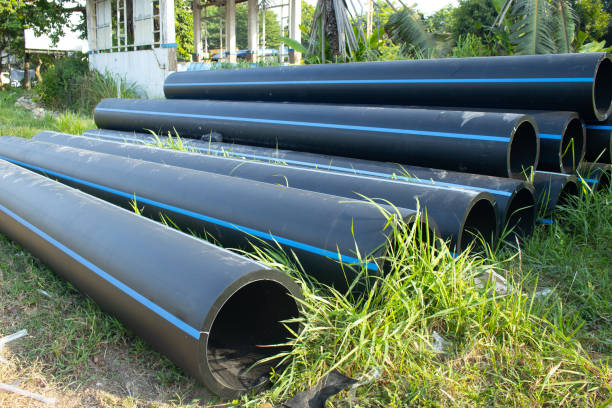
Black HDPE (High-Density Polyethylene) pipe continues to gain popularity in modern piping systems. Engineers, contractors, and facility managers value its performance, flexibility, and durability. Black HDPE pipe offers reliable solutions in water supply, gas distribution, sewage systems, and industrial piping. Its superior physical properties enable it to withstand harsh conditions, resist damage, and deliver long-term service.
This article explores the physical characteristics that define black HDPE pipe. It covers strength, flexibility, temperature resistance, impact durability, and chemical resilience. These features help decision-makers understand why black HDPE pipe remains a preferred choice in infrastructure and industry.
High Tensile Strength
Manufacturers design black HDPE pipe to endure significant tensile forces. This strength allows the pipe to handle pulling forces during installation and operation. In trenchless applications, such as horizontal directional drilling, the pipe resists breakage and stretching. It maintains structural integrity even in long continuous runs.
Field tests and lab analysis confirm its tensile yield strength reaches up to 3,200 psi. Contractors pull HDPE pipe through soil or tight passages without worry. Its high molecular weight and crystalline structure give it this strength. The pipe stretches slightly but returns to its original form without permanent deformation.
Flexibility and Bend Radius
Black HDPE pipe bends easily without cracking. This flexibility enables installations around obstacles and through uneven terrain. Unlike rigid piping materials, HDPE does not need complex joints or fittings to change direction. Contractors reduce installation time and cost by minimizing connectors.
The pipe maintains a minimum bend radius of about 20 to 25 times its outside diameter. For example, a 4-inch HDPE pipe bends around a radius of 80 to 100 inches. This feature proves especially valuable in utility applications such as telecommunications, gas pipelines, and irrigation systems.
Resistance to Impact and Abrasion
HDPE pipe resists damage from physical impact. Workers drop it or strike it during handling, and it rarely cracks or shatters. Its dense structure absorbs energy and distributes force evenly. This property prevents sudden failure and ensures safe transportation and installation.
In applications with abrasive materials, such as slurry or sand-filled water, HDPE pipe performs exceptionally well. Its smooth interior resists surface wear and erosion. It maintains flow efficiency over time and reduces maintenance needs. Municipalities and mining companies often choose HDPE for this reason.
Lightweight and Easy Handling
The low density of black HDPE pipe makes it much lighter than metal or concrete pipes. A worker can carry smaller diameters by hand. Larger diameters require fewer machines or crew members for movement. This lightweight nature speeds up delivery, storage, and assembly.
Its weight-to-strength ratio benefits engineers who design complex networks. They install long lengths with less structural support. HDPE pipe also allows easier lifting into trenches or over uneven surfaces. The installation process requires less fuel and equipment, reducing overall project costs.
Thermal Expansion and Contraction
Temperature changes affect all materials, and HDPE pipe expands and contracts more than metal. This characteristic matters during installation. Engineers must consider this movement and allow space for expansion loops or offsets.
For each 100 feet of pipe, HDPE expands about 1 inch with every 10°F increase in temperature. This rate ensures flexibility in systems that operate in fluctuating environments. Unlike rigid pipes that crack under thermal stress, HDPE accommodates expansion without damage.
In cold weather, HDPE maintains performance without becoming brittle. Workers install it in freezing conditions without risk of breakage. It retains flexibility and toughness even below -40°F, making it ideal for northern climates.
Smooth Interior Surface
The internal surface of black HDPE pipe remains smooth and consistent. This smoothness reduces friction loss and improves flow efficiency. Water, gas, or slurry moves through the pipe with less turbulence and lower pumping energy.
The pipe resists internal scaling and sediment buildup. It does not react with minerals or organic matter, and it maintains its bore size over time. These properties improve system longevity and reduce cleaning and repair needs.
In gravity-fed systems, the low friction factor helps maintain a steady flow. Engineers take advantage of this feature in drainage, stormwater, and wastewater designs. Fluid dynamics studies show HDPE performs better than rough-surfaced materials like concrete or cast iron.
Resistance to Corrosion and Chemicals
HDPE pipe does not corrode. It resists chemical attack from acids, bases, salts, and organic substances. Its molecular structure blocks reactions that affect metal or concrete pipes. As a result, black HDPE pipe provides long-term performance in aggressive environments.
Chemical processing plants, agricultural operations, and landfills often choose HDPE pipe. The pipe withstands exposure to fertilizers, wastewater, and industrial effluents. It continues to operate without degradation or leaks.
Engineers consider pH, temperature, and chemical concentration when selecting pipe materials. HDPE meets the requirements of many harsh applications. Its long service life and resistance to internal and external attack save time and money.
UV Resistance with Black Carbon Additive
Manufacturers add carbon black to HDPE pipe to protect it from ultraviolet (UV) rays. This black additive absorbs UV light and prevents molecular breakdown. The pipe resists surface degradation, chalking, or cracking caused by sunlight.
Outdoor installations benefit from this protection. Water lines, irrigation systems, and gas mains remain exposed to sunlight for decades. Black HDPE maintains performance without the need for protective coatings or insulation.
In remote areas where shielding or burying the pipe proves difficult, black HDPE pipe endures weather and light exposure without fail. The carbon black content, usually around 2%, ensures full UV stability.
Excellent Fatigue Resistance
HDPE pipe endures repeated stress cycles without failure. Pressure surges, vibrations, or water hammer effects cause little or no damage. The pipe absorbs and redistributes energy across its structure. It flexes rather than cracks, even after years of pulsing flow.
This fatigue resistance sets HDPE apart from other plastic materials. It handles both constant and variable pressure with ease. Water utilities and gas companies rely on this feature to ensure system reliability under fluctuating conditions.
Designers can reduce safety margins because HDPE tolerates dynamic loads better than many rigid pipes. This resilience reduces repair rates and service interruptions.
Leak-Free Fusion Joints
HDPE pipe enables thermal fusion joining. Technicians apply heat to the pipe ends and press them together, forming a uniform, leak-free joint. The joint becomes as strong as or stronger than the pipe itself.
This seamless connection method eliminates the need for gaskets, glue, or mechanical clamps. It prevents joint failure, which often represents the weakest point in other piping systems. HDPE fusion joints block leaks, reduce maintenance, and increase reliability.
Contractors fuse long segments in the field, creating continuous runs of several hundred feet. This technique improves installation speed and reduces risk in buried or underwater pipelines.
Pressure Ratings and Performance
Black HDPE pipe offers various pressure ratings based on wall thickness and pipe diameter. Engineers use the Standard Dimension Ratio (SDR) to determine pressure capacity. Lower SDR values indicate thicker walls and higher pressure resistance.
Common ratings include:
- SDR 17 for moderate-pressure water or gas lines
- SDR 11 for high-pressure applications
- SDR 9 or 7 for specialty systems requiring extra strength
These ratings give engineers flexibility when designing pipelines. They select the appropriate SDR for the application and ensure long-term safety.
Dimensional Stability
HDPE pipe maintains shape and dimensions under normal operating conditions. Its low creep rate ensures long-term load-bearing capacity. This dimensional stability allows for tight-fitting connections and accurate alignment in complex systems.
It does not shrink, warp, or deform under soil load or water pressure. Its stability supports precise engineering and system predictability. Contractors install the pipe with confidence, knowing it will retain its performance characteristics over decades.
Compatibility with Fittings and Accessories
HDPE pipe matches a wide range of fittings, valves, and accessories. Manufacturers provide fusion-compatible elbows, tees, and flanges. These components offer the same physical properties as the pipe, ensuring uniform strength and performance.
Installers use electrofusion, butt fusion, or mechanical couplings based on project needs. The pipe joins easily with equipment available on most job sites. This compatibility streamlines project planning and reduces procurement challenges.
Environmental Durability
Black HDPE pipe performs in diverse environmental conditions. It resists damage from soil chemicals, groundwater, root intrusion, and seismic movement. The pipe stays intact in shifting soils or freeze-thaw cycles.
Contractors install it in deserts, forests, urban settings, or underwater environments. The pipe adapts to each condition and continues to deliver clean water or gas safely.
HDPE’s environmental resistance minimizes future excavation or repair. Project owners save on operating and maintenance costs while protecting public health and infrastructure.
Recyclability and Sustainability
Manufacturers produce HDPE pipe from recyclable materials. Contractors often reuse cut sections or leftover pipe. When the system reaches the end of its life, recyclers convert HDPE into new piping products or other plastic goods.
This recyclability supports green construction goals. Municipalities and businesses lower their environmental footprint by choosing HDPE. The pipe’s long life and minimal failure rate further reduce waste and resource use.
Conclusion
Black HDPE pipe delivers outstanding physical properties for modern infrastructure. Its tensile strength, flexibility, impact resistance, and chemical stability outperform many traditional materials. Engineers and contractors use it in water, gas, sewer, and industrial systems with confidence.
The pipe resists UV exposure, extreme temperatures, and mechanical stress. It bends without breaking, joins without leaks, and endures for decades. Its lightweight design simplifies installation and lowers costs.
Black HDPE pipe continues to shape the future of piping systems. Its physical characteristics offer safety, reliability, and sustainability in every project.
IFAN international standard
IFAN’s HDPE compression fittings and pipes comply with a wide range of international standards, ensuring high performance and global compatibility. These include ASTM D3035 and ASTM D3350 from the United States, ISO 4427 series and EN 12201 series from Europe, DIN 8074/8075 from Germany, GB/T 13663 series from China, AS/NZS 4130 from Australia and New Zealand, JIS K6760 from Japan, BS 6572 from the United Kingdom, and CSA B137.1 from Canada. Adherence to these standards guarantees excellent mechanical properties, chemical resistance, and long-term durability across diverse water supply and industrial applications.
Contact
IFAN is a professional manufacturer with of experience, dedicated to producing high-quality plastic pipes, fittings, and valves. Our products include brass valves, PPR valves, as well as various pipes and fittings to meet different customer needs. Whether you need plumbing and drainage pipes or valve products, IFAN can provide a diverse range of high-quality, cost-effective products to support your projects. Below is our contact information.
We will reply your email or fax within 24 hours.
You can call us at any time if there is any question on our production.
For more information,pls visit our webside https://www.ifanplus.com/
Pls Mailto: [email protected]
Whatsapp: + 86 19857948982























