


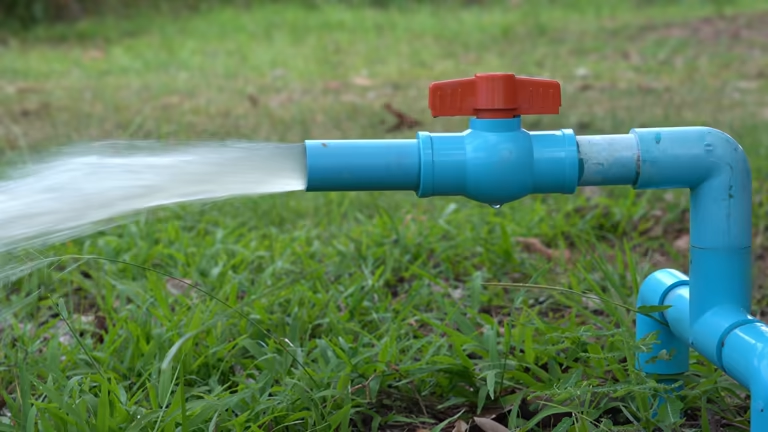
In the design of any plumbing or fluid handling system, reliability and longevity are key priorities. When components fail prematurely, the entire system suffers from increased maintenance costs, downtime, and even safety risks. Among the many options available, CPVC (chlorinated polyvinyl chloride) valves stand out for their exceptional durability. Known for their long service life, CPVC valves have become a preferred choice in various industries and residential systems.
This article explores why CPVC valves last so long, what makes them superior in durability, and how their longevity contributes to cost efficiency and system reliability.
Understanding the Longevity of CPVC Valves
The long service life of CPVC valves is not a coincidence. It is the result of careful material engineering, manufacturing standards, and chemical properties that provide superior resistance to common stress factors.
CPVC as a material is inherently tough and resistant to a range of mechanical, thermal, and chemical stresses. Unlike metal or standard plastic valves, CPVC valves maintain structural integrity and operational efficiency for decades.
High Resistance to Corrosion
One of the most significant contributors to CPVC valves’ long service life is their resistance to corrosion. In many systems, corrosion is a silent destroyer that weakens components from within. Metallic valves, in particular, suffer from rust and degradation when exposed to moisture, chemicals, or harsh environments.
In contrast, CPVC is naturally resistant to both internal and external corrosion. It does not react with water, acids, salts, or most chemicals found in industrial and residential systems. As a result, CPVC valves do not suffer from pitting, scaling, or rusting, which often shortens the lifespan of other materials.
Chemical Compatibility Enhances Durability
Chemical exposure is another factor that greatly impacts valve lifespan. In chemical processing facilities, laboratories, and even water treatment plants, valves are constantly exposed to aggressive substances.
CPVC offers a wide chemical compatibility range. It resists damage from a variety of acids, bases, salts, and other aggressive solutions. This chemical stability means CPVC valves can perform continuously for many years without structural degradation or material fatigue.
Furthermore, since chemical attack is one of the primary reasons for early valve failure, this resistance greatly extends the service life of CPVC valves in demanding environments.
UV and Weather Resistance for Outdoor Use
CPVC valves also perform well outdoors. While many plastics degrade under sunlight due to UV exposure, CPVC has inherent UV resistance. In addition, manufacturers often apply UV stabilizers during production to improve longevity in exterior installations.
Whether installed in rooftop HVAC systems or outdoor irrigation networks, CPVC valves resist sunlight, rain, wind, and fluctuating temperatures. This allows them to function reliably in both indoor and outdoor environments over extended periods.
Resistance to Scaling and Biofilm
Another factor contributing to CPVC valves’ long life is their resistance to scale buildup and biofilm formation. In water systems, especially those with hard water or organic materials, scaling can clog valves and restrict flow.
CPVC has a smooth internal surface that prevents mineral deposits from adhering easily. It also discourages the growth of bacteria and fungi. By minimizing internal buildup, CPVC valves preserve flow capacity and avoid premature blockages that can shorten operational lifespan.
Excellent Thermal Stability
Temperature fluctuations can stress many materials, causing expansion, contraction, and eventual cracking. However, CPVC offers excellent thermal stability across a wide temperature range.
CPVC valves are often rated for continuous use up to 200°F (93°C). Even when exposed to elevated temperatures over time, they maintain their structural integrity. Unlike other plastics, CPVC does not soften or deform easily under heat. This contributes significantly to its long-term durability in hot water systems and industrial applications.
Low Maintenance Requirements
One of the most attractive features of CPVC valves is their low maintenance. Unlike metal valves that require regular lubrication, painting, or inspection for rust, CPVC valves remain stable with minimal attention.
Their resistance to chemical attack, scaling, and corrosion means that CPVC valves rarely need servicing. They do not jam, degrade, or lose performance over time. This low maintenance translates directly to longer service life and lower total cost of ownership.
Mechanical Strength and Pressure Tolerance
CPVC valves are designed to handle moderate to high-pressure systems. Their mechanical strength allows them to resist deformation, cracking, and failure under sustained load. This is especially important in applications where valves experience frequent cycling, water hammer, or high flow rates.
Because of their structural reliability, CPVC valves continue performing even under repeated stress, extending their functional lifespan. Moreover, the consistent strength of CPVC ensures predictable performance over many years of use.
Long-Term Testing and Certification
The long life of CPVC valves is not just theoretical. Manufacturers conduct extensive testing to ensure product durability. CPVC valves are subject to pressure cycling, thermal shock, aging tests, and chemical exposure analysis.
In fact, many CPVC valve products are certified for use in systems with a projected lifespan of or more. These tests simulate decades of operation, validating the long-term performance customers can expect.
Standards organizations such as ASTM, NSF, and ISO recognize CPVC materials for use in critical systems due to their long-term stability. This gives engineers and designers confidence in choosing CPVC for installations that must stand the test of time.
Real-World Performance in Diverse Applications
CPVC valves have been installed in real-world systems for more than 40 years. Their performance in a wide range of industries has proven their long service life.
In residential plumbing, CPVC valves handle hot and cold water distribution with little sign of aging. In industrial plants, they control the flow of aggressive chemicals year after year. In agriculture and irrigation, they endure sun, rain, and pressure cycles without failure.
Case studies across the globe show CPVC valves remaining in service for decades with no reduction in performance. This real-world longevity underscores the trust users place in CPVC technology.
Comparison with Other Valve Materials
When evaluating valve options, it’s helpful to compare CPVC with other commonly used materials.
Metal valves, while strong, often corrode, especially in aggressive environments. This corrosion leads to reduced flow, leakage, and eventual failure. Even stainless steel, while more corrosion-resistant, can suffer under certain chemical exposures and comes at a much higher cost.
PVC valves are cheaper but less resistant to heat and pressure. They are more likely to deform or crack over time in demanding systems.
Polypropylene and polyethylene valves resist chemicals but may not handle high temperatures or pressures as effectively as CPVC.
In contrast, CPVC provides a balanced performance profile: resistant to heat, pressure, and chemicals, with no risk of rust and little maintenance required. This makes it a leading choice for long-life applications.
Economic Advantages of Long Service Life
The long service life of CPVC valves has important financial implications. While the initial cost of a CPVC valve might be similar to or slightly higher than PVC or low-grade metal alternatives, the total lifetime cost is much lower.
Reduced maintenance, fewer replacements, and minimized system downtime lead to substantial savings over the valve’s operational life. For facility managers, engineers, and homeowners alike, this long-term value makes CPVC valves an economical and dependable investment.
Sustainability Benefits
Long-lasting valves contribute to sustainability. Fewer replacements mean less material waste. Reduced maintenance means lower resource consumption. And reliable performance helps prevent leaks, spills, and contamination.
CPVC valves also support energy-efficient system operation by maintaining flow rates and avoiding pressure losses caused by blockages or corrosion. Their environmental footprint is lower than many alternatives over the system’s full lifecycle.
Applications That Benefit from Long Valve Life
Many sectors choose CPVC valves specifically because of their extended service life. These include:
- Commercial and residential plumbing
- Water treatment plants
- Industrial chemical transport systems
- Cooling towers and HVAC loops
- Food and beverage processing
- Pharmaceutical production
- Agricultural irrigation systems
- Fire suppression systems
Each of these applications demands consistent valve performance over many years. CPVC valves meet those demands reliably, helping keep operations running smoothly without frequent interventions.
Conclusion: CPVC Valves Are Built to Last
In conclusion, CPVC valves deliver exceptional longevity across a variety of fluid handling systems. Their resistance to corrosion, chemicals, temperature, and pressure gives them a distinct advantage over competing materials.
Because they require little maintenance and maintain their performance for decades, CPVC valves are a smart investment for anyone seeking durability, safety, and cost-effectiveness.
Whether used in home plumbing or industrial pipelines, CPVC valves provide dependable flow control that stands the test of time. For systems designed with long-term performance in mind, there is no better choice than CPVC.
IFAN international standard
IFAN products comply with a wide range of international standards, ensuring quality and reliability across different markets. These standards include ASTM D2846, DIN 8079/8080, ASTM F441/F441M SCH80, various DIN specifications, the GB/T 18993 Series standards, AS/NZS 1477, CSA B137.6, NSF/ANSI 14, and TIS 17-2532/1131-2535. This broad compliance demonstrates IFAN’s commitment to meeting global requirements and delivering products that meet the strictest performance and safety criteria.
Contact
IFAN is a professional manufacturer with of experience, dedicated to producing high-quality plastic pipes, fittings, and valves. Our products include brass valves, PPR valves, as well as various pipes and fittings to meet different customer needs. Whether you need plumbing and drainage pipes or valve products, IFAN can provide a diverse range of high-quality, cost-effective products to support your projects. Below is our contact information.
We will reply your email or fax within 24 hours.
You can call us at any time if there is any question on our production.
For more information,pls visit our webside https://www.ifanplus.com/
Pls Mailto: [email protected]
Whatsapp: + 86 19857948982























