


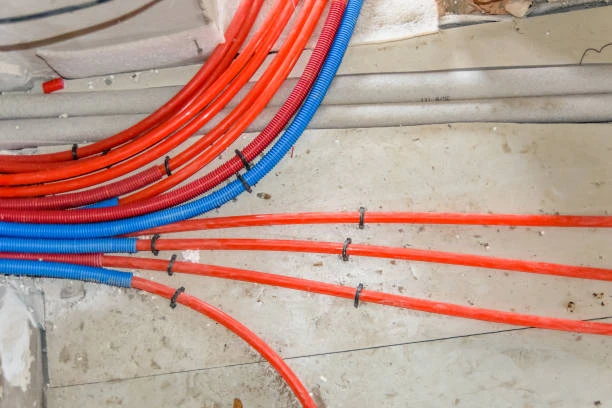
In today’s plumbing and heating industries, durability and reliability remain top priorities. Among the many types of piping materials available, plastic PEX pipe has gained widespread popularity. This preference does not stem from one quality alone. Rather, it results from a combination of attributes—flexibility, thermal resistance, cost-effectiveness, and most importantly, impact resistance.
Understanding the impact resistance of plastic PEX pipe is essential for both professionals and consumers. Piping systems frequently encounter accidental impacts during transportation, storage, and installation. Even after being placed behind walls or under floors, pipes may suffer from vibrations or construction-related collisions. In these situations, a pipe’s ability to withstand sudden physical shocks becomes vital.
Therefore, in this article, we will explore how plastic PEX pipe performs under impact. We will also compare it with other common piping materials, investigate the science behind its resilience, and offer guidance on best-use practices. Step by step, we will uncover why plastic PEX pipe is more than just convenient—it is built for strength.
What Does Impact Resistance Mean in Piping?
Impact resistance refers to a material’s ability to withstand sudden force or shock without cracking, breaking, or deforming. In plumbing systems, this characteristic plays a crucial role in maintaining long-term system integrity. Pipes with low impact resistance are more likely to fracture under stress, especially in low-temperature environments.
For instance, dropping a pipe from a certain height, hitting it with a heavy object, or accidentally stepping on it during construction could cause significant damage. If a pipe cracks, leaks may follow—resulting in costly repairs and water damage.
Clearly, avoiding such failures is essential. Hence, choosing a material like PEX, which can absorb impact energy and return to its original form, brings peace of mind to installers and homeowners alike.
The Composition of Plastic PEX Pipe
To appreciate its impact resistance, one must first understand the structure of PEX. PEX stands for cross-linked polyethylene. Manufacturers take polyethylene—a common plastic—and chemically or physically bond its molecular chains together. This process, known as cross-linking, changes the material’s internal structure.
As a result, the finished product becomes stronger and more flexible than regular polyethylene. This enhanced structure improves the material’s toughness, meaning it can absorb more energy before breaking. Thus, cross-linking transforms a soft thermoplastic into a resilient, semi-rigid piping solution.
PEX pipes typically come in three varieties: PEX-A, PEX-B, and PEX-C. Though each type offers good impact resistance, PEX-A provides the highest performance due to its more uniform molecular structure. Nevertheless, all three types are well-suited to applications where durability is essential.
How PEX Performs Under Physical Shock
Now, let us delve deeper into how plastic PEX pipe responds to physical shock.
When an external force strikes the pipe, its molecular network reacts by distributing the energy across a wider area. Instead of localizing the impact—which would create cracks or breaks—the material flexes slightly. This behavior allows it to absorb and dissipate energy without permanent deformation.
Additionally, PEX pipes perform exceptionally well in cold temperatures. Other plastics may become brittle as temperatures drop, increasing the risk of cracks during handling or installation. However, PEX maintains its elasticity even in sub-zero conditions. Therefore, contractors can install PEX confidently in both warm and freezing climates.
Moreover, PEX’s resistance to impact continues after installation. Pipes hidden inside walls or embedded in floors still face risks—such as hammering, drilling, or shifting building structures. Fortunately, PEX can withstand minor strikes and vibrations without failure.
Testing and Standards for Impact Resistance
Impact resistance is not just a marketing term. Independent testing bodies assess this property using strict protocols. For PEX pipes, several international standards help validate durability.
For example, ASTM F876 and ASTM F877 cover specifications and performance requirements for PEX piping systems. These standards include impact resistance tests conducted at varying temperatures. Pipes must pass tests involving falling weights and impact hammers without fracturing.
Additionally, the ISO 15875 standard governs impact performance on a global scale. Pipes that meet these benchmarks offer dependable performance in both residential and commercial applications. Therefore, certified PEX products come with a level of assurance that they have undergone rigorous evaluation.
Comparing PEX with Other Pipe Materials
To truly appreciate the impact resistance of plastic PEX pipe, let’s compare it to other widely used materials.
Copper Pipe
Copper has long served as a reliable piping material. However, it suffers from a major drawback—low tolerance to mechanical shock. While copper offers strength in terms of pressure and temperature, it dents easily. A dropped tool or heavy impact can damage it. Dents reduce internal flow, and sharp strikes may even cause cracks.
Furthermore, copper becomes brittle in cold conditions. If exposed to freezing temperatures, it may split when impacted. PEX, on the other hand, retains flexibility even when frozen. Consequently, PEX offers a clear advantage in cold-climate durability.
PVC and CPVC Pipe
PVC and CPVC are rigid plastic materials often used in drainage or hot water systems. Although affordable and lightweight, they show poor performance under impact. When hit hard, especially in low temperatures, they shatter easily. Even a slight mishap on a cold morning can render a PVC pipe useless.
By contrast, PEX bends and flexes instead of breaking. It accommodates more abuse during handling, transportation, and installation. This quality reduces waste and replacement costs on the job site.
Galvanized Steel
Steel pipes handle impact better than brittle plastics, but they are heavy and difficult to work with. When impacted, they may not break, but they can shift joints, loosen fittings, or corrode. Installing and modifying steel systems takes significant effort.
PEX, in contrast, provides an excellent balance. It delivers reliable impact resistance while remaining easy to transport and install.
Field Applications That Demand Impact Resistance
Plastic PEX pipe finds use in a wide variety of installations, many of which involve frequent handling and physical stress.
Residential Construction
In new home construction, job sites often present harsh conditions. Workers carry tools and materials across piping runs. Equipment may fall or get dropped. In such situations, a pipe that resists impact helps prevent delays and avoids costly repairs.
Moreover, when threading PEX through wall studs or floors, friction and tension introduce additional mechanical strain. Because PEX resists cracks, installers can work quickly without worrying about damaging the pipe.
Renovation Projects
Older buildings present unique challenges. Contractors must retrofit new plumbing systems into tight spaces. Walls may hide old nails or debris. In some cases, installers must reroute pipes through rough framing or around corners.
PEX’s flexibility and toughness make it ideal for these situations. It allows easier pulling, bending, and feeding through complex layouts—without breaking under stress.
Commercial Buildings
Hotels, hospitals, and offices rely on reliable plumbing. Their systems run constantly, often under high usage. Mechanical rooms, crawl spaces, and ceiling voids house a maze of pipes and equipment. In these environments, accidental knocks and tools striking pipes are common.
With PEX, building managers enjoy confidence. The pipe can handle most physical contact without bursting or leaking, maintaining uninterrupted service for occupants.
Outdoor and Underground Applications
PEX also performs well in underground installations. Landscapers and contractors frequently install it in trenchless runs, outdoor radiant heating, or agricultural irrigation. During backfilling, rocks and tools may strike the pipe.
Thankfully, PEX’s impact resistance protects against punctures. It also tolerates slight ground movements, avoiding damage from soil shifts or frost heaves.
Enhancing System Longevity Through Impact Resistance
Long-term reliability depends not only on material composition but also on how a pipe handles stress. Every plumbing system will face some form of mechanical shock during its life. Whether it comes from installation, maintenance, or building movement, the pipe must remain strong.
PEX delivers this strength naturally. Since it does not crack easily, systems built with PEX experience fewer leaks and require fewer repairs. Over time, this durability leads to lower maintenance costs and less downtime.
Additionally, the pipe’s ability to flex under stress reduces the strain on fittings and joints. By distributing forces more evenly, PEX helps preserve the integrity of the entire system.
Installation Best Practices for Maximum Protection
To make the most of PEX’s impact resistance, installers should follow a few important guidelines:
- Use smooth-edged tools to avoid scoring the pipe
- Protect exposed areas with insulation or sleeves if impact risk remains high
- Avoid over-tightening metal fasteners directly against the pipe
- Store pipe in clean, dry locations away from heavy tools or vehicles
By observing these simple practices, installers ensure that the pipe retains its maximum strength throughout the project.
A Future-Proof Choice
As building codes evolve and demand for durable materials increases, plastic PEX pipe continues to meet and exceed expectations. Its impact resistance contributes significantly to its overall reputation. More and more builders, engineers, and homeowners trust it for long-term plumbing performance.
Its unique combination of flexibility and toughness makes PEX a compelling choice—not just for today, but for the decades to come.
Conclusion: Strength That Lasts
In conclusion, the impact resistance of plastic PEX pipe offers a decisive advantage in modern plumbing. From rough job sites to long-term operation, PEX withstands physical stress with ease. It bends under force rather than breaking, endures harsh climates without becoming brittle, and surpasses traditional materials in durability.
Because of these qualities, PEX reduces breakage, minimizes waste, and enhances system reliability. Installers appreciate its toughness, while users enjoy years of trouble-free service.
Ultimately, when choosing a pipe that must survive impact and endure time, plastic PEX pipe stands out as the smart, strong, and sustainable choice.
IFAN international standard
IFAN products comply with various internationally recognized standards to ensure quality and reliability. These standards include ISO 15875, GB/T 18992, DIN 16892, ASTM F877, ASTM F2788, BS 7291, BS EN ISO 15875, and CSA B137. Adherence to these certifications demonstrates IFAN’s commitment to meeting global requirements for performance, safety, and durability in piping systems.
Contact
IFAN is a professional manufacturer with of experience, dedicated to producing high-quality plastic pipes, fittings, and valves. Our products include brass valves, PPR valves, as well as various pipes and fittings to meet different customer needs. Whether you need plumbing and drainage pipes or valve products, IFAN can provide a diverse range of high-quality, cost-effective products to support your projects. Below is our contact information.
We will reply your email or fax within 24 hours.
You can call us at any time if there is any question on our production.
For more information,pls visit our webside https://www.ifanplus.com/
Pls Mailto: [email protected]
Whatsapp: + 86 19857948982























