


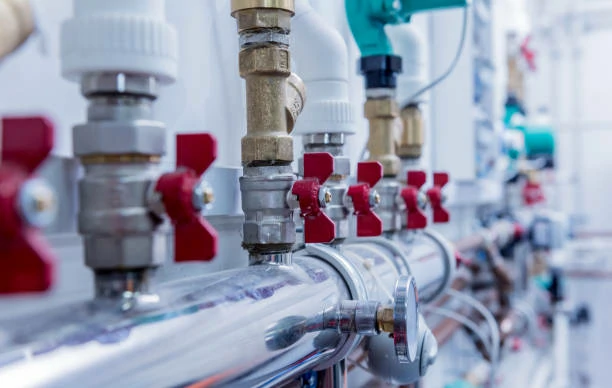
1. Introduction to Non-Return Valves
Non-return valve, also known as check valves, prevent the backward flow of liquids or gases in a system. They allow flow in one direction and automatically close to stop reverse flow. These valves are essential in many industries, including plumbing, HVAC, and water treatment. Non-return valves protect equipment and maintain system efficiency. Without them, pressure surges or backflows could cause significant damage. Understanding how they work helps in proper installation and maintenance.
2. Key Functions of a Non-Return Valve
The primary function of a non-return valve is to prevent reverse flow. In systems where fluid should only travel in one direction, backflow could lead to contamination or system failure. For example, in water supply systems, reverse flow could introduce dirty water into clean lines. Non-return valves prevent this by automatically closing when the flow reverses. They maintain system integrity by ensuring that the fluid travels in the intended direction, protecting both equipment and users.
3. Types of Non-Return Valves
There are several types of non-return valves, each suitable for different applications.
Swing Check Valve
The swing check valve has a hinged disc that swings to open with forward flow and closes against backflow.
Ball Check Valve
The ball check valve uses a ball that moves within a seat to allow one-way flow.
Lift Check Valve
The lift check valve has a disc that moves vertically to open or close.
Each valve type has its advantages and is chosen based on the system’s pressure, flow rate, and space constraints.
4. Applications in Plumbing Systems
In plumbing, non-return valves are crucial for preventing wastewater backflow into clean water supplies. In household systems, they are installed in toilets, washing machines, and dishwashers to prevent contamination. They also protect pumps and other critical components from damage caused by reverse pressure. Non-return valves ensure that the water flow remains steady and uncontaminated, even during pressure fluctuations. In sewer systems, they prevent sewage from flowing back into homes during heavy rains or system blockages.
5. Role in Industrial Systems
In industrial systems, non-return valves are often used to protect pumps, compressors, and other machinery from backpressure. They ensure that systems like heating, ventilation, and air conditioning (HVAC) operate smoothly. In industries such as oil and gas, non-return valves prevent dangerous backflow, which could compromise safety. These valves are often integrated into systems that handle pressurized gases or fluids, ensuring that the system’s integrity is maintained even under extreme conditions.
6. Non-Return Valves in Water Treatment
Water treatment plants rely heavily on non-return valves to ensure clean water flows in the right direction. These valves prevent treated water from flowing back into the contaminated supply. They are also used in backwash systems, which clean filters by reversing flow. By preventing reverse flow, non-return valves ensure that harmful substances are kept away from clean water sources. In addition, they help maintain pressure and flow consistency in the treatment process.
7. Advantages of Using Non-Return Valves
Non-return valves offer several advantages, including protecting against contamination, maintaining system efficiency, and preventing damage to expensive equipment. By allowing flow in one direction, they reduce the risk of backflow-related issues such as system contamination, pressure fluctuations, and equipment failure. They are simple to install and maintain, offering long-term reliability. Their low cost and ease of use make them an ideal choice for many applications, from residential plumbing to large industrial systems.
8. Conclusion: Ensuring System Protection with Non-Return Valves
Non-return valves are crucial for maintaining the safety, efficiency, and integrity of many systems. By preventing reverse flow, they protect systems from contamination, equipment damage, and pressure fluctuations. Their simplicity and effectiveness make them indispensable in both residential and industrial applications. Proper installation and maintenance of non-return valves ensure that systems remain functional and reliable for years. Understanding their importance helps users make informed decisions about their use and care.
IFAN Product Standards Overview
IFAN manufactures products in full compliance with international and regional standards to meet diverse market requirements. Our product range adheres to specifications such as ISO 15874, EN 15874, ASTM F2389, DIN 8077/8078, GB/T 18742, and NBR 15884 for PPR systems. We also follow ISO 15494, EN ISO 15494, GB/T 19472, and NBR 15494 for industrial piping applications. Standards like ASTM D1785 SCH40/SCH80, DIN 8061/8062, ISO 1452, AS/NZS 1477, and NSF/ANSI 14 apply to our PVC systems. For HDPE and gas pipes, we comply with ISO 4437, EN 12201, ASTM D2513, ASTM D3035, and GB/T 13663. Stainless steel and composite piping products meet ASTM A312, ISO 10380, ASTM F1974, and ISO 21003. Other supported standards include CSA B137, BS 7291, JIS K6741, and TIS 17-2532/1131-2535. IFAN ensures reliable quality and compatibility by meeting these globally recognized specifications.
Contact
IFAN is a professional manufacturer with of experience, dedicated to producing high-quality plastic pipes, fittings, and valves. Our products include brass valves, PPR valves, as well as various pipes and fittings to meet different customer needs. Whether you need plumbing and drainage pipes or valve products, IFAN can provide a diverse range of high-quality, cost-effective products to support your projects. Below is our contact information.
We will reply your email or fax within 24 hours.
You can call us at any time if there is any question on our production.
For more information,pls visit our webside https://www.ifanplus.com/
Pls Mailto: [email protected]
Whatsapp: + 86 19857948982























