


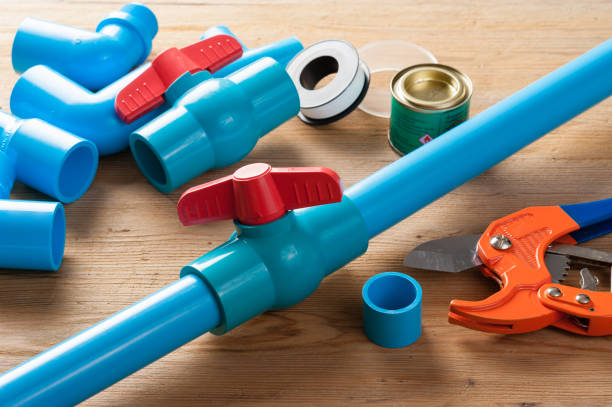
1. Basic Definition and Overall Summary
A pvc water pipe supports efficient distribution systems for many types of water networks. It delivers water smoothly and protects the flow from contamination or leakage. The pipe structure uses polyvinyl chloride, a strong and lightweight material. This combination creates a dependable product that supports long-distance distribution.
A pvc water pipe performs well in many environments, including residential zones, industrial areas, and agricultural fields. The smooth inner surface reduces friction and supports stable pressure. Installers appreciate the easy handling and fast cutting process.
The pipe also resists corrosion, weather influence, and chemical contact. This reduces long-term maintenance and lowers system costs. A pvc water pipe suits many modern distribution projects that require safe, clean, and consistent water delivery. Its versatility and low cost make it a preferred choice for contractors and distributors.
2. FAQ – Five Common Questions
Q1: Does PVC support large-scale water distribution?
Yes. A pvc water pipe supports both small and large distribution networks because it handles pressure well.
Q2: Can PVC be used for drinking water distribution?
Yes. A pvc water pipe meets standard safety requirements when it comes from certified factories.
Q3: Is PVC easy to transport to job sites?
Yes. A pvc water pipe weighs very little and reduces transport cost and storage difficulty.
Q4: Can PVC resist soil and moisture during distribution?
Yes. A pvc water pipe resists soil pressure and moisture exposure in underground systems.
Q5: Does PVC support long-term distribution systems?
Yes. A pvc water pipe functions well over long periods and keeps water flow stable.
3. Industries That Rely on PVC Water Pipes
Many industries depend on a pvc water pipe for stable distribution networks. Municipal water departments use PVC for wide distribution grids that deliver water to homes and businesses.
Agricultural farms use PVC to transport water to fields, orchards, and irrigation zones. The pipe supports large volumes and stays functional in various soil types.
Industrial plants rely on a pvc water pipe for internal distribution systems that supply cooling water, process water, or drainage flow.
Commercial facilities, such as hotels and shopping centers, use PVC for internal and external distribution lines. Its quiet flow and stable performance improve building operation.
4. Installation Guidelines
A correct installation ensures a long service life for any pvc water pipe used in distribution. Installers must cut the pipe cleanly with proper tools. The ends must stay smooth and free of cracks.
All joints must stay dry and clean before applying solvent cement. Accurate measurement prevents misalignment and prevents unnecessary pressure loss.
Installers must support the pipe at regular intervals to reduce bending stress. Underground installation must follow soil compaction rules to avoid pipe displacement.
Pressure testing after installation confirms the stability of the distribution system and ensures safety before full operation.
🔥 Big Store Bulk Purchase Event – Special Insertion
We welcome contractors, wholesalers, and distribution companies to join our bulk purchase event for large pvc water pipe orders.
You can visit our warehouse at 2249 Levy Court, SEATTLE, Washington. We offer strong stock, fast pickup, and helpful support for large project needs.
5. Comparison with Other Pipe Materials
A pvc water pipe offers clear advantages when compared with metal pipes. It does not corrode, rust, or react with minerals. These features increase distribution reliability.
Compared with PPR pipes, PVC installs faster because it uses solvent cement instead of heat fusion. PPR fits hot water better, but PVC works well for cold water distribution.
Compared with PE pipes, PVC offers higher rigidity and supports stable underground routes. PE bends more easily and suits flexible applications.
PVC also costs less and delivers consistent performance across many climates.
6. News in the Pipe Manufacturing Industry
Manufacturers continue to upgrade production methods for pvc pipe systems. Many factories now use advanced extrusion technology to improve wall strength and uniformity.
Some production plants introduce recyclable additives and cleaner stabilizers to support environmental goals.
New testing systems check pipe thickness, pressure rating, and impact resistance with improved accuracy. This ensures higher reliability in distribution projects.
Market demand for pvc water pipe continues to rise due to rapid expansion in agriculture, municipal upgrades, and commercial construction.
7. Conclusion
A pvc water pipe supports efficient distribution systems with strong durability and simple installation. Its lightweight structure, corrosion resistance, and stable flow make it a top choice for many industries.
With correct installation and proper design, PVC ensures long-term reliability in both small and large distribution networks.
As technology improves, the continues to play an important role in modern water supply systems around the world.
Contact IFAN for Catalogs and Samples
Need technical documents, catalogs, or sample products? Reach out to IFAN today.
📧 Email: [email protected]
📱 Whatsapp: +86 19857948982
Our team responds quickly and provides professional support for all your pipeline needs.
IFAN international standard
IFAN piping systems comply with a wide range of international standards to ensure high quality and performance. These include ASTM F1974 and ASTM F1281 for multilayer piping systems, CSA B137 for Canadian plumbing applications, DIN 16836 for German technical specifications, GB18997 for Chinese standards, and ISO 21003, which covers multilayer piping systems used for hot and cold water installations. This broad certification scope highlights IFAN’s commitment to global compliance and product reliability.























