


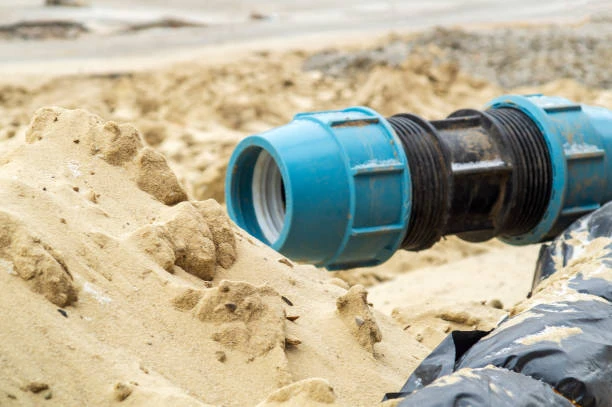
HDPE floating pipes serve a wide range of industries that require durable, flexible, and corrosion-resistant piping systems in water-based environments. Their lightweight structure, high strength, and excellent chemical resistance make them ideal for applications such as dredging, mining, aquaculture, marine construction, and wastewater management. Operators choose HDPE floating pipes for their ability to withstand harsh conditions while maintaining performance and longevity.
Dredging and Reclamation
Dredging operations depend on HDPE floating pipes to transport dredged materials from excavation sites to disposal areas. These pipes handle large volumes of sand, silt, and slurry while floating on water surfaces. Their flexibility allows them to adapt to changing water levels and environmental conditions.
Contractors use HDPE floating pipes in land reclamation projects where sand or soil needs to be transported to new locations. These pipes connect dredging equipment to pumping stations, enabling the movement of materials over long distances. The abrasion-resistant inner surface prevents wear, ensuring smooth and efficient transport.
Mining and Slurry Transport
Mining operations require reliable pipelines for transporting mineral-rich slurries from extraction sites to processing plants. HDPE floating pipes handle high-pressure flows of water, mud, and minerals without corrosion or leakage. Their lightweight design allows for easy transportation and installation in remote locations.
In open-pit mining, floating pipes provide an efficient method for moving extracted materials from underwater excavation sites. The pipes resist chemical reactions with acidic or alkaline substances, ensuring long-term durability in aggressive environments. Their floating capability reduces maintenance requirements by preventing sediment buildup inside the pipeline.
Aquaculture and Fish Farming
Fish farming operations use HDPE floating pipes to distribute fresh water, oxygen, and nutrients across large aquatic enclosures. These pipes supply essential resources to fish ponds, ensuring a controlled and sustainable environment for marine life. Their flexibility allows adaptation to varying water depths and tidal movements.
Seaweed and shellfish farms also benefit from HDPE floating pipes, which facilitate the controlled flow of seawater. Farmers rely on these pipes to maintain optimal water quality and nutrient distribution. Their smooth surface prevents biofouling, reducing the need for frequent cleaning and maintenance.
Marine Construction and Offshore Installations
Marine construction projects require floating pipelines to transport water, concrete, or other materials between vessels and coastal structures. Engineers design HDPE floating pipes to withstand strong waves, saltwater corrosion, and harsh weather conditions. Their flexibility ensures stability in dynamic marine environments.
Offshore oil and gas industries use floating pipes for auxiliary water supply, cooling systems, and chemical transport. Their lightweight nature simplifies handling and deployment, making them suitable for temporary or permanent offshore installations. HDPE floating pipes help support floating docks, wave barriers, and coastal protection projects by providing structural integrity and reliable fluid transport.
Water Supply and Irrigation
Large-scale irrigation systems rely on HDPE floating pipes to distribute water efficiently across agricultural fields. These pipes connect water sources to farmland, ensuring continuous water supply in areas with fluctuating water levels. Farmers use them in floating pump stations that draw water from rivers, lakes, or reservoirs.
Floating pipelines allow irrigation systems to adapt to seasonal water variations, preventing blockages or disruptions caused by sediment buildup. Their UV-resistant properties ensure long-term functionality under direct sunlight. These pipes provide a cost-effective solution for water distribution in remote or difficult-to-access locations.
Wastewater Treatment and Effluent Discharge
Industrial and municipal wastewater treatment plants utilize HDPE floating pipes to transport treated effluent to designated discharge points. These pipes ensure controlled flow, preventing contamination and environmental hazards. Their chemical resistance allows them to handle corrosive wastewater without degradation.
Floating pipes facilitate the safe discharge of treated water into oceans, lakes, or rivers. Their ability to remain stable on water surfaces helps maintain consistent flow rates. Some wastewater facilities integrate floating pipelines with aeration systems to improve oxygen levels in treated water before releasing it into natural ecosystems.
Hydroelectric Power Generation
Hydroelectric plants require floating pipelines to manage water flow between reservoirs and turbines. These pipes transport large volumes of water while adapting to changing water levels. Their lightweight structure simplifies installation in deep or high-flow areas.
Operators use HDPE floating pipes for penstock extensions, spillway channels, and cooling water circulation. Their resistance to hydrostatic pressure ensures reliable operation under continuous water exposure. Hydropower projects benefit from their long lifespan and ability to function in extreme weather conditions.
Emergency Flood Control and Water Diversion
Flood control systems utilize HDPE floating pipes to redirect excess water away from vulnerable areas. These pipes play a vital role in emergency response efforts, providing temporary or permanent drainage solutions. Their flexibility allows quick deployment in flooded regions.
Cities and municipalities implement floating pipelines to manage stormwater runoff, preventing urban flooding and infrastructure damage. These pipes help divert water from overflowing rivers or lakes, reducing risks associated with natural disasters. Their easy installation and portability make them essential for flood prevention projects.
Desalination and Coastal Water Management
Desalination plants use HDPE floating pipes to transport seawater from intake points to processing facilities. These pipes handle high-salinity water without corroding, ensuring efficient operation in marine environments. Their smooth inner walls reduce friction, optimizing water flow rates.
Coastal water management projects incorporate floating pipelines to control water circulation in harbors, estuaries, and marine reserves. These pipes help regulate salinity levels, improve water quality, and support ecological balance in coastal regions. Their ability to withstand saltwater exposure makes them ideal for long-term applications.
Recreational and Tourism Applications
Water parks, floating resorts, and artificial lakes utilize HDPE floating pipes for water circulation, filtration, and drainage. These pipes support aquatic attractions by maintaining water quality and ensuring efficient water movement. Their resistance to UV exposure and chemical treatments enhances durability in recreational settings.
Floating docks and marinas use HDPE pipelines to supply fresh water, remove waste, and provide fire protection systems. Their lightweight and corrosion-resistant properties make them a preferred choice for marine-based tourism and leisure facilities. These pipes help create sustainable water infrastructure in floating communities and eco-resorts.
Choosing the Right HDPE Floating Pipe System
Different industries require specific HDPE floating pipe configurations based on pressure ratings, environmental conditions, and operational demands. Engineers consider factors such as buoyancy control, connection methods, and flow capacity when selecting the appropriate system.
Dredging and mining industries prioritize abrasion resistance to handle high-solid content materials. Aquaculture and irrigation systems focus on flexibility and adaptability to water movements. Offshore applications require enhanced UV resistance and structural integrity for prolonged exposure to harsh marine environments.
Customization options allow industries to optimize floating pipe performance for their specific needs. Operators can integrate flotation collars, reinforcement layers, and specialized coatings to enhance durability. Proper selection and maintenance ensure long-term efficiency, minimizing operational costs and environmental impact.
Conclusion
HDPE floating pipes provide versatile solutions for industries requiring reliable, water-based pipeline systems. Their applications span dredging, mining, aquaculture, marine construction, irrigation, wastewater treatment, hydroelectric power, flood control, desalination, and recreation. Their lightweight, corrosion-resistant, and flexible properties make them ideal for harsh environments.
Engineers and operators choose HDPE floating pipes to improve efficiency, reduce maintenance, and ensure long-term performance in various aquatic applications. Their ability to withstand challenging conditions while maintaining functionality makes them a crucial component in modern water management and industrial operations.
IFAN international standard
IFAN’s HDPE products comply with various international standards, ensuring quality, durability, and reliability. These standards include ASTM D3035 and ASTM D3350, which define specifications for polyethylene (PE) pipes and materials. The ISO 4427 and EN 12201 series set global benchmarks for PE pipes used in water supply systems. Additionally, DIN 8074/8075 and GB/T 13663 establish performance and dimension requirements for HDPE pipes in European and Chinese markets. Other recognized standards, such as AS/NZS 4130 (Australia/New Zealand), JIS K6760 (Japan), BS 6572 (UK), and CSA B137.1 (Canada), further demonstrate IFAN’s commitment to meeting industry regulations worldwide.
Contact
IFAN is a professional manufacturer with of experience, dedicated to producing high-quality plastic pipes, fittings, and valves. Our products include brass valves, PPR valves, as well as various pipes and fittings to meet different customer needs. Whether you need plumbing and drainage pipes or valve products, IFAN can provide a diverse range of high-quality, cost-effective products to support your projects. Below is our contact information.
We will reply your email or fax within 24 hours.
You can call us at any time if there is any question on our production.
For more information,pls visit our webside https://www.ifanplus.com/
Pls Mailto: [email protected]
Whatsapp: + 86 19857948982























