


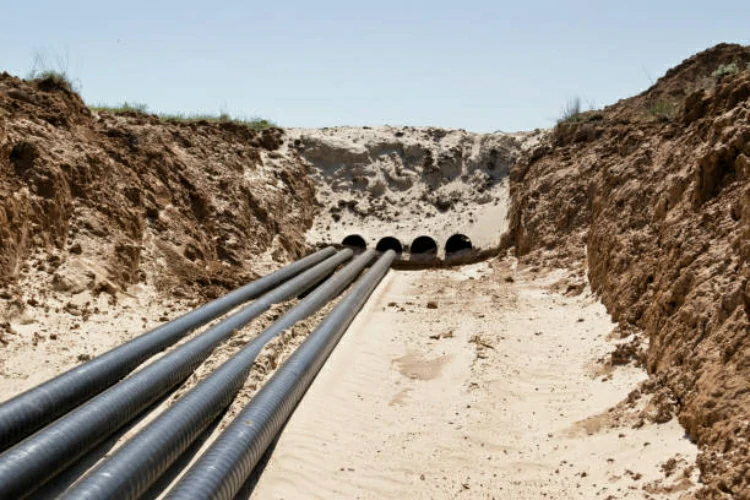
High-Density Polyethylene (HDPE) pipes are renowned for their versatility, durability, and cost-effectiveness in various applications. This article delves into the material composition of HDPE pipe and the manufacturing process involved in their production.
Composition of HDPE Pipes
HDPE pipes are composed of polymer chains of ethylene monomers, which are chemically bonded to form the high-density polyethylene material. The material’s molecular structure imparts exceptional strength, flexibility, and resistance to corrosion and abrasion, making it ideal for piping systems in diverse environments.
Ethylene Monomers
Ethylene, a hydrocarbon gas derived from natural gas or crude oil, serves as the primary building block for HDPE polymerization. Through a process known as polymerization, ethylene molecules undergo bonding to form long-chain polymers, giving HDPE its unique properties.
Aditif dan Stabilisator
HDPE pipes may contain additives and stabilizers to enhance specific properties such as UV resistance, thermal stability, and oxidative resistance. These additives ensure the longevity and performance of HDPE pipe in challenging environmental conditions.
Manufacturing Process of HDPE Pipes
The manufacturing of HDPE pipes involves several sequential processes, including material preparation, extrusion, cooling, and quality control measures to ensure product consistency and quality.
Material Preparation
The manufacturing process begins with the preparation of raw materials, including HDPE resin pellets and any necessary additives. The resin pellets are typically fed into a hopper and then conveyed to an extruder for melting and shaping.
Ekstrusi
In the extrusion process, we force the molten HDPE material through a die to form the desired pipe shape and size. We then cool the extruded pipe using a water bath or air cooling system to solidify the material and maintain its structural integrity.
Pendinginan dan Ukuran
After extrusion, the cooled HDPE pipe undergoes a sizing process to ensure dimensional accuracy and consistency. The pipe may pass through a series of calibration tools and cooling tanks to achieve the desired dimensions and mechanical properties.
Quality Control
Throughout the manufacturing process, we implement rigorous quality control measures to monitor key parameters such as wall thickness, diameter, and mechanical properties. We may employ non-destructive testing methods to identify any defects or inconsistencies in the finished product.
Kesimpulan
HDPE pipes offer a reliable and versatile solution for various piping applications due to their unique material composition and manufacturing process. Understanding the material properties and production methods of HDPE pipes is essential for ensuring their optimal performance and longevity in diverse environments.
Kontak
IFANPLUS adalah rangkaian produk khusus yang diluncurkan oleh IFAN, yang utamanya meliputi pipa plastik, fitting, dan berbagai jenis katup. Kami menawarkan pipa PPR dan PVC dalam standar Jerman dan Amerika, yang menjamin kualitas dan keandalan produk kami yang tinggi. Produk katup IFANPLUS meliputi berbagai katup, dari katup PPR hingga katup tembaga beragam lainnya, yang memenuhi kebutuhan spesifik Anda. Apa pun produk yang Anda butuhkan, IFANPLUS akan menjadi mitra andal Anda. Berikut adalah informasi kontak kami.
Kami akan membalas email atau faks Anda dalam waktu 24 jam.
Anda dapat menghubungi kami kapan saja jika ada pertanyaan tentang produksi kami.
Untuk informasi lebih lanjut, silakan kunjungi situs web kami https://www.ifanplus.com/
Silakan Kirim Email ke: [email protected]























