


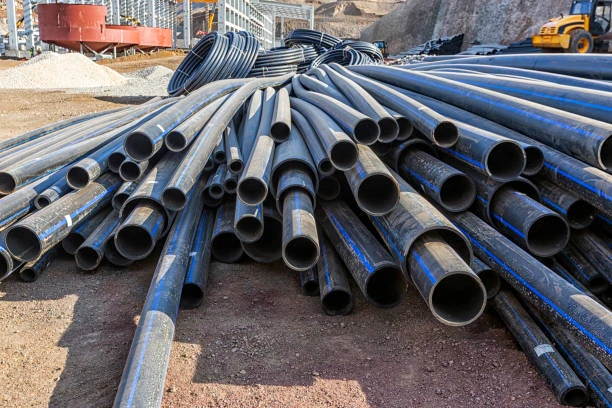
Polyethylene (PE) tubes serve various industries due to their outstanding physical properties. These tubes exhibit a balance of flexibility, durability, and resistance to environmental factors. Engineers and manufacturers prefer PE tubes for water supply, gas distribution, and industrial applications. Their physical characteristics determine their suitability for different environments and operating conditions.
Kepadatan dan Berat
PE tubes possess a low density compared to many other materials. Their lightweight nature makes transportation and installation more convenient. High-density polyethylene (HDPE) tubes provide greater strength while maintaining a manageable weight. Low-density polyethylene (LDPE) tubes offer more flexibility but lower mechanical strength. The balance between density and performance influences material selection for specific applications.
Flexibility and Bending Capacity
They exhibit excellent flexibility, which allows them to accommodate movement and vibrations. Unlike rigid materials, these tubes bend without breaking, reducing the need for additional fittings. Their flexibility proves beneficial in underground installations, where soil shifts over time. Smaller-diameter tubes demonstrate a higher bending capacity, making them ideal for applications requiring intricate routing.
Tensile Strength and Durability
PE tubes maintain impressive tensile strength, enabling them to withstand internal pressure and external forces. Their durability ensures long-term performance in demanding conditions. HDPE tubes, in particular, resist cracking and deformation under mechanical stress. The molecular structure of PE materials enhances their resistance to sudden impacts, preventing failure in critical applications.
Tahan Suhu
PE tubes perform reliably across a broad temperature range. Standard PE materials handle moderate temperatures, while specially formulated variants endure extreme conditions. Cross-linked polyethylene (PEX) enhances thermal resistance, making it suitable for hot water distribution. The temperature tolerance of them affects their usability in heating, cooling, and industrial processing systems.
Ketahanan Kimia
PE tubes resist a wide range of chemicals, making them ideal for transporting corrosive fluids. Their non-reactive surface prevents material degradation when exposed to acids, alkalis, and organic solvents. Chemical resistance varies between different types of PE, with HDPE offering superior performance in aggressive environments. Industries rely on them for safe and efficient fluid transport in chemical processing and wastewater treatment.
Tahan Benturan
PE tubes demonstrate remarkable impact resistance, reducing the risk of damage during handling and installation. Unlike brittle materials, PE absorbs shocks without cracking or breaking. This property enhances their reliability in high-traffic areas, underground systems, and industrial settings. The ability to withstand mechanical stress extends the service life of them, lowering maintenance costs.
Ketahanan Abrasi
PE tubes maintain their structural integrity when subjected to abrasive conditions. Their smooth surface minimizes friction, reducing wear and tear. This characteristic makes them suitable for transporting slurries, granules, and other solid-laden fluids. Industries that handle abrasive substances rely on PE tubes for extended operational life and reduced material loss.
Tahan UV
Standard PE tubes degrade when exposed to prolonged ultraviolet (UV) radiation. However, UV-stabilized variants incorporate additives that enhance resistance to sunlight. Outdoor applications require PE tubes with UV protection to prevent brittleness and discoloration. Proper material selection ensures longevity in above-ground installations, agricultural systems, and exposed pipelines.
Water Absorption
PE tubes exhibit minimal water absorption, preserving their mechanical properties in humid environments. Unlike materials that swell or weaken when exposed to moisture, PE maintains its strength and flexibility. This property proves essential in plumbing, irrigation, and marine applications. The low absorption rate ensures consistent performance in both wet and dry conditions.
Gas Permeability
PE tubes allow a certain level of gas permeability, which varies depending on material composition. While LDPE permits higher gas transmission, HDPE offers better barrier properties. Gas distribution networks utilize PE tubes with optimized permeability to maintain efficiency and safety. Understanding this characteristic helps engineers design reliable gas transportation systems.
Isolasi Listrik
PE tubes provide excellent electrical insulation, making them suitable for protecting wires and cables. Their dielectric properties prevent electrical conduction, reducing the risk of short circuits and failures. Telecommunications, power transmission, and electronic industries use PE tubing for insulation and shielding. The ability to resist electrical interference enhances system reliability.
Surface Smoothness and Flow Efficiency
PE tubes feature a smooth internal surface, minimizing friction and pressure loss. This characteristic enhances flow efficiency in fluid transport systems. The low coefficient of friction reduces energy consumption in pumping applications. Compared to metal pipes, PE tubes prevent scale buildup and blockages, ensuring continuous operation.
Keramahan Lingkungan
PE tubes support sustainability efforts due to their recyclability and non-toxic composition. Their long service life reduces material waste, making them an environmentally responsible choice. Many industries prefer them for eco-friendly infrastructure projects. The ability to withstand harsh conditions without releasing harmful substances enhances their appeal for green applications.
Kesimpulan
PE tubes combine flexibility, durability, and resistance to various environmental factors. Their physical properties make them suitable for numerous applications, from water supply to chemical transport. Engineers consider density, tensile strength, temperature resistance, and other characteristics when selecting PE tubes for specific uses. Understanding these properties ensures optimal performance and longevity in diverse industries.
Standar internasional IFAN
Pipa PE IFAN memenuhi berbagai standar internasional, menjamin kualitas dan keandalan yang tinggi. Standar-standar ini mencakup ASTM D3035 dan ASTM D3350 untuk pipa polietilena di Amerika Utara, serta seri ISO 4427 dan EN 12201, yang menetapkan kriteria kinerja untuk aplikasi pasokan air. Selain itu, DIN 8074/8075 menguraikan spesifikasi untuk pasar Jerman, sementara GB/T 13663 berlaku untuk standar nasional Tiongkok. IFAN juga memenuhi AS/NZS 4130 untuk Australia dan Selandia Baru, JIS K6760 untuk Jepang, BS 6572 untuk aplikasi di Inggris, dan CSA B137.1 untuk Kanada. Sertifikasi ini menunjukkan komitmen IFAN terhadap kepatuhan global dan kinerja produk yang unggul.
Kontak
IFAN adalah produsen profesional dengan pengalaman 30 tahun, yang berdedikasi untuk memproduksi pipa, fitting, dan katup plastik berkualitas tinggi. Produk kami meliputi katup kuningan, katup PPR, serta berbagai pipa dan fitting untuk memenuhi berbagai kebutuhan pelanggan. Baik Anda memerlukan pipa ledeng dan drainase atau produk katup, IFAN dapat menyediakan berbagai macam produk berkualitas tinggi dan hemat biaya untuk mendukung proyek Anda. Berikut adalah informasi kontak kami.
Kami akan membalas email atau faks Anda dalam waktu 24 jam.
Anda dapat menghubungi kami kapan saja jika ada pertanyaan tentang produksi kami.
Untuk informasi lebih lanjut, silakan kunjungi situs web kami https://www.ifanplus.com/
Silakan Kirim Email ke: [email protected]
Telepon Whatsapp: + 86 19857948982























