


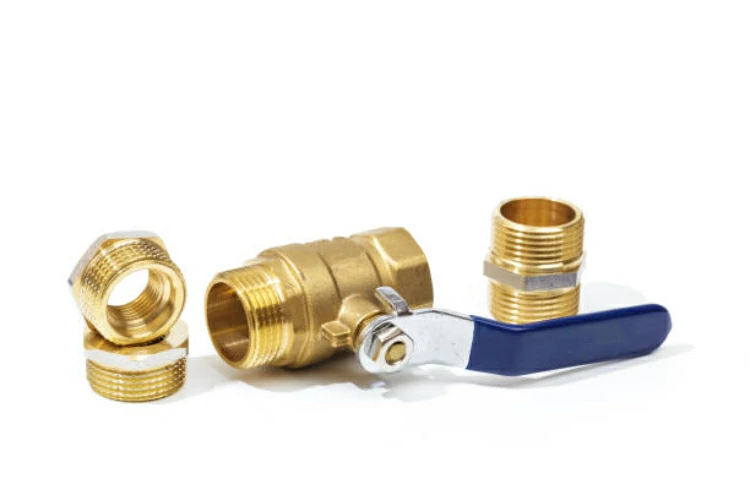
When it comes to fluid control systems, selecting the right valve is crucial for optimal performance and efficiency. Let’s compare brass ball valve with other commonly used valve types to understand their differences and advantages.
1. Brass Ball Valves vs. Cast Iron Gate Valves
Design and Construction:
Brass ball valves feature a spherical closure mechanism (the ball) that rotates to control flow. In contrast, cast iron gate valves use a sliding gate to regulate flow, which moves perpendicular to the direction of flow.
Sealing Mechanism:
Brass ball valves typically utilize soft seat materials, such as PTFE (Teflon), for tight sealing against the ball. Cast iron gate valves rely on metal-to-metal contact between the gate and seat for sealing, which may be susceptible to wear and leakage over time.
Aplikasi:
Brass ball valve are versatile and suitable for a wide range of applications, including residential, commercial, and industrial settings. Cast iron gate valves are commonly used in applications requiring a full flow path and are often found in municipal water systems and large-scale industrial processes.
2. Brass Ball Valves vs. Stainless Steel Ball Valves
Komposisi Bahan:
Brass ball valves are primarily made of brass, a copper-zinc alloy known for its corrosion resistance and machinability. Stainless steel ball valves, on the other hand, are constructed entirely of stainless steel, offering superior corrosion resistance and strength.
Performance in Corrosive Environments:
While brass ball valve are suitable for many applications, they may not be as corrosion-resistant as stainless steel ball valve, making the latter a preferred choice for harsh or corrosive environments, such as chemical processing plants or offshore oil platforms.
Pertimbangan Biaya:
Brass ball valves are generally more affordable than stainless steel ball valves, making them a cost-effective option for applications where corrosion resistance is not a primary concern.
3. Brass Ball Valves vs. PVC (Polyvinyl Chloride) Valves
Material Properties:
Metal constructs brass ball valve, ensuring durability and reliability in diverse conditions. Conversely, PVC valves consist of plastic, offering lightweight, corrosion resistance, and suitability for non-critical applications.
Pressure and Temperature Ratings:
Brass ball valve typically have higher pressure and temperature ratings compared to PVC valve, making them suitable for use in high-pressure or high-temperature environments.
Application Specificity:
While brass ball valves are versatile and can be used in a wide range of applications, PVC valves are best suited for low-pressure applications, such as residential plumbing, irrigation systems, and water treatment plants.
Kesimpulan
Choosing the right valve type is essential for ensuring optimal performance and longevity in fluid control systems. While brass ball valves offer versatility, reliability, and cost-effectiveness, other valve types may be better suited for specific applications based on factors such as material properties, corrosion resistance, and operating conditions. By understanding the differences between brass ball valves and alternative valve types, you can make informed decisions when selecting valves for your specific needs, ultimately enhancing system efficiency and performance.
Kontak
IFANPLUS adalah rangkaian produk khusus yang diluncurkan oleh IFAN, yang utamanya meliputi pipa plastik, fitting, dan berbagai jenis katup. Kami menawarkan pipa PPR dan PVC dalam standar Jerman dan Amerika, yang menjamin kualitas dan keandalan produk kami yang tinggi. Produk katup IFANPLUS meliputi berbagai katup, dari katup PPR hingga katup tembaga beragam lainnya, yang memenuhi kebutuhan spesifik Anda. Apa pun produk yang Anda butuhkan, IFANPLUS akan menjadi mitra andal Anda. Berikut adalah informasi kontak kami.
Kami akan membalas email atau faks Anda dalam waktu 24 jam.
Anda dapat menghubungi kami kapan saja jika ada pertanyaan tentang produksi kami.
Untuk informasi lebih lanjut, silakan kunjungi situs web kami https://www.ifanplus.com/
Silakan Kirim Email ke: [email protected]























