


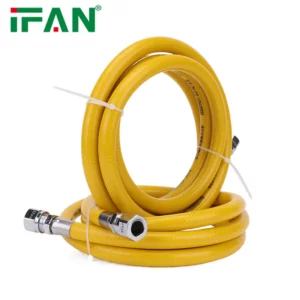
Tuyau de gaz OEM ODM de bonne qualité
Nom du produit Tuyau de gaz
Couleur normale rouge, blanc, jaune, orange, bleu ou personnalisée
Pression de travail 0,7 MPa
Taille 1216 mm-2632 mm
Matériau PEX+AL+PEX (100% Nouveau matériau)
Emballage IFAN Carton + Sac OPP
Utilisation de l'alimentation en eau chaude et du chauffage
Performance Bonne flexibilité, facile à plier
Certification ISO CE
Technologie de production Technologie avancée allemande
Installation de conduites de gaz : un guide complet
Natural gas serves as a vital energy source in residential, commercial, and industrial settings. Ensuring the safety and efficiency of gas pipes requires proper installation. In this guide, we’ll delve into the methods and best practices for installing gas pipes, as well as their diverse applications across various sectors.
Choosing the Right Materials
Before beginning any gas pipe installation project, it’s essential to select the appropriate materials. Gas pipes are commonly made from materials like steel, copper, and plastic (such as polyethylene). Each material has its advantages and suitability for different applications.
Tubes en acier
Steel pipes are durable and can withstand high-pressure environments, making them suitable for underground and outdoor installations. However, they are susceptible to corrosion over time, especially in humid or corrosive environments.
tuyaux en cuivre
Copper pipes are lightweight and resistant to corrosion, making them ideal for indoor gas installations. They are easy to install and offer excellent durability. However, copper pipes can be more expensive than other materials.
Plastic Pipes
Plastic pipes, such as polyethylene (PE), are lightweight, flexible, and resistant to corrosion. They are suitable for both underground and above-ground installations. Plastic pipes are often used in residential gas piping systems due to their ease of installation and cost-effectiveness.
Méthodes d'installation
Gas pipe installation requires careful planning and adherence to safety standards to prevent leaks and ensure proper functioning of the system. The following are common methods used for installing gas pipes:
Threaded Connection
For steel pipes, threaded connections are commonly used to join sections of pipe together. A pipe threading machine is used to cut threads into the pipe ends, allowing them to be screwed together securely. Threaded connections are simple and reliable but may require additional sealant to prevent leaks.
Soudage
Welding is used to join steel pipes together permanently. It involves heating the pipe ends to a high temperature and then fusing them together using a welding torch. Welded joints are strong and durable, making them suitable for high-pressure gas systems. However, welding requires specialized equipment and training.
Raccords à compression
Compression fittings find common usage with copper and plastic pipes. They comprise a compression nut, ferrule, and body, which users tighten together to establish a watertight seal. These fittings are straightforward to install and can be disassembled if required. They prove suitable for both indoor and outdoor gas piping systems.
Fusion thermique
Heat fusion, a method employed for joining plastic pipes, entails heating the pipe ends and subsequently pressing them together to form a permanent bond. This process results in robust, leak-proof joints and finds widespread application in underground gas piping systems.
Applications of Gas Pipes
Gas pipes are used in a wide range of applications, including:
Residential Heating
Gas pipes supply natural gas to furnaces, boilers, and water heaters in residential heating systems. Ensuring safe and efficient operation requires proper installation and maintenance of gas pipes.
Bâtiments commerciaux
Gas pipes serve common functions in commercial buildings, including heating, cooking, and hot water systems. They also find application in industrial processes such as manufacturing and food processing.
Production d'électricité
Gas pipes play a crucial role in power plants by transporting natural gas to turbines for electricity generation. Ensuring reliable power generation necessitates the proper installation and maintenance of gas pipes.
Conclusion
Gas pipe installation requires careful planning, proper material selection, and adherence to safety standards. Whether for residential, commercial, or industrial applications, gas pipes play a crucial role in delivering natural gas safely and efficiently. By following the recommended installation methods and best practices, you can ensure the reliability and longevity of your gas piping system.
Contact
Avec 30 ans d'expérience, IFAN est un fabricant spécialisé dans la production de raccords et de vannes en plastique de haute qualité. Nos produits comprennent des vannes en cuivre, des vannes en PPR et divers raccords pour répondre aux différents besoins de nos clients. Quels que soient vos besoins en plomberie ou en vannes, IFAN Nous proposons une large gamme de produits économiques pour accompagner votre projet. Vous trouverez ci-dessous nos coordonnées. WhatsApp: + 86 19857948982,E-mail : [email protected]
Related products
-
 Industrie du gaz
Tuyau de gaz à prix de gros bon marché