


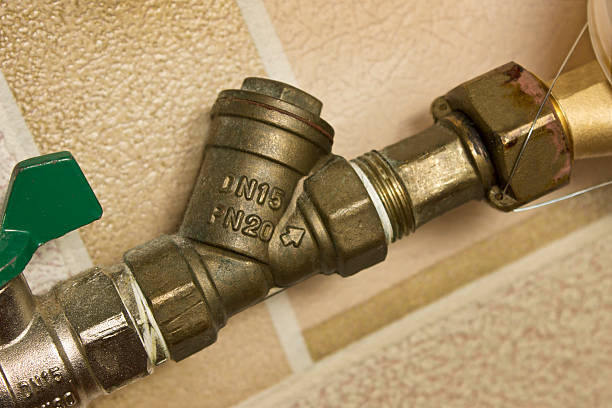
A reliable plumbing or fluid control system depends on the proper flow of liquid or gas. To ensure smooth operation and prevent dangerous backflow, systems often rely on one essential component: the Valve en laiton. Whether in household water lines or complex industrial setups, this small valve serves as a safeguard that allows fluid to move in only one direction. It’s simple in structure, but critical in function.
This article offers a complete look at how the 1/2 check valve functions, what makes it so important, and where it sees the most use. We will also examine how to choose the right valve, explore comparisons with other fittings, and provide answers to common questions about its role in plumbing and engineering systems.
Foire aux questions (FAQ)
What does a 1/2 check valve do?
A 1/2 check valve lets liquid or gas flow in one direction only. It blocks reverse flow, helping protect the system.
Why is the valve called “1/2”?
The number “1/2” refers to the valve’s connection size. It fits pipes with a 1/2-inch diameter.
Can a 1/2 check valve be used in both water and gas lines?
Yes, as long as the valve is made from the right material and pressure-rated for the specific fluid.
Where is this valve usually installed?
It is found in water heaters, irrigation systems, HVAC units, aquariums, and industrial processing lines.
How do I know which material to choose for my valve?
Consider the fluid type, temperature, and pressure. Common materials include brass, stainless steel, and PVC.
What Is a 1/2 Check Valve and What Makes It Unique?
UN 1/2 check valve is a non-return valve that controls the flow direction of liquids or gases. It is designed to allow flow forward and shut automatically when fluid attempts to move in the opposite direction. Its compact size makes it suitable for smaller systems or sections where space is limited.
Unlike gate or ball valves, it works automatically. The internal mechanism—often a disc, spring, or ball—opens under forward pressure and closes instantly when pressure drops or reverses. This action helps maintain system integrity and avoids problems caused by backflow, such as contamination or damage to equipment.
Key characteristics of a 1/2 check valve include:
- One-way flow control for liquids or gases
- Compact size that fits tight or complex systems
- Automatic closure with no manual input needed
- Faible entretien due to its simple mechanical design
- Versatile applications in plumbing, irrigation, HVAC, and industrial lines
These qualities make the 1/2 check valve one of the most efficient backflow prevention tools in both domestic and industrial applications.
Where Are 1/2 Check Valves Most Commonly Used?
Due to their small size and high efficiency, 1/2 check valves appear in a wide range of systems across industries. Their primary role stays the same—to prevent backflow—but the settings and needs can vary.
Applications résidentielles
In homes, these valves protect water quality and extend the life of appliances.
- Chauffe-eau: Installed on the cold water inlet to stop heated water from flowing back into the cold supply.
- Washing Machines: Used in the supply line to prevent reverse flow when the washer stops.
- Dishwashers: Helps avoid dirty water returning to clean water pipes.
- Garden Irrigation: Prevents dirty or fertilized water from re-entering clean supply lines.
- Water Softeners: Protects internal media from reverse water movement that can damage the system.
Applications industrielles
In factories, laboratories, and commercial sites, these valves support complex systems.
- Traitement chimique: Ensures acids or solvents do not flow backward into sensitive lines.
- Systèmes d'air comprimé: Stops compressed air from leaking into upstream equipment when the compressor turns off.
- Cooling Towers: Maintains correct water flow and prevents contamination.
- Boiler Systems: Avoids water hammer and ensures the safe operation of pumps and lines.
- Aquaculture and Aquariums: Keeps water from draining out during power failure or pump shutdown.
By fitting into both everyday and advanced systems, the 1/2 check valve supports both safety and system reliability.
How to Choose the Right 1/2 Check Valve
When selecting a 1/2 check valve, it is essential to match the product to your application’s needs. Choosing the wrong valve can reduce efficiency or lead to system failure. Several factors should be considered.
Matériel
- Laiton: Durable and corrosion-resistant; perfect for potable water and household systems.
- Acier inoxydable: High strength and corrosion resistance; used in chemical or high-pressure environments.
- PVC/CPVC: Lightweight and affordable; ideal for irrigation or low-pressure applications.
Each material suits different pressures, temperatures, and fluid types.
Couleur et finition
Colors often reflect the material. Brass valves usually appear gold or bronze. PVC valves are white or gray. Stainless steel valves have a shiny metallic finish. While color doesn’t affect performance, it helps in identifying and organizing system components.
Type de connexion
Ensure the connection style matches your piping. Common types include:
- Fileté: Common in plumbing systems.
- Socket Weld: Often used with plastic piping.
- Compression: For temporary or adjustable setups.
Certifications
Certifications confirm safety and quality standards. Look for:
- NSF or ANSI: For drinking water systems.
- ISO 9001: Indicates quality manufacturing.
- CSA or UPC: Valid for North American building codes.
Pression et température nominales
Always check the valve’s limits. Choose a model rated higher than your system’s normal operating conditions to ensure reliability and longevity.
Orientation and Flow Direction
Some valves are designed for horizontal lines, while others work vertically. Check the flow arrow on the valve body to ensure correct installation.
Top Uses of a 1/2 Check Valve in Residential and Industrial Lines
As the title suggests, the most common uses fall into these two broad categories—home systems and industrial applications. Let’s look at them more closely.
Plomberie résidentielle
In residential settings, a 1/2 check valve protects drinking water and supports appliance efficiency. For example, when used near a water heater, it stops hot water from returning to the cold inlet, which helps stabilize water temperature and pressure. Similarly, when installed in irrigation systems, it stops chemicals or soil-laden water from flowing backward into clean pipes.
In aquariums, the valve protects tanks from siphoning during a power outage. It also serves as a barrier in carbon or reverse osmosis filtration systems, ensuring water flows only in the intended direction.
Systèmes industriels
In industrial setups, backflow can cause severe damage. A 1/2 check valve in a chemical line protects workers and equipment by keeping harmful substances from moving backward into clean supply lines. In air compressors, it prevents air from leaking back into the pump when it’s turned off. In chilled water systems, it ensures circulation stays stable.
The simplicity and reliability of this small valve make it useful across manufacturing plants, medical labs, food processing plants, and more. Any system with fluctuating pressure or flow conditions benefits from this valve’s protection.
1/2 Check Valve vs. Other Pipe Fittings
Choosing between a 1/2 check valve and other fittings depends on your goals. The table below compares different valve types based on their function and best use cases.
| Fonctionnalité | 1/2 Check Valve | Robinet à boisseau sphérique | vanne à guillotine | Robinet à soupape |
|---|---|---|---|---|
| Flow Control Direction | Sens unique | Two-way (open/close) | Two-way | Two-way (throttling) |
| Operation Type | Automatique | Manuel | Manuel | Manuel |
| Fonction principale | Prevents backflow | Starts/stops flow | Isolates flow path | Controls flow rate |
| Niveau de maintenance | Faible | Moyen | Haut | Moyen |
| Applications courantes | Backflow prevention | General plumbing | Shut-off lines | Pressure regulation |
| Suitable for Small Pipes | Oui | Oui | Rarement | Parfois |
This comparison shows that while other valves control or shut off flow, only the check valve offers automatic, one-directional flow protection.
Conclusion
The 1/2 check valve may be small, but its impact on safety, efficiency, and system performance is substantial. In both residential and industrial settings, it serves as a dependable tool to prevent backflow, support clean water systems, and protect equipment from pressure-related damage.
When selecting a valve, always consider the material, size, pressure rating, and certifications. Match the valve to your fluid type and application needs. Whether used in a home water heater or a factory’s fluid transfer system, the 1/2 check valve delivers peace of mind and long-lasting performance.
For reliable backflow protection, smooth fluid control, and system stability, the 1/2 check valve remains one of the best choices in modern plumbing and industrial design.
Contactez l'IFAN pour les catalogues et les échantillons
Besoin de documents techniques, de catalogues ou d'échantillons ? Contactez l'IFAN dès aujourd'hui.
📧 Courriel : [email protected]
📱 Whatsapp : +86 19857948982
Notre équipe répond rapidement et fournit un soutien professionnel pour tous vos besoins en matière de pipeline.
Norme internationale IFAN
Les systèmes de tuyauterie IFAN sont conformes à un large éventail de normes internationales pour garantir une qualité et des performances élevées. Parmi celles-ci figurent les normes ASTM F1974 et ASTM F1281 pour les systèmes de tuyauterie multicouche, la norme CSA B137 pour les applications de plomberie canadiennes, la norme DIN 16836 pour les spécifications techniques allemandes, la norme GB18997 pour les normes chinoises et la norme ISO 21003, qui couvre les systèmes de tuyauterie multicouche utilisés pour les installations d'eau chaude et froide. Ce large champ de certification souligne l'engagement de l'IFAN en matière de conformité mondiale et de fiabilité des produits.























