


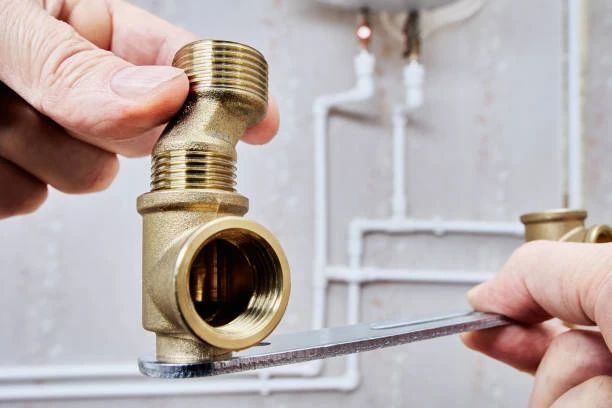
Raccords de pression en laiton play a key role in maintaining reliable and leak-free connections across various piping systems. These components provide exceptional strength, durability, and corrosion resistance. As a result, professionals across industries trust them to ensure system safety and long-term performance. From residential plumbing to industrial systems, brass pressure fittings offer secure and effective solutions. This article outlines their main characteristics, applications, selection tips, installation advice, and comparison with alternative fittings.
Foire aux questions (FAQ)
1. What are brass pressure fittings used for?
Brass pressure fittings connect pipes in systems that carry fluids or gases under pressure. They ensure tight, secure joints.
2. Are brass pressure fittings suitable for high temperatures?
Yes, brass handles both high pressure and elevated temperatures. This makes it suitable for hot water, steam, and HVAC systems.
3. Can brass pressure fittings be used for gas lines?
Absolutely. Many brass fittings are certified for natural gas and propane applications when properly selected.
4. Do I need special tools to install brass pressure fittings?
Not at all. Basic tools like a wrench and sealant tape usually suffice, especially for threaded and compression types.
5. Are brass pressure fittings reusable?
In many cases, yes. You can often remove and reinstall brass fittings without damaging the threads or connections.
Definition and Key Features of Brass Pressure Fittings
Brass pressure fittings are connectors made from an alloy of copper and zinc. Because of their mechanical strength and corrosion resistance, they’re ideal for high-pressure systems. Unlike fittings made from plastic or other metals, brass provides a balance of durability, cost-efficiency, and thermal performance.
Let’s explore some defining features:
- High Pressure Capacity: Brass fittings handle pressures from 150 psi up to 1200 psi, depending on the type and size.
- Stabilité thermique: These fittings perform well across a wide temperature range, often from -65°F to 400°F.
- Résistance à la corrosion: Brass resists water corrosion, chemical reactions, and scaling, especially in plumbing systems.
- Connexions polyvalentes: They come in threaded, compression, flare, and push-to-connect types for different piping materials.
- Longue durée de vie: Due to their strength and resistance, brass pressure fittings last for years with minimal maintenance.
Clearly, these advantages make brass fittings a dependable choice for pressurized systems.
Applications et industries courantes
Thanks to their versatility, brass pressure fittings find use in a wide range of systems. Let’s take a closer look at where and how they are applied.
Systèmes de plomberie
In both residential and commercial buildings, brass fittings serve hot and cold water lines. Because of their corrosion resistance, they last longer than many alternatives.
Systèmes de chauffage et de refroidissement
Brass pressure fittings handle thermal expansion and contraction. Therefore, they work well in boilers, radiators, and air conditioning units.
Gas Supply Lines
Because brass withstands pressure and temperature, it’s often used in gas supply systems, including propane and natural gas pipelines.
Systèmes de fluides industriels
Manufacturing plants use brass fittings for oil, chemical, and air lines. Their chemical resistance ensures safe transport of many substances.
Marine and Outdoor Applications
Brass also resists saltwater and outdoor elements. For this reason, it’s frequently found in boats, irrigation systems, and garden plumbing.
By covering all these areas, brass pressure fittings show their adaptability and reliability.
Guide d'achat : Comment choisir les bons raccords de pression en laiton
To get the most from brass pressure fittings, selecting the right product matters. Here’s what to consider before buying:
1. Know Your Pressure and Temperature Requirements
Start by checking the pressure rating. Systems with higher operating pressures need heavy-duty fittings. Next, confirm that the temperature range matches the operating environment.
2. Match the Connection Type
Choose from:
- Raccords filetés for easy assembly and disassembly.
- Raccords à compression for copper or plastic tubes.
- Flare fittings for refrigeration or fuel lines.
- Raccords à emboîtement for fast, tool-free installation.
Make sure the fitting type is compatible with your pipe material and system design.
3. Check for Quality Certifications
Look for third-party certifications such as:
- NSF/ANSI 61 for potable water safety.
- UL and CSA for gas systems.
- ASTM or ISO for dimension and performance standards.
These certifications confirm that the fittings meet strict industry requirements.
4. Examine Material and Finish
Choose fittings made from high-grade brass, preferably lead-free if used in drinking water. A smooth or nickel-plated finish may improve corrosion resistance and appearance.
5. Consider the Brand and Warranty
Well-known brands often provide better consistency, documentation, and customer service. A product with a clear warranty adds extra peace of mind.
By following these steps, you can select brass pressure fittings that match both your system needs and local regulations.
Installation Guidelines for Brass Pressure Fittings
Correct installation ensures leak-free operation and system reliability. Follow these steps for a smooth installation process:
Step 1: Cut and Prepare the Pipe
Use a pipe cutter for a clean, square edge. Remove any burrs, then clean the pipe surface with a cloth or brush.
Step 2: Apply Thread Sealant (If Needed)
Use PTFE tape or pipe thread sealant for threaded fittings. For compression and flare fittings, sealing compounds are usually unnecessary.
Step 3: Align the Fittings
Make sure the pipe and fitting are aligned correctly. Misalignment could cause stress or leaks over time.
Step 4: Tighten Securely
Use two wrenches—one to hold the fitting body, another to turn the nut or thread. Tighten until secure but avoid over-tightening, which may crack the fitting or deform the pipe.
Étape 5 : Test de pression du système
After installation, pressurize the system and check for leaks. You can use a soap solution or a pressure gauge.
Tips:
- Always follow local plumbing or mechanical codes.
- Avoid mixing brass with galvanized steel to prevent galvanic corrosion.
- Allow for some movement in high-temperature systems.
With these practical steps, you can ensure long-lasting performance.
Brass Pressure Fittings vs. Other Fitting Types
Let’s compare brass pressure fittings to other common options. Consider factors such as strength, cost, ease of use, and lifespan.
Brass vs. Plastic Fittings
- Brass handles higher temperatures and pressures.
- Plastic is cheaper but may degrade faster, especially in UV or chemical environments.
Brass vs. Stainless Steel
- Stainless steel resists corrosion slightly better, especially in extreme conditions.
- Brass is easier to work with and costs less.
Copper Sweat Fittings
- Copper fittings require soldering, which needs heat and skill.
- Brass fittings use mechanical connections, making them easier to install or remove.
Push-Fit Fittings
- Push-fit fittings are faster but may not offer the same strength.
- Brass fittings last longer in demanding conditions and allow for flexible maintenance.
Summary Comparison Table (Text Format):
- Durabilité: Brass > Plastic
- Facilité d'utilisation: Push-Fit > Brass
- Résistance à la corrosion: Stainless Steel > Brass
- Rentabilité: Brass > Stainless Steel
- Installation Time: Push-Fit > Brass > Sweat Fittings
This comparison shows where brass fittings stand out and when they’re the best choice.
Conclusion
Brass pressure fittings deliver strong, secure, and flexible connections across a wide range of applications. They stand up to pressure, resist corrosion, and work with various pipe types. Their advantages make them suitable for plumbing, gas, HVAC, marine, and industrial systems.
By understanding their features, selecting the right product, and installing them correctly, you ensure your system stays leak-free and efficient. Compared to other materials, brass offers an excellent balance between performance, cost, and convenience. Therefore, if you want a secure solution for tough conditions, brass pressure fittings provide reliability you can count on.
Contactez l'IFAN pour les catalogues et les échantillons
Besoin de documents techniques, de catalogues ou d'échantillons ? Contactez l'IFAN dès aujourd'hui.
📧 Courriel : [email protected]
📱 Whatsapp : +86 19857948982
Notre équipe répond rapidement et fournit un soutien professionnel pour tous vos besoins en matière de pipeline.
Norme internationale IFAN
Les systèmes de tuyauterie IFAN sont conformes à un large éventail de normes internationales pour garantir une qualité et des performances élevées. Parmi celles-ci figurent les normes ASTM F1974 et ASTM F1281 pour les systèmes de tuyauterie multicouche, la norme CSA B137 pour les applications de plomberie canadiennes, la norme DIN 16836 pour les spécifications techniques allemandes, la norme GB18997 pour les normes chinoises et la norme ISO 21003, qui couvre les systèmes de tuyauterie multicouche utilisés pour les installations d'eau chaude et froide. Ce large champ de certification souligne l'engagement de l'IFAN en matière de conformité mondiale et de fiabilité des produits.























