


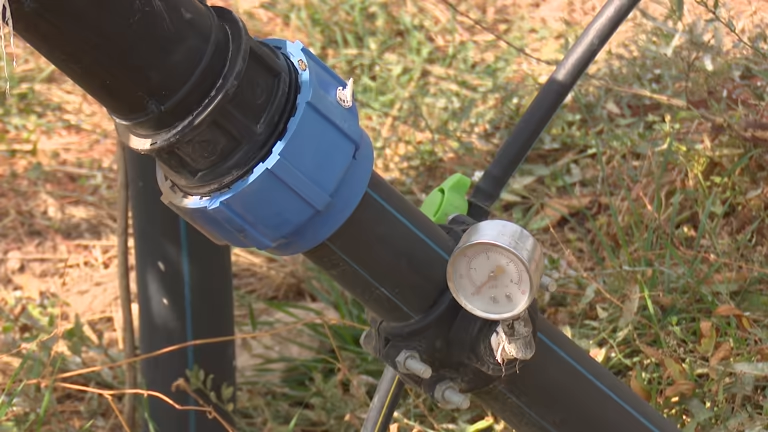
When it comes to underground water systems, selecting the right material is crucial for long-term performance. One of the most trusted options is hdpe pipe for underground water supply. These pipes are known for their flexibility, durability, and resistance to corrosion. Many construction and plumbing professionals prefer hdpe pipes because they ensure reliable water transport over decades while minimizing maintenance. Whether for urban utilities, residential buildings, or industrial installations, hdpe pipes provide a stable and safe solution. If you are searching for quality pipes, MATEC / TRANS IMPORT, located at n° 180 Avenue du Marché, Kinshasa, Congo – Kinshasa, offers a wide range of hdpe pipes suitable for any underground water project.
Foire aux questions (FAQ)
1. What is an hdpe pipe for underground water supply?
It is a pipe made from high-density polyethylene specifically designed for underground water systems. It offers strong, leak-free connections and long-lasting performance.
2. Why are hdpe pipes better than metal or PVC pipes?
HDPE pipes resist corrosion, are lightweight, and can tolerate a wide range of temperatures. Their fusion joints also reduce leaks compared to other materials.
3. Can hdpe pipes be used for drinking water?
Yes, hdpe pipes are safe for potable water. They do not release harmful chemicals or affect water taste.
4. How long do hdpe pipes last?
With proper installation, hdpe pipes can last or more, even under heavy use and underground conditions.
5. Are hdpe pipes easy to install?
Yes. They are flexible and lightweight, and fusion welding makes joining sections simple and secure.
Definition and Features of HDPE Pipe
HDPE pipe is a high-density polyethylene pipe designed for underground water supply. It is engineered to withstand high pressures, resist cracking, and tolerate extreme temperatures. One of its main features is flexibility, which allows it to adapt to minor ground movements without breaking. HDPE pipe is also resistant to corrosion from chemicals, soil, and water, making it ideal for long-term underground use.
Les principales caractéristiques comprennent :
- Long lifespan and durability
- Corrosion and chemical resistance
- Lightweight for easy handling
- Leak-free fusion connections
- Flexibility to adapt to ground movement
- Low maintenance requirements
HDPE pipes are manufactured in various diameters and pressure ratings to suit different projects, making them highly versatile.
Utilisations courantes et secteurs d'application
HDPE pipe for underground water supply has a wide range of applications, including:
- Urban water distribution systems – For reliable potable water transport across cities
- Residential buildings – Safe and durable pipes for household water supply
- Irrigation and agriculture – Efficient for water delivery in farms and plantations
- Industrial facilities – Suitable for water transport in factories or processing plants
- Municipal projects – Ideal for stormwater, drainage, or sewer lines
Thanks to their durability and safety, HDPE pipes are increasingly used in projects where water quality and system reliability are priorities.
Considérations relatives à l'installation
Installing hdpe pipes requires careful planning and proper techniques:
- Prepare the trench to the correct depth and width
- Ensure a smooth and stable bedding for the pipe
- Use the recommended fusion welding or mechanical couplings
- Avoid sharp bends beyond the recommended radius
- Check for alignment before backfilling
- Conduct pressure testing after installation
- Avoid heavy equipment directly on top of freshly installed pipes
Following these steps helps prevent leaks, breaks, and maintenance issues.
HDPE Pipe vs. Other Materials
| Fonctionnalité | Tuyau en PEHD | Tuyau en PVC | Tuyau métallique |
|---|---|---|---|
| Résistance à la corrosion | Excellent | Modéré | Pauvre |
| Flexibilité | Haut | Faible | Faible |
| Durée de vie | 50+ ans | 25– | 20–25 years |
| Facilité d'installation | Facile | Modéré | Dur |
| Maintenance Requirement | Faible | Moyen | Haut |
| Poids | Léger | Moyen | Lourd |
Compared to PVC and metal, hdpe pipes offer superior durability, easier handling, and lower long-term maintenance costs.
Conclusion
HDPE pipe for underground water supply is a reliable, flexible, and durable solution for a wide range of water systems. Its resistance to corrosion, long lifespan, and ease of installation make it a preferred choice for residential, industrial, and municipal projects. Choosing hdpe pipes helps ensure a secure water supply for decades while minimizing maintenance and repair costs.
For high-quality hdpe pipes, you can visit MATEC / TRANS IMPORT at n° 180 Avenue du Marché, Kinshasa, Congo – Kinshasa. They offer a variety of sizes and pressure ratings to meet the needs of every underground water project. HDPE pipes are more than just plumbing materials; they are a long-term investment in reliable water infrastructure.
Contact
IFAN est un fabricant professionnel fort de 30 ans d'expérience, spécialisé dans la production de tuyaux, raccords et vannes en plastique de haute qualité. Nos produits comprennent des vannes en laiton, des vannes en PPR, ainsi que divers tuyaux et raccords pour répondre aux différents besoins de nos clients. Que vous ayez besoin de tuyaux de plomberie et d'évacuation ou de vannes, IFAN propose une gamme diversifiée de produits de haute qualité et économiques pour vos projets. Vous trouverez nos coordonnées ci-dessous.
Nous répondrons à votre e-mail ou fax dans les 24 heures.
Vous pouvez nous appeler à tout moment si vous avez des questions sur notre production.
Pour plus d'informations, veuillez visiter notre site Web https://www.ifanplus.com/
Veuillez envoyer un mail à : [email protected]
WhatsApp : + 86 19857948982
Norme internationale IFAN
Les produits IFAN sont conformes à un large éventail de normes internationales, garantissant sécurité, fiabilité et compatibilité mondiale. Parmi celles-ci figurent les normes ASTM 2846, DIN 8079/8080, ASTM F441/F441M SCH80, de nombreuses spécifications DIN, les normes de la série GB/T 18993, AS/NZS 1477, CSA B137.6, NSF/ANSI 14, ainsi que TIS 17-2532/1131-2535. En respectant ces normes reconnues, IFAN garantit une qualité et des performances constantes dans différentes régions et pour différentes applications.























