


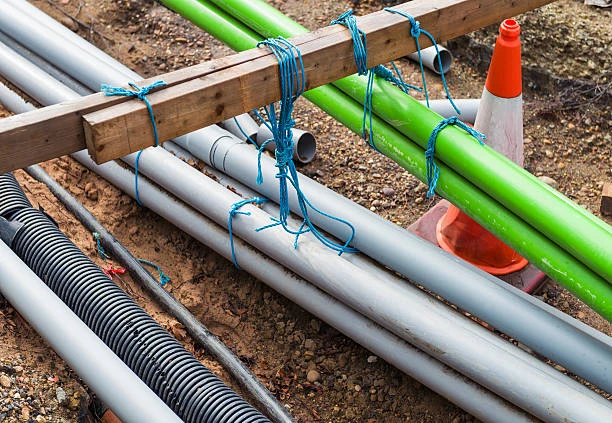
Understanding PPR Pipe Sizes
tuyaux PPR come in various sizes, each suitable for specific plumbing needs. Among the most popular sizes are 1/2 inch, 25mm, and 32mm. These measurements refer to the outer diameter of the pipe. However, choosing the right size depends not only on diameter but also on pressure, flow rate, and installation environment.
Moreover, PPR (Polypropylene Random Copolymer) is widely used in modern plumbing systems for hot and cold water due to its resistance to pressure and temperature. It also complies with international standards such as ISO 15874 et DIN 8077/8078, ensuring product safety and performance. In this guide, we compare the key features, applications, and price ranges of 1/2″, 25mm, and 32mm PPR pipes to help you make an informed decision.
1/2 Inch PPR Pipe: Compact and Economical
The 1/2 inch PPR pipe is commonly used for internal water lines and small installations. Because of its compact size, it is ideal for:
- Bathroom sink connections
- Short water distribution lines
- Low-pressure systems in residential settings
In addition, this size is lightweight and easy to install, making it popular for do-it-yourself plumbing projects. The 1/2 inch pipe typically supports PN16 pressure rating, which is enough for low- to medium-pressure applications.
From a cost perspective, 1/2 inch PPR pipes are the most affordable. On average, prices range between $0.15 and $0.35 per meter, depending on quality, color, and country of origin. For installations where space is limited and high flow is unnecessary, this pipe offers great value.
25mm PPR Pipe: The Residential Standard
The 25mm PPR pipe is a standard choice for home plumbing systems. It offers a balance between flow capacity and pressure performance. Moreover, it supports both PN20 and PN25 pressure classes, making it suitable for hot water lines, cold water distribution, and even heating systems.
Installers prefer 25mm PPR pipes for:
- Kitchen and bathroom water supply
- Outdoor garden lines
- Residential heating circuits
- Water connections to washing machines and showers
Additionally, this pipe size is compatible with a wide range of fittings, valves, and accessories. Most certified 25mm pipes meet ISO and DIN standards, ensuring safety for drinking water.
Price-wise, 25mm PPR pipes range between $0.40 and $0.80 per meter. While they cost more than smaller pipes, their versatility and capacity justify the price in most domestic projects.
32mm PPR Pipe: High Flow and Pressure Capacity
For high-volume systems or installations with long distances, the 32mm PPR pipe is often the best choice. This size delivers more water at higher speed, making it ideal for:
- Multi-bathroom homes
- Main water inlet lines
- Commercial kitchens and laundry facilities
- Central heating manifolds
Furthermore, the 32mm pipe is designed for PN20 or PN25 pressure, suitable for demanding conditions. Thanks to its thicker wall and wider bore, it handles both pressure and temperature changes better than smaller sizes.
However, installation requires more space and stronger welding tools. For best results, always use certified pipe and fittings, especially in concealed or high-pressure systems.
Cost ranges between $0.70 and $1.20 per meter, which is higher than smaller pipes. Yet, the durability and capacity of 32mm pipes make them essential for advanced plumbing setups.
Which Size Should You Choose?
Each PPR pipe size has specific advantages. To select the right one, consider the following factors:
- Water Flow Needs
- 1/2″ is perfect for light, local water supply.
- 25mm covers most household plumbing.
- 32mm supports large-volume systems.
- System Pressure
- Use PN20 or PN25-rated pipes for pressurized systems.
- Check compatibility with pumps, heaters, and fittings.
- Espace d'installation
- Choose smaller pipes for compact areas.
- Use larger pipes for main lines and open installations.
- Certifications
- Always verify compliance with ISO 15874 or DIN 8077/8078.
- Look for factory certifications and material guarantees.
- Budget
- Consider both the pipe price and fitting cost.
- Balance affordability with performance.
In conclusion, for small home installations, 1/2 inch pipes are enough. For complete household plumbing, 25mm offers the best mix of value and performance. For high-demand systems or future upgrades, 32mm ensures smooth operation.
Why Certification Matters
When buying PPR pipes, size is only part of the equation. International standards ensure that the pipe will perform safely under expected conditions. The most recognized standards include:
- ISO 15874: Defines dimensions, pressure ratings, and material properties.
- DIN 8077/8078: Sets physical and mechanical performance requirements.
- GB/T 18742 (China): Ensures domestic and export-grade quality.
Certified pipes are safer, longer-lasting, and less likely to fail under pressure or heat. Moreover, they are usually manufactured from virgin PPR, not recycled plastic, which improves fusion welding quality and chemical resistance.
Installation Tips for Different Sizes
Proper installation helps maintain pipe performance. Keep these tips in mind:
- Use fusion welding for secure joints. Ensure pipe and fittings are heated evenly.
- Avoid mixing sizes unless you use reducers or adapters.
- Support pipes every 40–50 cm to prevent sagging.
- Allow expansion space for hot water lines.
- Pressure test the system before use.
Regardless of the size, proper storage is also essential. Keep pipes away from direct sunlight and store them in dry, clean areas.
Conclusion: Choosing the Best PPR Pipe Size
Selecting the right PPR pipe size impacts system efficiency, cost, and long-term performance. A 1/2 inch pipe suits basic needs. A 25mm pipe is perfect for most homes. A 32mm pipe delivers superior capacity and pressure handling.
Make sure to choose pipes from trusted suppliers that comply with international standards. Always plan your system according to flow needs, installation layout, and future expansion.
When in doubt, consult a plumbing expert to avoid costly mistakes. With the right size and proper installation, PPR pipes offer decades of reliable service.
Présentation des normes de produits de l'IFAN
IFAN fabrique des produits en totale conformité avec les normes internationales et régionales afin de répondre aux diverses exigences du marché. Notre gamme de produits est conforme aux normes ISO 15874, EN 15874, ASTM F2389, DIN 8077/8078, GB/T 18742 et NBR 15884 pour les systèmes PPR. Nous respectons également les normes ISO 15494, EN ISO 15494, GB/T 19472 et NBR 15494 pour les applications de tuyauterie industrielle. Des normes telles que ASTM D1785 SCH40/SCH80, DIN 8061/8062, ISO 1452, AS/NZS 1477 et NSF/ANSI 14 s'appliquent à nos systèmes PVC. Pour les conduites en PEHD et les conduites de gaz, nous respectons les normes ISO 4437, EN 12201, ASTM D2513, ASTM D3035 et GB/T 13663. Les conduites en acier inoxydable et composites sont conformes aux normes ASTM A312, ISO 10380, ASTM F1974 et ISO 21003. Les autres normes prises en charge incluent CSA B137, BS 7291, JIS K6741 et TIS 17-2532/1131-2535. L'IFAN garantit une qualité et une compatibilité fiables en respectant ces spécifications mondialement reconnues.
Contact
IFAN est un fabricant professionnel fort de 30 ans d'expérience, spécialisé dans la production de tuyaux, raccords et vannes en plastique de haute qualité. Nos produits comprennent des vannes en laiton, des vannes en PPR, ainsi que divers tuyaux et raccords pour répondre aux différents besoins de nos clients. Que vous ayez besoin de tuyaux de plomberie et d'évacuation ou de vannes, IFAN propose une gamme diversifiée de produits de haute qualité et économiques pour vos projets. Vous trouverez nos coordonnées ci-dessous.
Nous répondrons à votre e-mail ou fax dans les 24 heures.
Vous pouvez nous appeler à tout moment si vous avez des questions sur notre production.
Pour plus d'informations, veuillez visiter notre site Web https://www.ifanplus.com/
Veuillez envoyer un mail à : [email protected]
WhatsApp : + 86 19857948982























