


Thorough Preparation Before Installation
The quality of PPR pipe installation affects not only water supply performance but also the service life of the entire piping system. Before construction begins, preparatory work is essential. Installers must verify the pipeline routing, pipe diameters, and installation locations against the design drawings, while also inspecting the PPR pipes and fittings for any damage. Essential tools—such as a heat fusion machine, pipe cutter, tape measure, and marker—should be prepared to ensure a smooth installation process.
Inspecting Pipe and Fitting Quality
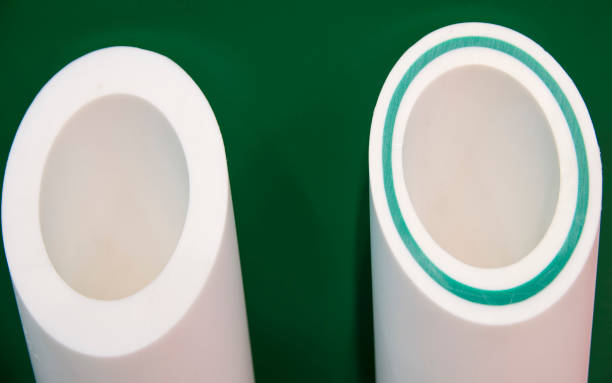
All materials must be inspected prior to installation. High-quality PPR pipes should have a smooth, even surface free from cracks, air bubbles, or significant deformation. Fittings must match the pipe dimensions, and connection points should be intact. Any products with quality defects should be replaced immediately to prevent issues such as leaks or insecure connections after installation.
Measuring and Marking Based on Drawings
Measuring and marking the layout is a crucial step in the installation process. Installers must determine the pipeline route based on site conditions and design requirements, using a tape measure for accurate measurements. Planning the route in advance minimizes the need for later modifications or rework, thereby improving construction efficiency. A well-planned layout also facilitates future maintenance and repairs.
Cutting PPR Pipes to Size
Once dimensions are determined, use a specialized pipe cutter to cut the PPR pipes. The cut must be clean and perpendicular to the pipe’s axis; slanted cuts or burrs can compromise the quality of the heat fusion connection. After cutting, clean the pipe ends to ensure the connection area is tidy and ready for heat fusion welding.
Marking Insertion Depth for Accuracy
Before heat fusion, the insertion depth is typically marked on the pipe end. Different pipe specifications require different insertion depths; marking this in advance prevents inserting the pipe too deeply or too shallowly. Correct insertion depth ensures sufficient fusion surface area, resulting in stronger connections and better sealing performance.
Heating for Heat Fusion Connection
Heat fusion welding is the core step in PPR pipe installation. During construction, first heat the fusion machine to the specified temperature—generally around 260°C. Once the equipment reaches the operating temperature, simultaneously insert the pipe and fitting into the corresponding heating dies. Strict Control of Heating Time
Heating time must be strictly controlled based on the pipe diameter to ensure uniform softening of the material surface.
Rapid Butt-Fusion for a Strong Connection
Once heating is complete, the pipe should be rapidly inserted into the fitting to the marked depth. A straight-line motion must be maintained during insertion, avoiding any rotation or repeated repositioning. As the heated material is in a molten state, contact between the components allows for molecular fusion, creating a robust, integrated structure.
Natural Cooling to Ensure Weld Quality
After the connection is made, the assembly must remain undisturbed while cooling. No external force should be applied to the joint, and it must not be moved or bent. As the temperature drops, the molten layer re-solidifies, forming a stable structure at the weld site. Adequate cooling ensures optimal joint strength.
Securing the Pipeline for Operational Stability
Upon completion of installation, pipe clamps and supports must be installed according to design specifications to secure the pipeline. Proper spacing of supports prevents displacement caused by the pipe’s weight, water flow impact, or thermal expansion and contraction. For extensive piping systems, adequate allowance for thermal expansion should be provided to enhance operational stability.
Pressure Testing to Verify Installation Integrity
Before the system is put into service, a pressure test must be conducted on the entire pipeline. By filling the system with water and applying pressure, one can check for leaks at any of the joints. Any irregularities detected must be promptly repaired or adjusted. The system may only be officially put into operation after successfully passing the pressure test.
Flushing the Pipeline to Ensure Water Supply Hygiene
After pressure testing, the pipeline typically requires flushing. Circulating clean water through the system removes impurities, dust, and debris left over from construction, ensuring the interior of the water supply system remains clean. For drinking water systems, flushing is a crucial step in guaranteeing water safety.
Conclusion
The installation process for PPR piping involves several key steps: construction preparation, material inspection, measurement and layout, pipe cutting, depth marking, heat-fusion welding, natural cooling, pipeline securing, pressure testing, and system flushing. Each stage impacts the final quality of the installation; therefore, strict adherence to specifications is mandatory throughout the process. Only by ensuring material quality, proper welding techniques, and thorough testing can the advantages of PPR piping—such as corrosion resistance, excellent sealing, and long service life—be fully realized, providing a safe and reliable water supply system for the building.
Contact
IFAN est un fabricant professionnel fort de 30 ans d'expérience, spécialisé dans la production de tuyaux, raccords et vannes en plastique de haute qualité. Nos produits comprennent des vannes en laiton, des vannes en PPR, ainsi que divers tuyaux et raccords pour répondre aux différents besoins de nos clients. Que vous ayez besoin de tuyaux de plomberie et d'évacuation ou de vannes, IFAN propose une gamme diversifiée de produits de haute qualité et économiques pour vos projets. Vous trouverez nos coordonnées ci-dessous.
Nous répondrons à votre e-mail ou fax dans les 24 heures.
Vous pouvez nous appeler à tout moment si vous avez des questions sur notre production.
Pour plus d'informations, veuillez visiter notre site Web https://www.ifanplus.com/
Veuillez envoyer un mail à : [email protected]
WhatsApp : + 86 19857948982
Norme internationale IFAN
Les produits IFAN sont conformes à un large éventail de normes internationales, garantissant sécurité, fiabilité et compatibilité mondiale. Parmi celles-ci figurent les normes ASTM 2846, DIN 8079/8080, ASTM F441/F441M SCH80, de nombreuses spécifications DIN, les normes de la série GB/T 18993, AS/NZS 1477, CSA B137.6, NSF/ANSI 14, ainsi que TIS 17-2532/1131-2535. En respectant ces normes reconnues, IFAN garantit une qualité et des performances constantes dans différentes régions et pour différentes applications.























