


Introduction
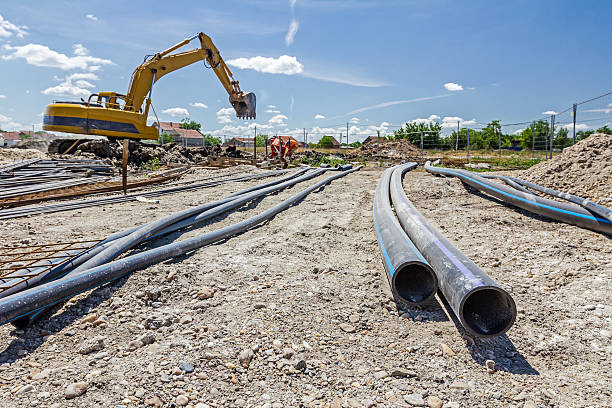
Agriculture depends on reliable and efficient water delivery systems. Farmers and irrigation managers need pipelines that are durable, safe, and cost-effective. Traditional pipes, such as steel and concrete, often face issues like corrosion, leakage, and high installation costs. In contrast, the pipeline PE has become a preferred choice for agricultural and irrigation systems. Its flexibility, corrosion resistance, and long service life make it ideal for both small farms and large-scale irrigation projects. This article explains the definition, features, applications, selection tips, installation guidelines, and comparisons of PE pipelines while answering common questions.
Foire aux questions (FAQ)
1. What is a PE pipeline?
A PE pipeline is a piping system made from polyethylene, a strong and flexible thermoplastic material used for fluid transport.
2. Why are PE pipelines suitable for irrigation?
They resist corrosion, handle varying water pressures, and adapt easily to uneven agricultural land.
3. How long do PE pipelines last in farming use?
With proper installation, PE pipelines can last more than in irrigation and agricultural systems.
4. Can PE pipelines carry drinking water for livestock?
Yes, they are safe for potable water and are widely used in both human and animal water supply.
5. Are PE pipelines environmentally friendly?
Yes, PE pipelines are recyclable, require less energy to produce, and reduce water loss compared to older systems.
Definition and Key Features of PE Pipeline
A PE pipeline is produced by extruding polyethylene resin into a continuous pipe structure. Depending on the grade—PE63, PE80, or PE100—the pipe can withstand different levels of pressure and stress.
Key features of PE pipelines include:
- Flexibilité: Can bend without cracking, ideal for farms with uneven terrain.
- Résistance à la corrosion: Does not rust or scale, ensuring clean and consistent water flow.
- Lightweight design: Easy to transport and install, even in remote rural areas.
- High pressure capacity: Can handle variable pressures common in irrigation systems.
- Durabilité: Resistant to fertilizers, pesticides, and soil chemicals.
- Longévité: Expected service life exceeds with proper handling.
These features make PE pipelines particularly valuable in agriculture, where reliability and efficiency are essential.
Applications et industries courantes
PE pipelines have found extensive applications in agriculture and irrigation. Some of the most common uses include:
- Irrigation goutte à goutte: Delivers water directly to plant roots with minimal loss.
- Sprinkler systems: Distributes water evenly across fields using pressurized PE pipelines.
- Main water distribution: Connects water sources such as reservoirs or pumps to fields.
- Serres: Supplies precise water flow to controlled environments.
- Livestock watering: Provides safe drinking water to animals without contamination.
- Drainage systems: Channels excess rainwater away from farmland to prevent flooding.
Beyond agriculture, PE pipelines are also used in urban water supply, industrial cooling systems, mining, and gas distribution. Their adaptability shows why they are trusted across different industries.
Buying Guide for PE Pipeline
Choosing the right PE pipeline for agricultural use requires attention to several factors:
- Material grade: Higher grades like PE100 offer better strength and longer service life.
- Diameter and wall thickness: Match these to irrigation requirements and water pressure.
- Color coding: Black PE with blue stripes is used for water; yellow-striped PE is used for gas.
- résistance aux UV: For exposed installations, UV-stabilized PE pipelines prevent degradation.
- Certifications: Ensure compliance with ISO, ASTM, or local standards for quality assurance.
- Application-specific needs: For drip irrigation, smaller diameters may be ideal; for main lines, larger sizes are necessary.
- Supplier reliability: Choose manufacturers with a reputation for consistency and technical support.
By considering these factors, farmers and project managers can select pipelines that ensure efficiency and sustainability.
Considérations relatives à l'installation
The success of an irrigation project depends on correct installation of PE pipelines. Key steps include:
- Planning layout: Design the pipeline system according to crop requirements and land shape.
- Manutention: Avoid dragging pipes on rough ground; use lifting equipment for large diameters.
- Joining methods: Use butt fusion, electrofusion, or compression fittings for strong, leak-proof joints.
- Alignment and support: Lay pipelines in smooth curves and provide proper bedding to prevent stress points.
- Essai: Perform hydrostatic pressure tests to detect leaks before regular operation.
- Backfilling: Use fine soil or sand to protect the pipeline and prevent damage during soil compaction.
- Maintenance checks: Inspect periodically for leaks, damages, or blockages to maintain system efficiency.
Following these practices ensures reliable long-term performance in agricultural environments.
PE Pipeline vs Other Pipe Materials
A comparison with other common pipe materials helps highlight the advantages of PE pipelines in agriculture.
| Fonctionnalité | PE Pipeline | Tuyau en acier | Tuyau en PVC | Concrete Pipe |
|---|---|---|---|---|
| Résistance à la corrosion | Excellent, no rust or scale | Poor, rusts quickly in soil | Good, but can degrade in UV | Moderate, chemical erosion possible |
| Flexibilité | High, adapts to uneven land | Very low, rigid | Medium, limited bending | Very low, fully rigid |
| Poids | Lightweight, easy to transport | Heavy, requires machinery | Lightweight, easy to handle | Extremely heavy, hard to install |
| Durée de vie | 50+ years with proper use | 20– with high maintenance | 25–40 ans | 50+ years but brittle risks |
| Coût d'installation | Low, simple joining and handling | High, welding and lifting costs | Faible à moyen | High, requires heavy equipment |
This comparison shows that PE pipelines outperform traditional options in key areas like corrosion resistance, flexibility, and cost-effectiveness, making them especially suitable for agricultural and irrigation systems.
Conclusion
Le pipeline PE has transformed water management in agriculture and irrigation. Its corrosion resistance ensures clean and reliable water supply, while its flexibility adapts to challenging landscapes. With a long service life and eco-friendly properties, PE pipelines provide a sustainable solution for farmers and irrigation managers. Compared to steel, PVC, or concrete, they deliver clear advantages in cost, efficiency, and environmental impact.
By selecting the right grade, ensuring proper installation, and following recognized standards, farmers can build irrigation systems that support higher productivity and long-term sustainability. As global agriculture faces challenges of water scarcity and climate change, PE pipelines will continue to play a central role in ensuring efficient and reliable water distribution for future generations.
Norme internationale IFAN
IFAN strictly follows international standards to ensure product quality and reliability. Our piping systems comply with ASTM D3035, ASTM D3350, ISO 4427 Series standards, EN 12201 Series standards, DIN 8074/8075, GB/T 13663 Series standards, AS/NZS 4130, JIS K6760, BS 6572, CSA B137.1, and many other globally recognized specifications. These certifications guarantee durability, safety, and performance across diverse applications worldwide.
Contact
IFAN est un fabricant professionnel fort de 30 ans d'expérience, spécialisé dans la production de tuyaux, raccords et vannes en plastique de haute qualité. Nos produits comprennent des vannes en laiton, des vannes en PPR, ainsi que divers tuyaux et raccords pour répondre aux différents besoins de nos clients. Que vous ayez besoin de tuyaux de plomberie et d'évacuation ou de vannes, IFAN propose une gamme diversifiée de produits de haute qualité et économiques pour vos projets. Vous trouverez nos coordonnées ci-dessous.
Nous répondrons à votre e-mail ou fax dans les 24 heures.
Vous pouvez nous appeler à tout moment si vous avez des questions sur notre production.
Pour plus d'informations, veuillez visiter notre site Web https://www.ifanplus.com/
Veuillez envoyer un mail à : [email protected]
WhatsApp : + 86 19857948982























