


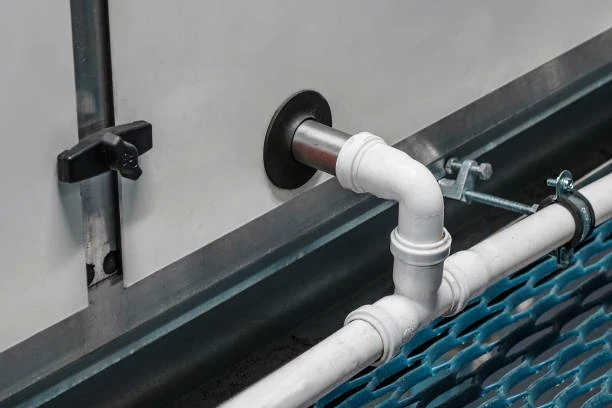
Les raccords en PVC (polychlorure de vinyle) offrent une excellente usinabilité, ce qui en fait un choix privilégié pour diverses applications de plomberie, industrielles et de construction. Leur facilité d'usinage permet la personnalisation, une installation précise et la création de systèmes complexes. Comprendre l'usinabilité des raccords en PVC permet d'apprécier leur polyvalence et leur large utilisation dans différents domaines.
Découpe et façonnage
Cutting and shaping PVC fittings requires minimal effort, thanks to their material properties. Standard cutting tools, such as saws and rotary cutters, easily slice through PVC without causing significant wear on the tools. PVC’s relatively low hardness and high rigidity allow for clean and smooth cuts, which is essential for creating precise fittings that fit perfectly within a system.
In addition, shaping PVC fittings to meet specific design requirements proves straightforward. Whether you need to create custom angles or unique shapes, PVC’s adaptability allows for easy manipulation. Heating PVC fittings with specialized equipment softens the material, enabling easy bending or reshaping to fit particular needs. This flexibility in cutting and shaping reduces the time and cost associated with complex installations, making PVC a practical option for various projects.
Drilling and Threading
Drilling into PVC fittings does not pose significant challenges. The material’s consistent density ensures that drill bits penetrate smoothly without causing cracks or irregularities. This quality proves crucial when creating openings for additional piping or accessories. The uniform structure of PVC prevents the material from chipping or splintering during the drilling process, ensuring a clean, professional finish.
Threading PVC fittings for screw connections or other fastening methods also proves effective. The material accommodates threading tools well, allowing for precise and durable threads. This characteristic ensures that connections made with threaded PVC fittings remain secure and leak-proof. The ease of drilling and threading enhances PVC fittings’ utility in systems requiring custom modifications or specialized attachments.
Gluing and Solvent Welding
PVC fittings excel in applications involving gluing or solvent welding. These processes create strong, permanent bonds between PVC components, ensuring the integrity of the entire system. Gluing PVC involves applying a specialized adhesive that chemically bonds the fittings together, forming a secure and durable connection.
Solvent welding takes the process a step further by slightly melting the surface of the PVC fittings, allowing them to fuse seamlessly. This technique results in a bond that is as strong as the original material, providing excellent resistance to leaks and mechanical stress. The simplicity and effectiveness of gluing and solvent welding contribute to the overall machinability of them, making them a reliable choice for both small-scale and large-scale projects.
Sanding and Smoothing
Sanding PVC fittings to achieve a smooth surface or to remove imperfections proves effective and straightforward. The material responds well to sanding, allowing for the easy removal of rough edges or burrs that may result from cutting or drilling. This process ensures that the fittings maintain a clean and professional appearance, which is especially important in visible installations.
Smoothing the surface of them can also enhance the bonding process when gluing or solvent welding. By sanding the areas where the fittings will join, you create a better surface for the adhesive or solvent to work with, resulting in a stronger connection. The ease of sanding and smoothing adds to the machinability of them, allowing for precise and aesthetically pleasing results.
Compatibility with Machining Equipment
PVC fittings demonstrate excellent compatibility with a wide range of machining equipment. Whether using manual tools or automated machinery, PVC fits seamlessly into various production processes. The material’s stability under machining conditions allows for consistent results without the risk of warping or deformation.
In industrial settings where high-volume production is necessary, PVC fittings can be easily machined in large quantities without sacrificing quality. The predictability of PVC’s behavior under machining conditions ensures that each fitting meets the required specifications, reducing waste and ensuring uniformity across all components. This compatibility with machining equipment enhances the efficiency and cost-effectiveness of working with PVC fittings.
Resistance to Heat and Friction
During machining processes, PVC fittings exhibit resistance to heat and friction, which prevents melting or degradation. This characteristic allows for higher machining speeds, increasing productivity without compromising the quality of the fittings. The resistance to heat ensures that the material maintains its structural integrity even during prolonged machining sessions.
Friction during cutting, drilling, or threading does not cause significant wear on them. This resistance to friction extends the life of the machining tools and reduces maintenance costs. The ability to withstand heat and friction during machining makes PVC fittings an ideal material for projects requiring precision and efficiency.
Considérations environnementales
PVC fittings offer machinability that aligns with environmental considerations. The material allows for efficient use of resources, as the waste generated during machining processes remains minimal. Additionally, the ease of recycling PVC fittings after their useful life reduces the environmental impact of using this material.
By selecting PVC fittings, industries can take advantage of a material that offers both machinability and sustainability. The ability to machine PVC with minimal waste, combined with the potential for recycling, supports environmentally responsible practices in manufacturing and construction.
Conclusion
PVC fittings provide exceptional machinability, making them a versatile and practical choice for a wide range of applications. The ease of cutting, shaping, drilling, and threading allows for precise and efficient installation, while the effectiveness of gluing and solvent welding ensures secure connections. Sanding and smoothing processes enhance the appearance and performance of the fittings, contributing to the overall quality of the system. Compatibility with various machining equipment and resistance to heat and friction further highlight the advantages of using PVC fittings in diverse projects. The machinability of them not only supports efficient production and installation but also aligns with environmental considerations, making them a valuable material in modern construction and industrial practices.
Contact
IFAN Fort de 30 ans d'expérience, nous sommes un fabricant professionnel de tuyaux, raccords et vannes en plastique de haute qualité. Nos produits comprennent des vannes en laiton, des vannes en PPR, ainsi que divers tuyaux et raccords pour répondre aux différents besoins de nos clients. Que vous ayez besoin de tuyaux de plomberie et d'évacuation ou de vannes, IFAN Nous proposons une gamme diversifiée de produits de haute qualité et économiques pour soutenir vos projets. Vous trouverez ci-dessous nos coordonnées.
Nous répondrons à votre e-mail ou fax dans les 24 heures.
Vous pouvez nous appeler à tout moment si vous avez des questions sur notre production.
Pour plus d'informations, veuillez visiter notre site Web https://www.ifanplus.com/
Veuillez envoyer un mail à : [email protected]
WhatsApp : + 86 19857948982























