


1. Introduction
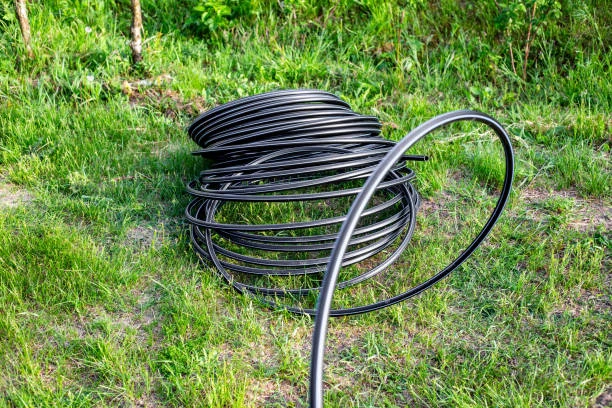
HDPE corrugated pipe have revolutionized drainage systems by offering superior flexibility, strength, and durability. These pipes are designed with a corrugated exterior and smooth interior to optimize flow and resist external pressures. Their lightweight nature and ease of installation make them a preferred choice in a variety of drainage applications. This article explores the characteristics, benefits, applications, selection tips, installation guidelines, and comparisons with other piping materials.
2. Foire aux questions (FAQ)
1. What is an HDPE corrugated pipe?
It is a pipe made from high-density polyethylene featuring a corrugated outer wall and smooth inner surface, designed primarily for drainage.
2. Why choose corrugated pipes over smooth pipes?
Corrugation provides enhanced structural strength and flexibility, allowing pipes to withstand external loads while maintaining efficient flow inside.
3. Are HDPE corrugated pipes suitable for underground drainage?
Yes, they are widely used underground for stormwater and wastewater drainage due to their durability and flexibility.
4. How long do HDPE corrugated pipes last?
These pipes can last or more with proper installation and maintenance.
5. Can HDPE corrugated pipes handle heavy traffic loads?
Yes, their design allows them to withstand significant soil and traffic loads, especially when installed with proper bedding.
3. Définition et caractéristiques principales
HDPE corrugated pipes are constructed with a ribbed exterior to provide strength and a smooth interior to reduce friction and improve flow rate. Key features include:
- High resistance to corrosion and chemical degradation
- Excellent flexibility to adapt to varied terrain and installation requirements
- Lightweight for easier transport and installation
- Durable against abrasion and impact
- Efficient water flow due to smooth interior
- UV resistant when designed for above-ground exposure
4. Utilisations et industries courantes
HDPE corrugated pipes serve various sectors:
- Stormwater drainage systems in urban and rural areas
- Agricultural drainage to manage field water and soil moisture
- Drainage des routes et des autoroutes protecting infrastructure from water damage
- Landfill leachate collection systems
- Building foundation drainage to prevent water accumulation
- Industrial wastewater management
5. Guide d'achat : éléments à prendre en compte
When selecting HDPE corrugated pipes, consider:
- Pipe diameter and length based on hydraulic requirements
- Wall thickness and structural integrity for load-bearing capacity
- Certification and standards compliance, such as ASTM F405 or EN 13476
- résistance aux UV if exposed to sunlight
- Jointing systems, typically snap-on or bell-and-spigot joints
- Environmental factors, including soil type and chemical exposure
6. Conseils d'installation
- Excavate trench with proper depth and width, ensuring uniform bedding
- Place a well-compacted granular bedding layer beneath the pipe
- Avoid sharp bends or stress during laying
- Use manufacturer-recommended joining techniques to ensure watertight seals
- Backfill carefully to prevent pipe deformation
- Test drainage system performance after installation
7. HDPE Corrugated Pipe vs Other Drainage Pipes (Comparison Table)
| Fonctionnalité | Tuyau ondulé en PEHD | Concrete Pipe | Tuyau en PVC | Tuyau en acier |
|---|---|---|---|---|
| Poids | Very light | Very heavy | Lumière | Lourd |
| Flexibilité | Haut | Faible | Faible | Faible |
| Résistance à la corrosion | Excellent | Pauvre | Bien | Pauvre |
| Coût d'installation | Faible | Haut | Modéré | Haut |
| Durée de vie | 50+ ans | 30– | 30– | 20 à 40 ans |
| Flow Efficiency | High (smooth inside) | Modéré | Haut | Modéré |
8. Conclusion
HDPE corrugated pipes provide a flexible, durable, and cost-effective drainage solution suitable for diverse applications. Their strength, longevity, and ease of installation make them ideal for modern drainage challenges. Selecting the right pipe and installing it correctly ensures long-lasting system performance.
Normes IFAN
Les raccords de tuyauterie en PE sont conformes à de nombreuses normes internationales garantissant sécurité, performance et compatibilité. Parmi celles-ci :
- ASTM D3035 et ASTM D3350 pour les tuyaux en PE résistants à la pression
- ISO 4427 et EN 12201 pour les applications d'approvisionnement en eau
- DIN 8074/8075 pour les spécifications dimensionnelles et de qualité
- GB/T 13663 pour les normes nationales chinoises relatives aux tuyaux en PE
- AS/NZS 4130 pour les systèmes australiens et néo-zélandais
- JIS K6760 pour les normes japonaises de tuyauterie industrielle
- BS 6572 pour les systèmes d'alimentation en eau froide au Royaume-Uni
- CSA B137.1 pour les systèmes de tuyauterie en PE canadiens
Ces normes garantissent que les raccords répondent à des exigences élevées en matière de résistance, de résistance chimique et de durabilité à long terme dans une grande variété d'installations.
Contactez l'IFAN pour les catalogues et les échantillons
Besoin de documents techniques, de catalogues ou d'échantillons ? Contactez l'IFAN dès aujourd'hui.
📧 Courriel : [email protected]
📱 Whatsapp : +86 19857948982
Notre équipe répond rapidement et fournit un soutien professionnel pour tous vos besoins en matière de pipeline.























