


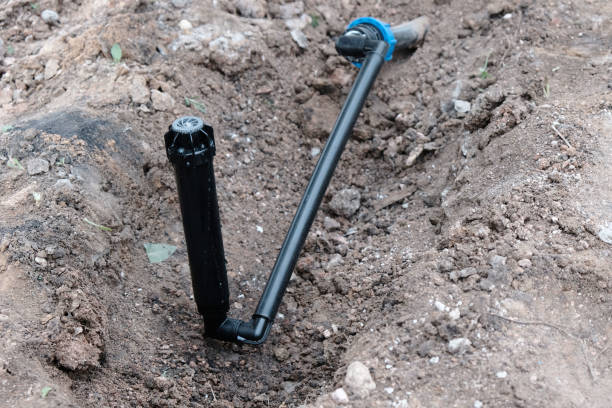
Water management plays a vital role in modern farming, and choosing the right irrigation system can save time, effort, and resources. Irrigation HDPE pipe has become a go-to choice for many farmers because it combines durability, flexibility, and ease of installation. These pipes make watering crops more efficient, reduce maintenance, and adapt well to different types of farmland. Using HDPE pipes ensures that water reaches plants consistently, which helps increase crop yield and overall farm productivity. With proper planning and installation, these pipes can last for decades without frequent repairs. If you are looking for reliable HDPE pipes and fittings, Plumbers & Irrigation Warehouse at Shop 9, Boundary Corner, Malibongwe Dr & Boundary Rd, Kya Sands, Roodepoort, Gauteng, 2169, offers a variety of options suitable for small and large farms alike. In this article, we will cover the basics of HDPE pipes, their advantages, applications, installation tips, and comparisons with other piping materials to help farmers make informed decisions.
Foire aux questions (FAQ)
- What is an irrigation HDPE pipe?
An irrigation HDPE pipe is a high-density polyethylene pipe designed to transport water efficiently in agricultural systems. It is lightweight, durable, and suitable for drip, sprinkler, or flood irrigation. - How long do HDPE pipes last?
With proper installation and care, HDPE pipes can last over 25 years. They resist corrosion, UV damage, and chemical exposure, making them very long-lasting. - Can HDPE pipes handle uneven terrain?
Yes. The flexibility of HDPE pipes allows them to bend around slopes and obstacles without breaking. This makes them ideal for farms with irregular or hilly landscapes. - Can HDPE pipes be connected to other types of pipes?
Yes. HDPE pipes can connect to PVC, metal, or older irrigation systems using the right fittings. Proper sealing ensures leak-free operation. - Do HDPE pipes require regular maintenance?
Maintenance is minimal. Occasionally checking fittings, flushing the system, and removing debris is enough to keep it functioning efficiently.
Définition et caractéristiques principales
Irrigation HDPE pipe is made from high-density polyethylene, a type of strong thermoplastic. Its combination of strength, flexibility, and chemical resistance makes it an excellent choice for agricultural irrigation. These pipes come in different diameters, wall thicknesses, and pressure ratings, allowing farmers to select the right type for their needs.
Some important features include:
- Durabilité: Resistant to cracking, pressure, and long-term wear.
- Flexibilité: Can bend around obstacles and adjust to terrain variations.
- Résistance à la corrosion : Unlike metal pipes, HDPE does not rust.
- UV resistance: Designed to withstand sunlight when used outdoors.
- Surface intérieure lisse : Reduces friction, ensuring consistent water flow.
- Environmentally safe: Made from non-toxic, recyclable materials suitable for crops.
These features ensure that HDPE pipes provide reliable water delivery in various agricultural scenarios.
Utilisations et applications courantes
HDPE pipes are versatile and widely used in agricultural irrigation:
- Drip irrigation: Delivers water directly to the root zone, conserving water and nutrients.
- Sprinkler irrigation: Ensures even water distribution across fields.
- Greenhouses: Supplies water to controlled environments efficiently.
- Hydroponics: Provides reliable water and nutrient supply for soilless cultivation.
- Water transfer: Moves water from reservoirs, rivers, or wells to fields.
- Livestock watering: Supplies water to animals efficiently and safely.
The adaptability of HDPE pipes makes them suitable for small family farms and large commercial agricultural operations alike.
Considérations relatives à l'installation
Installing HDPE pipes is simpler compared to rigid pipes, but careful planning is still necessary:
- Design the layout: Map out the farm, noting slopes, water sources, and obstacles.
- Prepare trenches or paths: Ensure smooth placement without sharp rocks or debris that may damage pipes.
- Use the right fittings: Compression, butt-fusion, or electrofusion fittings ensure secure connections.
- Avoid sharp bends: While flexible, pipes should follow gradual curves to prevent stress points.
- Pressure testing: Test the system for leaks before regular operation.
- Anchor pipes if needed: Above-ground installations require securing pipes to prevent movement.
- Regular checks: Inspect connections, flush pipes, and clean filters to maintain efficiency.
Following these steps makes installation faster and ensures the system performs well over time.
Comparaison avec d'autres matériaux de tuyaux
| Fonctionnalité | Tuyau en PEHD | Tuyau en PVC | Tuyau métallique |
|---|---|---|---|
| Durabilité | Haut | Modéré | High, but prone to rust |
| Flexibilité | Excellent | Faible | Faible |
| Résistance à la corrosion | Excellent | Modéré | Pauvre |
| Résistance aux UV | Haut | Modéré | Faible |
| Facilité d'installation | Facile | Modéré | Difficile |
| Coût | Modéré | Faible | Haut |
| Durée de vie | 25+ ans | 15-20 years | 10-15 years |
From the table, it’s clear that HDPE pipes outperform PVC and metal pipes in flexibility, corrosion resistance, and lifespan—making them a smart choice for farming irrigation.
Conclusion
Proper irrigation is crucial for healthy crops and sustainable farming. Irrigation HDPE pipe offers easy installation, flexibility, and long-term durability, making it ideal for farms of all sizes. These pipes reduce maintenance, adapt to various terrains, and ensure consistent water supply to crops, which in turn improves yield and efficiency. Farmers and irrigation specialists looking for quality HDPE pipes can rely on Plumbers & Irrigation Warehouse, Shop 9, Boundary Corner, Malibongwe Dr & Boundary Rd, Kya Sands, Roodepoort, Gauteng, 2169, for a wide range of options. By choosing HDPE pipes, you can simplify irrigation, conserve water, and boost productivity while investing in a solution that lasts for decades.
Contact
IFAN est un fabricant professionnel fort de 30 ans d'expérience, spécialisé dans la production de tuyaux, raccords et vannes en plastique de haute qualité. Nos produits comprennent des vannes en laiton, des vannes en PPR, ainsi que divers tuyaux et raccords pour répondre aux différents besoins de nos clients. Que vous ayez besoin de tuyaux de plomberie et d'évacuation ou de vannes, IFAN propose une gamme diversifiée de produits de haute qualité et économiques pour vos projets. Vous trouverez nos coordonnées ci-dessous.
Nous répondrons à votre e-mail ou fax dans les 24 heures.
Vous pouvez nous appeler à tout moment si vous avez des questions sur notre production.
Pour plus d'informations, veuillez visiter notre site Web https://www.ifanplus.com/
Veuillez envoyer un mail à : [email protected]
WhatsApp : + 86 19857948982
Norme internationale IFAN
Les produits IFAN sont conformes à un large éventail de normes internationales, garantissant sécurité, fiabilité et compatibilité mondiale. Parmi celles-ci figurent les normes ASTM 2846, DIN 8079/8080, ASTM F441/F441M SCH80, de nombreuses spécifications DIN, les normes de la série GB/T 18993, AS/NZS 1477, CSA B137.6, NSF/ANSI 14, ainsi que TIS 17-2532/1131-2535. En respectant ces normes reconnues, IFAN garantit une qualité et des performances constantes dans différentes régions et pour différentes applications.























