


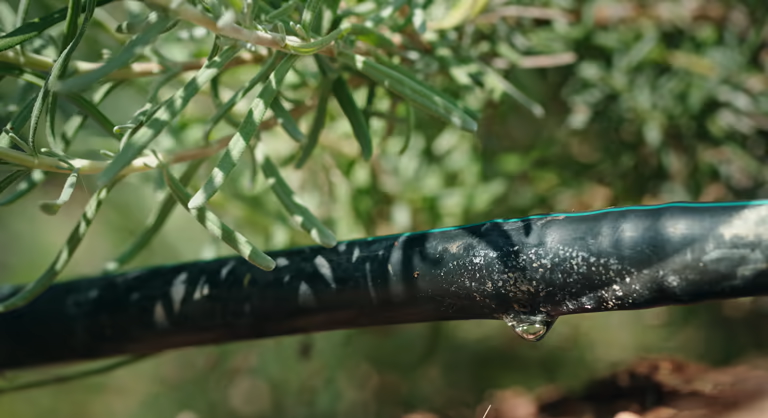
A reliable water supply system is vital for homes, commercial buildings, and industrial facilities. Choosing the right piping material can make a huge difference in durability, maintenance, and overall efficiency. Water supply HDPE pipe has become a trusted solution worldwide due to its strong resistance to corrosion, long lifespan, and flexibility. Whether you are installing plumbing in a new house, setting up irrigation for farms, or designing industrial water networks, HDPE pipes provide a cost-effective and efficient solution. In this article, we will explore the essential features of water supply HDPE pipe, its common uses, installation tips, and how it compares with other piping materials. If you are looking for high-quality HDPE pipes in Zimbabwe, you can visit Nations Hardware & Electrical, located at 101 Robert Mugabe Road, Corner Sam Nujoma, Harare, Zimbabwe, for expert advice and a wide selection of pipes and fittings.
Foire aux questions (FAQ)
- What is a water supply HDPE pipe?
A water supply HDPE pipe is a high-density polyethylene pipe designed to transport potable water, industrial fluids, or wastewater safely. It is lightweight, flexible, and highly resistant to corrosion. - Why should I choose HDPE pipes over traditional metal or PVC pipes?
HDPE pipes last longer, reduce leakages, resist corrosion, and are easier to install. They are also more flexible, which helps navigate obstacles without additional joints. - Can HDPE pipes handle high-pressure water systems?
Yes, HDPE pipes can withstand high water pressure. Their pressure rating depends on pipe diameter and wall thickness, making them suitable for residential, commercial, and industrial systems. - Are HDPE pipes suitable for hot water applications?
Standard HDPE pipes are mainly for cold water. For hot water systems, specially formulated HDPE or PEX pipes may be recommended to handle higher temperatures. - Where can I buy reliable HDPE pipes locally?
You can purchase durable water supply HDPE pipes at Nations Hardware & Electrical, 101 Robert Mugabe Road, Corner Sam Nujoma, Harare, Zimbabwe. They provide guidance on selecting the right size and fittings for any project.
Définition et caractéristiques principales
HDPE stands for high-density polyethylene, a thermoplastic polymer widely used in water and gas distribution. Water supply HDPE pipe is manufactured using high-quality polyethylene resin, giving it excellent mechanical strength, flexibility, and chemical resistance.
Les principales caractéristiques comprennent :
- Durability: HDPE pipes can last or more under normal operating conditions.
- Corrosion resistance: They do not rust, ensuring clean and safe water.
- Flexibility: Pipes can bend to accommodate curves or obstacles, reducing the need for multiple joints.
- Leak-free connections: Heat fusion or mechanical joints create a seamless water-tight system.
- Chemical resistance: HDPE pipes handle many chemicals, making them suitable for industrial use.
- Lightweight: Easier to transport and install than metal or concrete pipes.
These features make HDPE pipes a reliable and cost-effective choice for both domestic and industrial water supply systems.
Applications et industries courantes
Water supply HDPE pipe is versatile and widely used in different sectors:
- Residential plumbing: Homes and apartments benefit from leak-free, long-lasting water supply.
- Commercial and office buildings: HDPE pipes minimize maintenance while providing a reliable water supply.
- Agricultural irrigation: Flexible HDPE pipes are perfect for sprinklers, drip irrigation, and canals.
- Industrial water networks: Factories need pipes that resist corrosion and chemicals, which HDPE delivers.
- Municipal water distribution: Cities and towns use HDPE pipes to prevent water loss and ensure long-term reliability.
The versatility of HDPE pipes shows why they are a preferred choice for both small-scale and large-scale projects.
Conseils d'installation
Proper installation is key to maximizing the lifespan of HDPE pipes. Here are some practical tips:
- Trench preparation: Remove sharp rocks and debris from trenches to prevent pipe damage.
- Pipe handling: Avoid dragging pipes on rough surfaces to prevent scratches or cracks.
- Joining: Use heat fusion or mechanical fittings, ensuring pipe ends are clean and properly aligned.
- Bending: Follow the manufacturer’s minimum bending radius to avoid stress points.
- Pressure testing: Test the system for leaks before backfilling trenches.
Following these guidelines ensures a durable, efficient water supply system that minimizes maintenance over time.
HDPE Pipe vs Other Piping Materials
| Fonctionnalité | Tuyau en PEHD | Tuyau en PVC | Tuyau métallique |
|---|---|---|---|
| Poids | Léger | Moyen | Lourd |
| Flexibilité | Haut | Faible | Faible |
| Résistance à la corrosion | Excellent | Modéré | Pauvre |
| Installation | Facile | Facile | Difficile |
| Durée de vie | 50+ ans | 25- | 20-25 years |
| Entretien | Faible | Modéré | Haut |
| Résistance aux fuites | Excellent | Bien | Modéré |
As shown, water supply HDPE pipe outperforms traditional materials in durability, corrosion resistance, and flexibility. Its lower maintenance needs make it cost-effective in the long run.
Conclusion
Water supply HDPE pipe offers a durable, efficient, and cost-effective solution for residential, commercial, and industrial water systems. Its flexibility, corrosion resistance, and long lifespan make it a preferred choice over PVC or metal pipes. Proper installation ensures leak-free and smooth water distribution for decades.
For high-quality HDPE pipes and professional advice, visit Nations Hardware & Electrical at 101 Robert Mugabe Road, Corner Sam Nujoma, Harare, Zimbabwe. They provide a variety of pipe sizes, fittings, and guidance for both domestic and industrial projects. Choosing HDPE pipes ensures reliability, performance, and peace of mind for any water supply system.
Whether you are setting up home plumbing, managing irrigation networks, or installing industrial water systems, water supply HDPE pipe delivers unmatched durability and efficiency.
Contact
IFAN est un fabricant professionnel fort de 30 ans d'expérience, spécialisé dans la production de tuyaux, raccords et vannes en plastique de haute qualité. Nos produits comprennent des vannes en laiton, des vannes en PPR, ainsi que divers tuyaux et raccords pour répondre aux différents besoins de nos clients. Que vous ayez besoin de tuyaux de plomberie et d'évacuation ou de vannes, IFAN propose une gamme diversifiée de produits de haute qualité et économiques pour vos projets. Vous trouverez nos coordonnées ci-dessous.
Nous répondrons à votre e-mail ou fax dans les 24 heures.
Vous pouvez nous appeler à tout moment si vous avez des questions sur notre production.
Pour plus d'informations, veuillez visiter notre site Web https://www.ifanplus.com/
Veuillez envoyer un mail à : [email protected]
WhatsApp : + 86 19857948982
Norme internationale IFAN
Les produits IFAN sont conformes à un large éventail de normes internationales, garantissant sécurité, fiabilité et compatibilité mondiale. Parmi celles-ci figurent les normes ASTM 2846, DIN 8079/8080, ASTM F441/F441M SCH80, de nombreuses spécifications DIN, les normes de la série GB/T 18993, AS/NZS 1477, CSA B137.6, NSF/ANSI 14, ainsi que TIS 17-2532/1131-2535. En respectant ces normes reconnues, IFAN garantit une qualité et des performances constantes dans différentes régions et pour différentes applications.























