


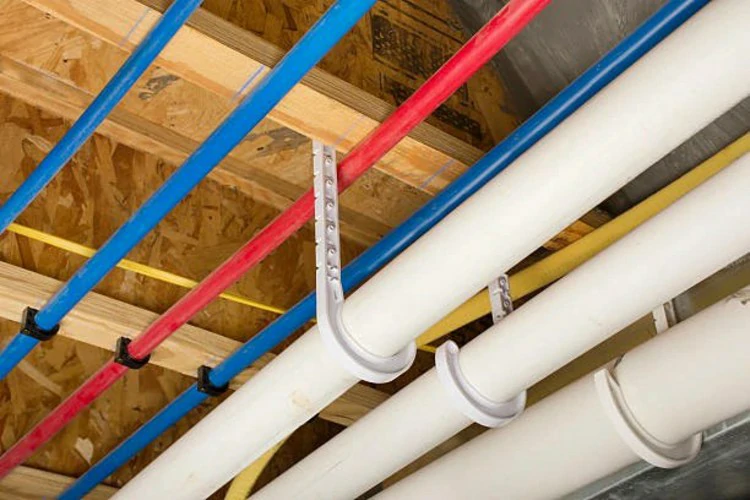
Introduction:
CPVC plumbing systems excel in performance and durability, making them popular for residential and commercial projects. Here, we’ll explore effective methods and tips for their installation, ensuring reliable plumbing systems.
Préparation et planification :
Assessing the Layout: Before beginning the installation process, carefully assess the plumbing layout and determine the placement of pipes, fittings, and fixtures. Plan the routing of CPVC plumbing to minimize bends, angles, and obstructions, ensuring efficient water flow and easy maintenance.
Gathering Materials and Tools: Gather all necessary materials and tools for the installation, including CPVC plumbing, fittings, solvent cement, primer, measuring tape, pipe cutter, deburring tool, and a suitable wrench. Ensure that you have the correct size and type of CPVC components for the intended application.
Techniques d'installation :
Cutting CPVC plumbing: Use a sharp, fine-toothed saw or a specialized pipe cutter to cut CPVC plumbing to the desired length. Ensure clean, square cuts without burrs for proper fitting and sealing.
Dry-Fitting and Marking: Dry-fit the CPVC pipes and fittings without cement to verify the alignment and fit. Use a marker to mark the insertion depth on both the pipe and fitting, ensuring accurate placement during the final assembly.
Solvent Cement Application: Apply CPVC solvent cement to the outside of the pipe and the inside of the fitting socket using a brush or applicator. Ensure that the cement is spread evenly and covers the entire joint surface to achieve a strong and leak-free bond.
Assembly and Cure Time: Immediately insert the pipe into the fitting socket and give it a quarter turn to evenly distribute the cement. Hold the joint in place for a few seconds to allow the cement to set. Allow sufficient curing time as per the manufacturer’s instructions before pressurizing the system.
Tips for Success:
Work in a well-ventilated area when using solvent cement to avoid inhalation of fumes.
Use CPVC primer before applying solvent cement to enhance the bonding strength and ensure a secure connection.
Avoid over-tightening CPVC fittings, as this can cause stress on the joints and lead to leaks or cracks.
Conduct pressure tests to verify system integrity and leak-free performance before concealing pipes.
Conclusion:
Mastering the installation of CPVC plumbing requires careful planning, proper technique, and attention to detail. Follow these methods and tips for a professional-quality CPVC plumbing installation, ensuring reliable performance and longevity.
Contact
IFAN Fort de 30 ans d'expérience, nous sommes un fabricant professionnel de tuyaux, raccords et vannes en plastique de haute qualité. Nos produits comprennent des vannes en laiton, des vannes en PPR, ainsi que divers tuyaux et raccords pour répondre aux différents besoins de nos clients. Que vous ayez besoin de tuyaux de plomberie et d'évacuation ou de vannes, IFAN Nous proposons une gamme diversifiée de produits de haute qualité et économiques pour soutenir vos projets. Vous trouverez ci-dessous nos coordonnées.
Nous répondrons à votre e-mail ou fax dans les 24 heures.
Vous pouvez nous appeler à tout moment si vous avez des questions sur notre production.
Pour plus d'informations, veuillez visiter notre site Web https://www.ifanplus.com/
Veuillez envoyer un mail à : [email protected]























