


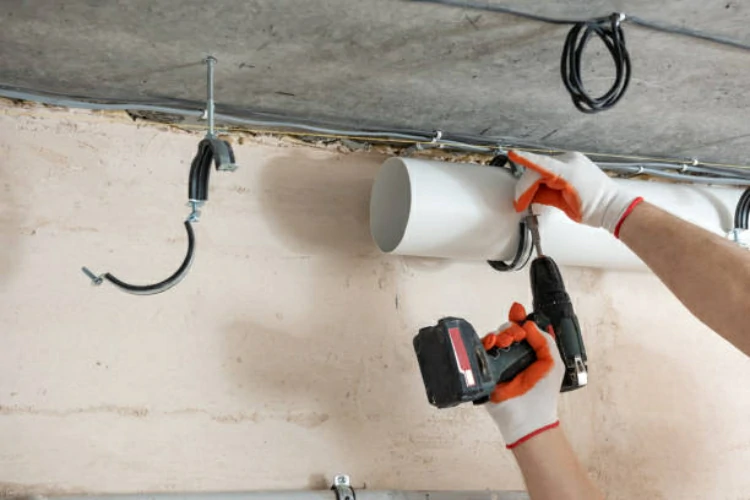
Installing CPVC (Chlorinated Polyvinyl Chloride) pipe fittings requires precision, attention to detail, and adherence to industry best practices. Proper installation ensures the longevity, reliability, and performance of plumbing systems. Let’s delve into the essential steps and techniques for installing CPVC pipe fittings effectively.
1. Pre-Installation Preparation
Assessing the Work Area:
Before commencing the installation, assess the work area to identify the layout, dimensions, and specifications of the plumbing system. Ensure that all necessary tools, materials, and safety equipment are readily available.
Cleaning and Deburring:
Thoroughly clean the pipe and fitting surfaces to remove dirt, debris, and any residues that may affect the bonding process. Use a deburring tool to remove any burrs or sharp edges from the pipe ends to ensure a proper fit.
2. Joint Preparation and Assembly
Applying Primer:
Apply a CPVC pipe fittings primer to the outer surface of the pipe and the inner surface of the fitting socket. The primer prepares the surfaces for solvent cement application, promoting adhesion and ensuring a strong, leak-proof joint.
Application du ciment solvant :
Using a brush or applicator, apply a liberal amount of CPVC pipe fittings solvent cement to the primed surfaces of the pipe and fitting. Ensure even coverage and avoid excess cement, as it may compromise the integrity of the joint.
Assembly and Alignment:
Quickly insert the pipe into the fitting socket, making sure to rotate the pipe slightly to achieve full coverage and a uniform bond. Align the pipe and fitting according to the desired orientation and angle, taking care to maintain proper alignment throughout the assembly process.
3. Curing and Testing
Curing Time:
Allow sufficient time for the solvent cement to cure and bond the pipe and fitting securely. Follow the manufacturer’s recommendations regarding curing time, temperature, and humidity conditions to ensure optimal joint strength and integrity.
Essais de pression :
After the solvent cement has cured, perform a pressure test to verify the integrity of the joints and the overall plumbing system. Apply hydraulic pressure gradually and monitor for any signs of leakage or pressure loss. Rectify any leaks or defects before proceeding with the installation.
Conclusion
Mastering the installation of CPVC pipe fittings is essential for ensuring the reliability, efficiency, and longevity of plumbing systems. By following proper pre-installation preparation, joint preparation and assembly, and curing and testing procedures, plumbers and contractors can achieve leak-proof, durable connections that withstand the rigors of everyday use. With their ease of installation and superior performance, CPVC pipe fittings continue to be a preferred choice for a wide range of residential, commercial, and industrial plumbing applications.
Contact
IFAN Fort de 30 ans d'expérience, nous sommes un fabricant professionnel de tuyaux, raccords et vannes en plastique de haute qualité. Nos produits comprennent des vannes en laiton, des vannes en PPR, ainsi que divers tuyaux et raccords pour répondre aux différents besoins de nos clients. Que vous ayez besoin de tuyaux de plomberie et d'évacuation ou de vannes, IFAN Nous proposons une gamme diversifiée de produits de haute qualité et économiques pour soutenir vos projets. Vous trouverez ci-dessous nos coordonnées.
Nous répondrons à votre e-mail ou fax dans les 24 heures.
Vous pouvez nous appeler à tout moment si vous avez des questions sur notre production.
Pour plus d'informations, veuillez visiter notre site Web https://www.ifanplus.com/
Veuillez envoyer un mail à : [email protected]























