


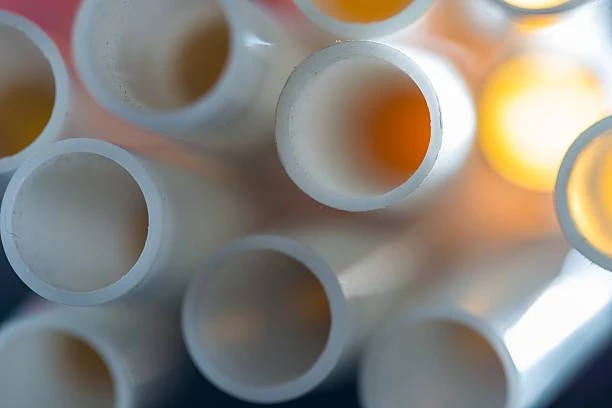
Beneath our feet and behind our walls lies a hidden network of PVC pipes, carrying water, data, and waste. For decades, locating these non-metallic conduits has been a challenging and risky endeavor—until now. The emergence of advanced PVC pipe detection technology represents more than just a new tool; it signifies a fundamental shift in how we approach construction, maintenance, and urban development. These devices are creating opportunities for increased safety, efficiency, and innovation across multiple sectors, while opening new markets for technology developers and service providers. This article explores the expanding horizon of possibilities that PVC pipe detectors are creating.
Basic Characteristics: The Foundation of Opportunity
Modern PVC pipe detectors possess features that make them uniquely suited to address longstanding industry challenges:
- Advanced Sensing Technology: Utilizing ground-penetrating radar (GPR), radio frequency identification (RFID), and acoustic wave technology, these devices can accurately locate non-metallic pipes without excavation
- Data Integration Capabilities: Many modern units can record, store, and transfer detection data to other devices and platforms, creating opportunities for digital documentation and analysis
- User-Friendly Interfaces: Intuitive displays and smartphone connectivity make sophisticated technology accessible to a broader range of users
- Portability and Durability: Lightweight, rugged designs enable use in various environments, from construction sites to finished buildings
Emerging Opportunities: Beyond Basic Detection
The capabilities of modern PVC pipe detectors are creating value in unexpected areas:
1. Digital Transformation of Construction
Pipe detection data is becoming integrated with Building Information Modeling (BIM) systems, allowing for accurate as-built documentation and creating digital twins of infrastructure. This integration helps facility managers and future renovation teams work with precise information about what lies behind walls and underground.
2. Preventive Maintenance Markets
The ability to non-invasively inspect pipe conditions allows for the development of predictive maintenance services. Companies can now offer subscription-based monitoring services that identify potential problems before they cause damage.
3. Insurance and Risk Management
Insurance companies are beginning to recognize the risk-reduction value of pipe detection technology. Some are offering premium reductions for construction projects that utilize advanced detection methods, creating a new value proposition for these devices.
4. Smart City Infrastructure
As cities deploy more underground infrastructure for utilities, communications, and environmental management, accurate mapping and maintenance of these systems becomes crucial. PVC pipe detectors enable the development of comprehensive underground utility maps.
5. Rental and Service-Based Business Models
The high cost of professional-grade equipment has created opportunities for equipment rental businesses and specialized detection services, making the technology accessible to smaller contractors and homeowners.
Industry Applications: Expanding Use Cases
The application of PVC pipe detectors is growing beyond traditional construction uses:
- Telecomunicaciones: Locating PVC conduits for fiber optic cables during network expansion and maintenance
- Environmental Monitoring: Identifying and mapping drainage and runoff systems for environmental compliance
- Agricultural Operations: Locating irrigation systems for maintenance and modification without disrupting crops
- Disaster Response: Quickly assessing and locating damaged utility systems after natural disasters
- Historical Preservation: Non-invasively mapping plumbing systems in historic buildings before restoration work
Public Recognition: Growing Appreciation for Value
Market acceptance of PVC pipe detection technology is accelerating due to several factors:
- Cost Avoidance: Both professionals and homeowners recognize the significant cost savings of preventing accidental pipe damage
- Time Efficiency: Projects proceed faster when workers can confidently avoid hidden obstacles
- Safety Enhancement: The ability to identify pipe locations reduces workplace accidents and liability issues
- Beneficios ambientales: Minimizing unnecessary excavation reduces environmental disruption and waste
- Educational Value: Trade schools and apprenticeship programs are increasingly incorporating detection technology training into their curricula
Preguntas frecuentes (FAQ)
1. How accurate are modern PVC pipe detectors?
Advanced models can detect pipes with centimeter-level accuracy and provide depth measurements within 10% variance, depending on soil conditions and pipe size.
2. Can these devices detect pipes under concrete?
Yes, most professional-grade detectors can penetrate concrete, asphalt, and other common building materials, though detection depth may be reduced.
3. What training is required to operate these devices effectively?
Basic models require minimal training, while advanced units benefit from manufacturer training programs. Many technical schools now offer certification courses.
4. How has smartphone technology impacted pipe detection?
Smartphone integration has dramatically improved data recording, sharing, and visualization capabilities while reducing the cost of sophisticated interfaces.
5. Are there opportunities for small businesses in this field?
Yes, the growing demand has created opportunities for specialized detection services, equipment rental businesses, and consulting services.
Resumen
PVC pipe detection technology represents a significant and growing market opportunity that extends far beyond its original purpose. What began as a specialized tool for avoiding construction accidents has evolved into a platform technology enabling digital transformation in multiple industries. The convergence of advanced sensing technology, data integration capabilities, and growing market awareness has created a perfect environment for innovation and business development.
From large-scale urban infrastructure projects to home renovation projects, the ability to accurately locate non-metallic pipes is reducing costs, improving safety, and enabling new approaches to construction and maintenance. As technology continues to advance and integrate with other digital systems, the opportunities for businesses, professionals, and even DIY enthusiasts will continue to expand. The market for PVC pipe detection technology is not just growing—it’s evolving into an essential component of modern infrastructure management and development.
Contacte con IFAN para catálogos y muestras
¿Necesita documentos técnicos, catálogos o muestras de productos? Contacte con IFAN hoy mismo.
📧 Correo electrónico: [email protected]
📱Whatsapp: +86 19857948982
Nuestro equipo responde rápidamente y brinda soporte profesional para todas sus necesidades de tuberías.
Norma internacional IFAN
Los sistemas de tuberías IFAN cumplen con una amplia gama de normas internacionales para garantizar una alta calidad y rendimiento. Entre ellas, se incluyen las normas ASTM F1974 y ASTM F1281 para sistemas de tuberías multicapa, CSA B137 para aplicaciones de plomería canadienses, DIN 16836 para especificaciones técnicas alemanas, GB18997 para normas chinas e ISO 21003, que abarca los sistemas de tuberías multicapa utilizados en instalaciones de agua caliente y fría. Este amplio alcance de certificación pone de manifiesto el compromiso de IFAN con el cumplimiento normativo global y la fiabilidad de sus productos.























