


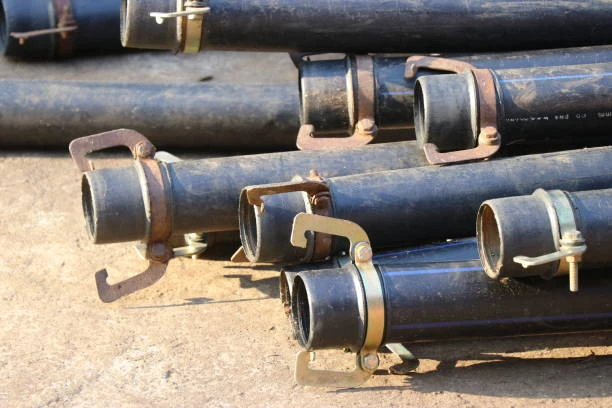
Introducción al plástico HDPE
Plástico HDPE (High-Density Polyethylene) ranks as one of the most versatile and durable thermoplastic materials, known for its exceptional physical stability. Its robust performance in various industries, such as construction, water systems, and packaging, relies on its unique physical characteristics, including its tensile strength, impact resistance, and structural integrity. These properties help ensure that Plastic HDPE maintains its performance under varying conditions.
Understanding the Structure of Plastic HDPE
Plastic HDPE consists of polymer chains that form a highly crystalline structure. These polymer chains are long and straight, allowing the material to pack tightly. This high-density arrangement leads to a more ordered molecular structure compared to low-density polyethylene (LDPE), which has more branching and a less crystalline structure.
The crystalline nature of HDPE gives it a high density, contributing to its stiffness and resistance to deformation. This dense structure results in improved strength, rigidity, and overall physical stability. Unlike materials with a lower density, HDPE resists mechanical stress and maintains its shape over time.
Key Physical Properties of Plastic HDPE
Plastic HDPE possesses several critical physical properties that enhance its stability, durability, and versatility. These properties play an essential role in various industrial applications, from plumbing systems to consumer products. Below are the key physical attributes that define Plastic HDPE’s performance.
Resistencia a la tracción
Tensile strength refers to the ability of a material to resist breaking under tension. Plastic HDPE demonstrates impressive tensile strength due to its tightly packed crystalline structure. The polymer chains in HDPE align to maximize strength, allowing it to withstand significant stress before breaking.
The tensile strength of HDPE typically ranges from 20 to 37 MPa, depending on the specific grade and processing conditions. As a result, Plastic HDPE maintains its integrity under pressure, making it a popular choice for applications requiring high-strength materials, such as pipes and structural components.
Resistencia al impacto
Impact resistance measures how well a material can withstand sudden shock or mechanical stress. Plastic HDPE excels in impact resistance, thanks to its ability to absorb and distribute the energy from impacts without breaking or cracking. This feature makes HDPE highly suitable for products exposed to rough handling or external forces, such as outdoor furniture, storage containers, and industrial equipment.
Unlike brittle materials, HDPE retains its flexibility and toughness, even in low temperatures. This resilience ensures that it remains stable under challenging conditions, reducing the risk of failure due to physical stress.
Flexural Strength
Flexural strength measures a material’s ability to resist bending. HDPE demonstrates high flexural strength, which allows it to maintain its shape and function when subjected to bending forces. This characteristic is particularly valuable in applications that experience continuous or repeated stress, such as structural supports, pipes, and beams.
Plastic HDPE’s ability to resist bending without permanent deformation makes it ideal for demanding applications, where flexibility and strength are both necessary. Its high flexural strength ensures that the material stays stable over time, even when exposed to constant pressure.
Hardness
Hardness refers to the material’s resistance to surface deformation, such as indentation or scratching. Plastic HDPE offers excellent hardness, which allows it to withstand wear and tear, even under heavy use. This property is especially important for products that experience frequent surface contact or friction, such as cutting boards, industrial containers, and pipelines.
HDPE’s hardness ensures it maintains its structural integrity and performance over an extended period. This resilience reduces the need for frequent replacements or repairs, providing long-term durability and stability in various environments.
Density and Weight
The density of Plastic HDPE plays a significant role in its physical stability. With a density ranging from 0.93 to 0.97 g/cm³, HDPE strikes a balance between being lightweight and durable. The material’s density contributes to its stiffness, strength, and overall stability.
The relatively low weight of HDPE compared to other rigid materials makes it easier to handle and transport, while its high density ensures it remains strong and durable under pressure. This combination of lightness and strength makes HDPE an excellent choice for many industrial applications, including piping systems and packaging.
Estabilidad dimensional
Dimensional stability refers to a material’s ability to retain its shape and size when exposed to changes in environmental conditions, such as temperature fluctuations or moisture. HDPE exhibits excellent dimensional stability due to its low coefficient of thermal expansion (CTE). This property ensures that the material’s dimensions change minimally with temperature variations, making it ideal for applications where precision is essential.
Plastic HDPE remains stable under both hot and cold conditions, ensuring that components manufactured from it do not warp, expand, or shrink. As a result, HDPE finds use in industries that require high tolerance levels and consistent material behavior over time.
Estabilidad térmica
Thermal stability measures a material’s ability to maintain its integrity at high temperatures. Plastic HDPE can withstand continuous exposure to temperatures up to 80°C without significant degradation. This thermal resistance allows HDPE to perform well in environments that experience moderate heat.
Although HDPE remains stable at temperatures below 80°C, higher temperatures may cause the material to soften. For extreme temperature applications, manufacturers often modify HDPE or combine it with other materials to improve its heat resistance.
Resistencia a los factores ambientales
Plastic HDPE performs exceptionally well under various environmental factors, including exposure to UV radiation, moisture, and chemicals. These environmental factors can significantly affect the stability of many materials over time. However, HDPE’s resistance to these elements ensures its long-term durability and reliability in demanding conditions.
Resistencia a los rayos UV
Plastic HDPE shows excellent resistance to ultraviolet (UV) radiation, which can degrade many materials over time. UV rays cause polymers to break down, leading to brittleness and discoloration. However, the molecular structure of HDPE protects it from UV damage.
For applications exposed to prolonged sunlight, manufacturers often add carbon black to HDPE to enhance UV resistance. Carbon black absorbs UV radiation and prevents the material from deteriorating. This feature allows HDPE to perform well in outdoor applications, such as playground equipment, agricultural pipes, and marine environments.
Resistencia a la humedad
Plastic HDPE excels in moisture resistance, as it does not absorb water. Unlike materials that swell or lose strength when exposed to moisture, HDPE maintains its physical stability even in wet conditions. This resistance makes it an ideal material for water-related applications, such as plumbing pipes, storage tanks, and drainage systems.
HDPE’s low moisture absorption also ensures that it remains free from mold or mildew, which can affect the performance of other materials. Its ability to withstand prolonged exposure to water enhances its suitability for use in underwater or submersible applications.
Resistencia química
Plastic HDPE demonstrates excellent chemical resistance, making it suitable for handling aggressive chemicals, acids, and bases. The material does not react with most common chemicals, ensuring that it retains its physical stability in environments where exposure to corrosive substances is frequent.
This chemical resistance allows HDPE to perform well in industries such as chemical processing, food storage, and water treatment. It ensures that HDPE pipes and containers do not degrade when in contact with various chemicals, maintaining their functionality and stability over time.
Applications of Plastic HDPE with High Physical Stability
Thanks to its remarkable physical stability, Plastic HDPE finds applications in several industries that demand durable, long-lasting materials. Its resistance to mechanical stress, environmental factors, and chemical exposure makes it a go-to choice for the following applications:
- Construcción: HDPE serves as a key material in construction applications, such as piping systems, drainage systems, and geotextiles, due to its resistance to wear and environmental degradation.
- Water and Wastewater Management: HDPE is widely used for potable water pipes, sewage systems, and stormwater management, thanks to its chemical resistance and dimensional stability.
- Embalaje: HDPE finds use in packaging products, including bottles and containers, as it resists impact and wear while maintaining its structural integrity.
- Agricultura: HDPE pipes and irrigation systems perform well in agricultural applications, withstanding exposure to chemicals and moisture.
- Marine: HDPE is used in marine environments for products like floating docks, piers, and boat components due to its resistance to water and UV radiation.
Conclusión
Plastic HDPE’s physical stability makes it an essential material for numerous applications. Its ability to maintain its structural integrity under various conditions, including mechanical stress, temperature fluctuations, and exposure to chemicals, sets it apart from other materials. Whether used in plumbing, packaging, or outdoor products, HDPE continues to provide exceptional durability and reliability.
As industries look for materials that can withstand challenging environments and provide long-term performance, Plastic HDPE remains a top choice. Its combination of strength, flexibility, and resistance to environmental factors ensures that it will remain a key material in numerous sectors for many years to come.
Norma internacional IFAN
Los productos de HDPE de IFAN cumplen con diversas normas internacionales, lo que garantiza su calidad, durabilidad y fiabilidad. Estas normas incluyen la ASTM D3035 y la ASTM D3350, que definen las especificaciones para tuberías y materiales de polietileno (PE). Las series ISO 4427 y EN 12201 establecen estándares globales para las tuberías de PE utilizadas en sistemas de suministro de agua. Además, las normas DIN 8074/8075 y GB/T 13663 establecen los requisitos de rendimiento y dimensiones para las tuberías de HDPE en los mercados europeo y chino. Otras normas reconocidas, como la AS/NZS 4130 (Australia/Nueva Zelanda), la JIS K6760 (Japón), la BS 6572 (Reino Unido) y la CSA B137.1 (Canadá), demuestran aún más el compromiso de IFAN con el cumplimiento de las normativas del sector a nivel mundial.
Contacto
IFAN es un fabricante profesional con 30 años de experiencia, dedicado a la producción de tuberías, accesorios y válvulas de plástico de alta calidad. Nuestros productos incluyen válvulas de latón, válvulas PPR, así como diversos tubos y accesorios para satisfacer las diferentes necesidades de nuestros clientes. Ya sea que necesite tuberías de plomería y drenaje o válvulas, IFAN le ofrece una amplia gama de productos de alta calidad y económicos para apoyar sus proyectos. A continuación, encontrará nuestra información de contacto.
Responderemos su correo electrónico o fax dentro de las 24 horas.
Puede llamarnos en cualquier momento si tiene alguna pregunta sobre nuestra producción.
Para obtener más información, visite nuestro sitio web. https://www.ifanplus.com/
Por favor envíelo a: [email protected]
WhatsApp: +86 19857948982























