


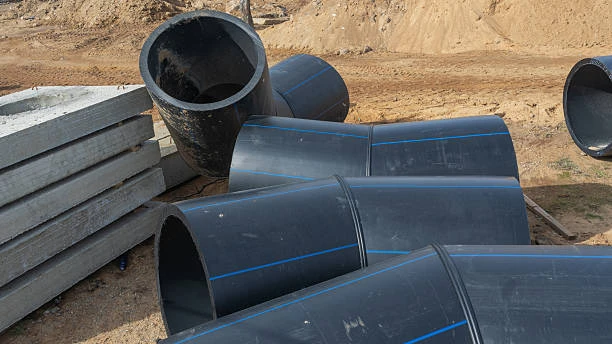
Introduction to PE High-Density Pipe
Tubería de polietileno de alta densidad (HDPE) stands out in many industries because it offers long-lasting performance, flexibility, and cost-effectiveness. Engineers, construction managers, and infrastructure planners value HDPE for its lightweight structure, excellent chemical resistance, and strength. Among all these features, wear resistance plays a crucial role in determining a pipe’s overall durability and efficiency. PE high-density pipes consistently deliver exceptional wear resistance, even under harsh conditions.
As infrastructure ages and systems experience more mechanical stress, industries seek materials that resist abrasion and wear. HDPE pipes fulfill this need effectively. This article explores the wear resistance of PE high-density pipes and highlights how this property supports long-term functionality in various applications.
Understanding Wear Resistance
Wear resistance refers to a material’s ability to withstand mechanical action such as scraping, rubbing, or erosion without losing its structural integrity. When abrasive particles pass through a pipe, the inner surface faces continuous friction. Without wear resistance, the material begins to degrade quickly, leading to pipe thinning, leaks, or failure.
PE high density pipe combat this problem with an exceptionally smooth and tough inner surface. Their molecular structure resists scratches and abrasions better than many metals and alternative plastics. These pipes maintain their thickness and performance even under extended exposure to solids, slurries, or high-velocity fluids.
Molecular Structure of HDPE Supports Durability
The wear resistance of pe high density pipe originates from its molecular configuration. The tightly packed polymer chains in high-density polyethylene provide stiffness and durability. This dense structure enables the pipe to resist surface erosion caused by particles moving inside.
HDPE resists gouging and pitting because of its high molecular weight and non-crystalline structure. As particles slide along the interior of the pipe, the material’s surface distributes the energy evenly. This uniform distribution reduces the chance of weak spots or concentrated wear zones. Manufacturers also formulate HDPE with additives to further enhance its surface strength and resistance to abrasion.
HDPE Performs Under Abrasive Conditions
Industrial and infrastructure systems frequently transport abrasive substances. Mining operations, for example, often pump slurry that contains sand, gravel, or minerals. These materials constantly scrape the interior of the pipe. In such settings, many traditional pipes degrade quickly. However, HDPE maintains its performance.
Construction teams use HDPE to transport aggregate materials, bentonite mixtures, and fine sediment suspensions. HDPE pipelines in wastewater systems also carry solids and other waste particles that challenge pipe longevity. These conditions can destroy weaker materials, but HDPE resists damage. It maintains flow capacity and avoids costly interruptions due to pipe failure.
Comparación con otros materiales
When evaluating pipe materials for wear resistance, decision-makers often compare HDPE with alternatives like steel, concrete, and PVC. Each material offers unique advantages, but HDPE performs best in many abrasion-heavy scenarios.
- Tubos de acero: Steel offers great pressure tolerance but wears down quickly in the presence of sand, gravel, or sludge. HDPE outlasts steel under consistent abrasion due to its smoother surface and flexibility.
- Tubos de hormigón: Concrete resists crushing forces, but particles often erode its internal walls over time. HDPE resists internal surface degradation and remains intact even after years of abrasive contact.
- Tubos de PVC: PVC provides light weight and corrosion resistance but cracks more easily than HDPE under abrasive conditions. HDPE bends and absorbs stress, giving it an edge in both wear and impact resistance.
Studies and real-world field tests consistently show HDPE’s superiority in environments where wear occurs frequently. These pipes maintain thickness and internal surface integrity longer than most materials available for similar purposes.
Benefits of Wear-Resistant HDPE Pipes
Industries gain many advantages by choosing pe high density pipe with strong wear resistance. These benefits go beyond longer lifespan and also include economic, environmental, and operational improvements.
1. Vida útil prolongada
Because HDPE resists internal wear, it provides extended operation time without replacement. Companies avoid frequent shutdowns for maintenance and pipe repair, saving both time and resources.
2. Costos de mantenimiento reducidos
High wear resistance reduces the likelihood of pipe bursts or leaks. Operators perform fewer emergency repairs and scheduled inspections. This benefit leads to major cost reductions, especially in remote or hard-to-access areas.
3. Improved Flow Efficiency
HDPE’s smooth surface resists scale buildup and internal roughness. This property minimizes friction, improves flow rate, and reduces energy consumption. Even after years of use, pe high density pipe maintain better flow than corroded or eroded metal pipes.
4. Adaptability to Harsh Environments
Engineers use HDPE pipes in mining, industrial wastewater management, and coastal dredging because they endure rough environments. In tunnels, deserts, underwater projects, or chemical zones, HDPE remains stable and wear-resistant.
5. Ligero y de fácil instalación
Despite its durability, HDPE remains light and flexible. Teams can transport and install HDPE pipes easily without heavy machinery. Quick installation saves labor and speeds up project timelines, even in rugged terrain.
Applications That Demand Wear Resistance
Many sectors rely on HDPE’s ability to resist abrasion. Below are several industries where this material plays a crucial role.
Mining and Mineral Processing
Mining operations generate large volumes of slurry containing rock and mineral particles. These materials require robust pipelines to prevent wear and leaks. HDPE pipes handle the rough flow with minimal surface loss.
Tratamiento de aguas residuales
Sewage systems carry solid waste, sand, and other abrasive debris. HDPE pipes withstand these materials without losing thickness. They also resist the chemical compounds found in wastewater, improving performance.
Riego agrícola
Farmers use HDPE pipes to carry water mixed with fertilizers, sand, and organic debris. These elements wear down weaker pipes. HDPE maintains its form, enabling reliable and efficient irrigation.
Dredging and Marine Projects
Marine engineers often transport sediment, coral fragments, and gravel during dredging. HDPE performs reliably in these situations, where high pressure and solid matter can cause extreme pipe wear.
Fabricación industrial
Chemical factories and processing plants move solid particles, chemicals, or hot fluids through their pipe systems. HDPE remains stable and wear-resistant throughout these processes, minimizing downtime and increasing production efficiency.
Testing Confirms HDPE’s Wear Resistance
Manufacturers and independent laboratories regularly test HDPE pipes for wear performance. They use standardized procedures such as slurry loop tests, sand abrasion tests, and accelerated erosion simulations. These tests expose the pipe material to controlled abrasives under various pressures and flow conditions.
Test results consistently demonstrate that HDPE outperforms metal, ceramic-lined, and cement-lined pipes. HDPE often loses only a small fraction of material over thousands of hours of abrasive exposure. Engineers and project managers use this data to choose HDPE for critical infrastructure, where failure would create significant delays or safety concerns.
Field Examples Show Long-Term Strength
In real-world scenarios, HDPE pipes support operations without performance degradation. For example:
- A mining operation in Chile installed pe high density pipe to transport slurry from the extraction site to the processing plant. After more than ten years, the pipes still maintain their wall thickness and internal smoothness.
- A coastal city in the Philippines upgraded its sewer system using HDPE. Engineers chose this material for its wear resistance and ability to handle sandy water. After fifteen years, the city still uses the original pipes without major repairs.
- In northern Canada, an oil sands project uses HDPE pipelines to handle abrasive slurry and sand under freezing conditions. HDPE pipes have remained intact despite harsh winters and continuous operation.
These examples confirm that HDPE performs reliably in challenging, wear-intensive environments.
Design and Installation Influence Performance
Even though HDPE naturally resists wear, designers and engineers still need to follow proper installation procedures to optimize its performance. They often take the following measures:
- Use smooth bends instead of sharp angles to reduce internal turbulence and particle impact.
- Match pipe diameter to flow volume to prevent excessive pressure and velocity that can cause wear.
- Ensure proper bedding and support to prevent external forces from stressing the pipe unnecessarily.
By combining HDPE’s wear resistance with smart engineering, project teams achieve excellent long-term results.
Sustainability of HDPE Pipes
Wear resistance contributes to the environmental benefits of HDPE pipes. Since these pipes do not require frequent replacement, they reduce waste generation. Their long service life lowers the demand for raw materials and energy associated with manufacturing new pipes.
HDPE is also recyclable. At the end of a pipeline’s lifespan, companies can collect and repurpose the material for new applications. This recyclability supports circular economy efforts and sustainable infrastructure development.
Conclusión
PE high-density pipes deliver impressive wear resistance that outperforms traditional materials in demanding applications. Their molecular structure, smooth surface, and flexibility enable them to endure years of exposure to abrasive substances. Industries such as mining, wastewater treatment, agriculture, and construction benefit from HDPE’s ability to maintain performance under pressure.
Companies save money, reduce maintenance needs, and protect the environment by choosing HDPE pipes for high-wear operations. With proper design and installation, these pipes continue to function effectively for decades. As modern infrastructure evolves and industries seek durable solutions, HDPE’s wear resistance ensures its place as a leading material for the future.
Norma internacional IFAN
Los accesorios y tuberías de compresión de HDPE de IFAN cumplen con una amplia gama de normas internacionales, lo que garantiza un alto rendimiento y compatibilidad global. Entre ellas, se incluyen las normas ASTM D3035 y ASTM D3350 de Estados Unidos, las series ISO 4427 y EN 12201 de Europa, DIN 8074/8075 de Alemania, GB/T 13663 de China, AS/NZS 4130 de Australia y Nueva Zelanda, JIS K6760 de Japón, BS 6572 del Reino Unido y CSA B137.1 de Canadá. El cumplimiento de estas normas garantiza excelentes propiedades mecánicas, resistencia química y durabilidad a largo plazo en diversas aplicaciones industriales y de suministro de agua.
Contacto
IFAN es un fabricante profesional con 30 años de experiencia, dedicado a la producción de tuberías, accesorios y válvulas de plástico de alta calidad. Nuestros productos incluyen válvulas de latón, válvulas PPR, así como diversos tubos y accesorios para satisfacer las diferentes necesidades de nuestros clientes. Ya sea que necesite tuberías de plomería y drenaje o válvulas, IFAN le ofrece una amplia gama de productos de alta calidad y económicos para apoyar sus proyectos. A continuación, encontrará nuestra información de contacto.
Responderemos su correo electrónico o fax dentro de las 24 horas.
Puede llamarnos en cualquier momento si tiene alguna pregunta sobre nuestra producción.
Para obtener más información, visite nuestro sitio web. https://www.ifanplus.com/
Por favor envíelo a: [email protected]
WhatsApp: +86 19857948982























