


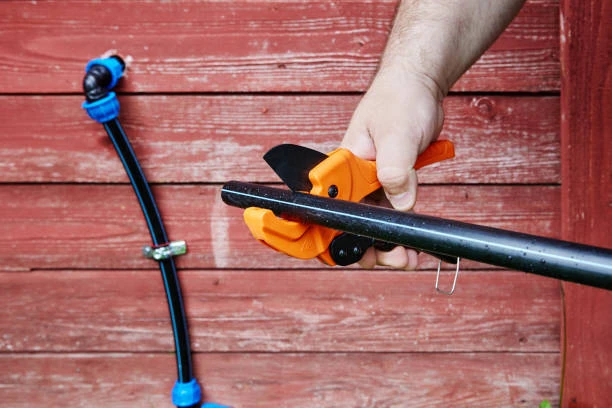
In modern civil and municipal engineering, material selection plays a critical role in the performance and longevity of infrastructure systems. When it comes to drainage piping, wear resistance is one of the most important characteristics to consider. This is because drainage systems are constantly subjected to flowing water, sediment, debris, and varying levels of mechanical abrasion.Fortunately, High-Density Polyethylene (HDPE) pipes have emerged as a top solution for drainage due to their exceptional wear resistance. This article explores, in detail, the wear resistance of tubería de drenaje de HDPE and highlights why they offer a superior solution for various drainage applications.
Understanding Wear in Drainage Systems
Before diving into HDPE’s unique properties, it is essential to understand what “wear” means in the context of drainage systems. Essentially, wear refers to the gradual removal of material due to mechanical action such as friction, scraping, or erosion. Over time, flowing water and abrasive particles can degrade the inner surface of a pipe, leading to reduced wall thickness, compromised flow efficiency, and ultimately, failure.
As a result, choosing a pipe material with high wear resistance is not just important—it is vital for ensuring long-term system durability, reduced maintenance, and operational efficiency.
Why HDPE Is Widely Used in Drainage Applications
To begin with, HDPE—short for High-Density Polyethylene—is a thermoplastic polymer that combines toughness with flexibility. It is known for its resistance to chemicals, low water absorption, and ability to withstand mechanical stress. However, one of the most underrated benefits of HDPE pipes is their superior resistance to abrasion and wear.
Unlike traditional materials such as concrete or steel, HDPE has a smooth surface and elastic structure that enable it to resist the scouring effects of sediments and other abrasive substances. In drainage applications, this translates to longer pipe life, improved reliability, and fewer disruptions due to pipe failure.
The Science Behind HDPE’s Wear Resistance
So, what gives HDPE its impressive wear-resistant properties? The answer lies in its molecular structure and physical composition. HDPE consists of long chains of polyethylene molecules that are tightly packed, creating a dense and tough material.
Moreover, the surface of HDPE is naturally smooth and has a low coefficient of friction. This means that water and debris can flow through the pipe with minimal resistance, reducing the chances of internal abrasion.
In contrast, materials like concrete or metal have rougher surfaces that tend to trap particles and enhance wear. Consequently, HDPE’s smoother surface allows it to withstand abrasive forces more effectively over time.
Lab Tests Prove HDPE’s Superior Abrasion Resistance
Numerous laboratory tests and field studies have been conducted to assess the wear performance of HDPE pipes. For instance, the Darmstadt test—a commonly accepted international standard for pipe abrasion resistance—has shown that HDPE outperforms many alternative materials under simulated conditions of abrasive flow.
In these tests, sand and water mixtures are passed through pipe sections to simulate real-life drainage conditions. The results consistently demonstrate that HDPE exhibits significantly less material loss over time compared to concrete or metal pipes.
Thus, from a scientific standpoint, HDPE stands out as a wear-resistant material that can handle harsh flow environments without degrading.
Performance in Real-World Conditions
Although laboratory tests are useful, real-world performance provides the ultimate validation. Fortunately, drainage HDPE pipes have been used successfully in a wide range of applications, including stormwater systems, mining drainage, agricultural runoff, and industrial wastewater management.
For example, in mining operations, where pipes must carry abrasive slurries containing sand, gravel, and chemicals, HDPE has proven to last significantly longer than steel or rubber-lined pipes. Similarly, in municipal stormwater systems where large volumes of water and debris must be transported during heavy rains, HDPE performs exceptionally well under pressure and friction.
These real-world applications confirm that HDPE is not just theoretically wear-resistant—it delivers consistent performance in demanding environments.
Long-Term Benefits of Wear-Resistant HDPE Pipe
Another major advantage of HDPE’s wear resistance is its contribution to long-term cost savings. Because Drainage HDPE Pipe degrade more slowly, they require less frequent replacement and fewer repairs. This reduces downtime and maintenance costs, which can be substantial over the lifetime of a drainage system.
Additionally, the reduced rate of internal wear ensures that the flow capacity of the pipe remains consistent over time. With other materials, the internal diameter may shrink due to erosion, reducing flow efficiency. In contrast, HDPE pipes maintain their original shape and capacity for decades, leading to improved hydraulic performance.
Hence, choosing HDPE is not just a technical decision—it’s a smart financial investment.
Lightweight Yet Tough: An Added Advantage
While HDPE’s wear resistance is already impressive, its lightweight nature makes it even more advantageous. Unlike concrete or steel pipes that are heavy and difficult to handle, HDPE is easy to transport and install. This means less risk of damage during handling, fewer workers needed on site, and quicker installation times.
Yet despite being lightweight, HDPE is incredibly tough. It resists not only abrasion but also impacts, ground movements, and external pressure. This duality—light yet durable—further enhances the suitability of HDPE for wear-intensive drainage environments.
Environmental Factors and HDPE’s Consistent Performance
Moreover, HDPE’s wear resistance remains consistent across a wide range of environmental conditions. Whether installed in cold, wet, hot, or chemically aggressive areas, HDPE retains its structure and performance.
In contrast, some other materials may become brittle in cold temperatures or corrode in the presence of certain chemicals. HDPE, on the other hand, is chemically inert and performs reliably under varying climate and soil conditions.
As a result, it is commonly used in coastal drainage, desert irrigation, and chemically contaminated sites where other materials would rapidly degrade.
Comparing HDPE with Alternative Materials
Let’s take a closer look at how HDPE stacks up against other common drainage pipe materials in terms of wear resistance:
- Concrete: Though strong in compression, concrete is extremely vulnerable to erosion caused by flowing water and debris. Over time, the rough internal surface accelerates wear and leads to reduced efficiency.
- Acero: While steel is tough and durable, it corrodes easily and is susceptible to internal wear when transporting abrasive materials. Maintenance costs are usually high.
- CLORURO DE POLIVINILO: PVC offers some resistance but is more brittle and prone to cracking under stress, especially in colder climates.
- Clay: Clay pipes have good chemical resistance but poor mechanical wear resistance and are prone to breakage.
Clearly, HDPE combines the best of both worlds—high wear resistance and durability—making it the ideal choice for drainage systems with abrasive flows.
Sustainability and HDPE’s Lifecycle Performance
Sustainability is a growing concern in infrastructure development, and HDPE also scores well in this regard. Because of its long service life and minimal maintenance requirements, HDPE reduces the need for frequent pipe replacement, thereby conserving resources.
Furthermore, HDPE pipes are fully recyclable at the end of their life. This not only reduces waste but also lowers the carbon footprint of infrastructure projects. Hence, choosing HDPE contributes to environmental responsibility without compromising performance.
Case Studies Demonstrating Wear Resistance
To reinforce the points made above, let’s examine a few case studies:
- Mining Operation in Australia: In this high-abrasion setting, HDPE pipelines were installed to transport slurry. After 15 years, inspections revealed minimal wear compared to nearby steel pipes that had failed within five years.
- Stormwater Drainage in Canada: HDPE pipes installed in urban storm drains remained in excellent condition after two decades of use, despite the seasonal influx of sand, debris, and road salt.
- Agricultural Irrigation in the Middle East: HDPE pipelines carrying sediment-heavy runoff across desert terrain showed no major degradation even after prolonged use.
These examples clearly illustrate HDPE’s ability to resist wear and continue performing under diverse and challenging conditions.
Conclusion: HDPE—Built to Withstand the Test of Time
In conclusion, the wear resistance of drainage HDPE pipe is one of its most valuable attributes. From its dense molecular structure to its smooth surface, every aspect of HDPE contributes to its ability to resist mechanical abrasion. This quality ensures that drainage systems remain functional, efficient, and cost-effective over the long term.
Whether it is used in mining, agriculture, municipal drainage, or industrial applications, HDPE proves itself time and again as a reliable and durable choice. Its performance in both laboratory and field conditions confirms that it can withstand the rigors of abrasive flows without compromising structural integrity.
For engineers, contractors, and project developers seeking a piping solution that combines mechanical strength, ease of installation, and long-lasting wear resistance, HDPE drainage pipe is the clear answer.
Norma internacional IFAN
Los productos de tuberías de polietileno de IFAN cumplen con una amplia gama de normas internacionales para garantizar la calidad, la seguridad y la compatibilidad en los mercados globales. Estas incluyen las normas ASTM D3035, ASTM D3350, ISO 4427, EN 12201, DIN 8074/8075, GB/T 13663, AS/NZS 4130, JIS K6760, BS 6572 y CSA B137.1, entre otras. Este cumplimiento exhaustivo refleja el compromiso de IFAN de ofrecer soluciones de tuberías fiables que satisfagan los diversos requisitos técnicos del suministro de agua, la distribución de gas y las aplicaciones industriales en todo el mundo.
Contacto
IFAN es un fabricante profesional con 30 años de experiencia, dedicado a la producción de tuberías, accesorios y válvulas de plástico de alta calidad. Nuestros productos incluyen válvulas de latón, válvulas PPR, así como diversos tubos y accesorios para satisfacer las diferentes necesidades de nuestros clientes. Ya sea que necesite tuberías de plomería y drenaje o válvulas, IFAN le ofrece una amplia gama de productos de alta calidad y económicos para apoyar sus proyectos. A continuación, encontrará nuestra información de contacto.
Responderemos su correo electrónico o fax dentro de las 24 horas.
Puede llamarnos en cualquier momento si tiene alguna pregunta sobre nuestra producción.
Para obtener más información, visite nuestro sitio web. https://www.ifanplus.com/
Por favor envíelo a: [email protected]
WhatsApp: +86 19857948982























