


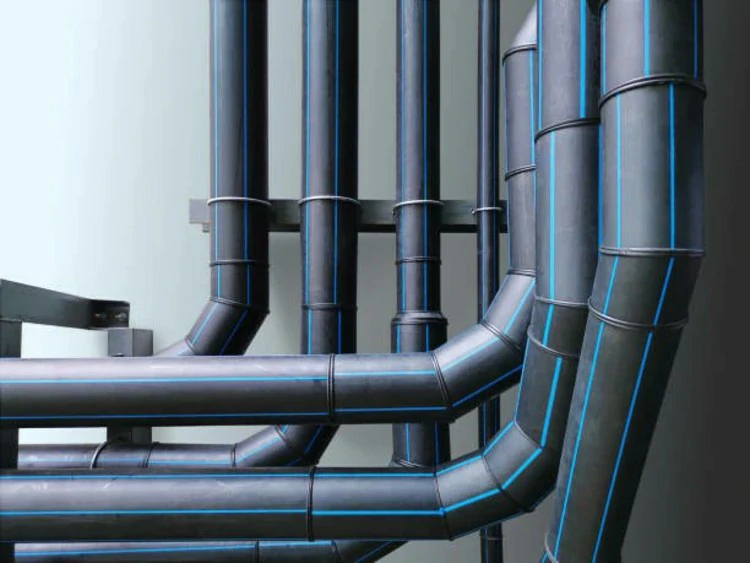
Introduction: Delving into HDPE Plumbing Pipe Production
HDPE (High-Density Polyethylene) plumbing pipes have gained immense popularity for their durability, flexibility, and versatility in various plumbing applications. Understanding the manufacturing process of HDPE pipes sheds light on their quality, performance, and suitability for different projects.
1. Selección de materia prima
1.1 High-Quality Resins
The production of HDPE plumbing pipes starts with selecting high-quality HDPE resins. These resins come from petroleum and natural gas through a refining process, ensuring consistent quality and performance characteristics in the final product.
1.2 Additives and Stabilizers
To enhance specific properties of HDPE pipes, such as UV resistance, thermal stability, and coloration, additives and stabilizers are incorporated into the resin mixture. These additives help improve the overall durability and longevity of HDPE plumbing, ensuring they can withstand various environmental conditions.
2. Pipe Extrusion Process
2.1 Heating and Melting
In the extrusion process, the HDPE resin mixture is heated to a precise temperature in an extruder. As the resin reaches its melting point, it transforms into a molten state, ready for shaping into pipes.
2.2 Shaping and Cooling
The molten HDPE resin passes through a shaping die, where it adopts the desired cylindrical shape of the pipe. As the shaped pipe exits the die, it enters a cooling chamber or water bath, rapidly cooling to solidify its structure.
2.3 Sizing and Cutting
Once cooled, the HDPE plumbing undergoes sizing to ensure its dimensions meet the specified requirements. High-precision cutting equipment is used to cut the pipe to the desired length, resulting in uniform and consistent products ready for further processing or installation.
3. Quality Control and Testing
3.1 Dimensional Accuracy
Throughout the manufacturing process, we implement strict quality control measures to ensure the dimensional accuracy of HDPE pipes. We utilize advanced measurement tools and techniques to verify that the pipes meet the specified diameter, wall thickness, and length requirements.
3.2 Material Integrity
In addition to dimensional accuracy, we rigorously test HDPE pipes to assess their material integrity and structural strength. We conduct various tests, including pressure testing, impact resistance testing, and tensile strength testing, to ensure the pipes can withstand the demands of plumbing applications.
Conclusión:
The manufacturing process of HDPE plumbing pipes showcases engineering excellence and innovation. From selecting high-quality raw materials to precisely shaping and testing finished products, we meticulously execute every step to ensure the production of durable, reliable, and high-performance HDPE pipes. Understanding the intricacies of HDPE pipe manufacturing empowers consumers and industry professionals to make informed decisions and select the best plumbing solutions for their projects.
Contacto
IFAN es un fabricante profesional con 30 años de experiencia, dedicado a la producción de tuberías, accesorios y válvulas de plástico de alta calidad. Nuestros productos incluyen válvulas de latón, válvulas PPR, así como diversas tuberías y accesorios para satisfacer las diferentes necesidades de nuestros clientes. Ya sea que necesite tuberías de plomería y drenaje o válvulas, IFAN Ofrecemos una amplia gama de productos de alta calidad y rentables para apoyar sus proyectos. A continuación, encontrará nuestra información de contacto.
Responderemos su correo electrónico o fax dentro de las 24 horas.
Puede llamarnos en cualquier momento si tiene alguna pregunta sobre nuestra producción.
Para obtener más información, visite nuestro sitio web. https://www.ifanplus.com/
Por favor envíelo a: [email protected]























