


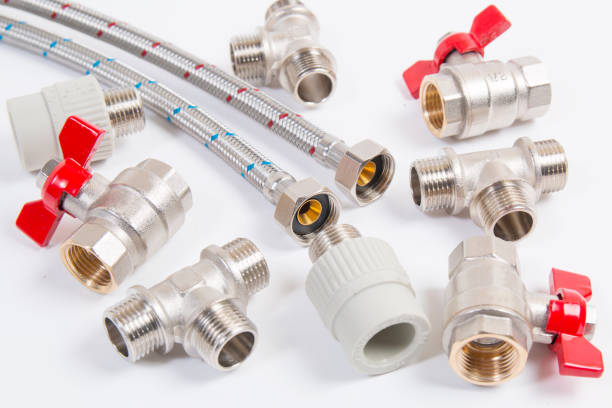
Válvulas de control de agua regulate the flow and pressure of water in various systems, ensuring efficient operation and stability. These valves are crucial in municipal water supply, industrial processes, and irrigation systems. Precise flow regulation enhances system performance and reduces inefficiencies like water wastage, pressure fluctuations, and unnecessary energy consumption. This article explores the importance of control precision, factors affecting it, and how it impacts water system operations.
Introduction to Control Water Valves
Control water valves are designed to manage the flow of water in pipelines and distribution networks. These valves adjust the water flow based on demand, pressure, and other system variables. The precision of control valves is vital for maintaining a stable and efficient water system. Proper control ensures that water reaches its destination at the right pressure and flow rate.
Water systems rely on control valves to maintain desired operational conditions. Valves are often automated for precise, continuous adjustments. Accurate flow regulation is essential in industrial, municipal, and residential settings. Without precision, systems may experience instability, leading to inefficiencies and damage. Control precision also prevents water wastage and unnecessary energy consumption.
Importance of Control Precision
Control precision ensures that water is delivered to users efficiently and safely. Proper flow regulation avoids problems such as overflows, pressure surges, or system failures. Inaccurate control can lead to higher operational costs and equipment damage. For example, incorrect flow rates can increase energy usage by forcing pumps to work harder. Furthermore, precise control helps maintain water quality in treatment systems by regulating flow during filtration and chemical dosing processes.
In industries, precise water control prevents product contamination and ensures that manufacturing processes run smoothly. For example, in food production, incorrect water flow can ruin batches, causing waste and additional costs. In municipal systems, control precision prevents disruptions in water supply and pressure fluctuations. The need for precise control is growing as water systems become more complex and automated.
Factors Influencing Control Precision
Several factors affect the control precision of water valves. These factors determine the accuracy and reliability of flow regulation. Key factors include valve type, actuator type, and valve sizing. The actuator controls the valve’s movement, while the valve type determines its suitability for specific applications. Valve sizing ensures that the valve fits the system’s flow capacity and does not underperform.
Valve characteristics, such as flow curve and pressure sensitivity, also affect precision. Some valves are better suited for throttling flow, while others excel in on/off control. The flow characteristics of a valve dictate how effectively it can regulate water at varying flow rates. Additionally, changes in system pressure and temperature can affect valve performance. A high-precision valve should maintain accurate control under diverse operating conditions.
Types of Control Valves and Their Precision
Control water valves come in various designs, each offering different levels of control precision. Popular valve types include ball valves, globe valves, butterfly valves, and pressure-regulating valves. Globe valves are ideal for precise flow regulation, especially in systems requiring throttling. Ball valves are known for their simplicity and durability but are typically better for fully open or fully closed positions.
Butterfly valves offer good control precision, especially for large flow rates. They are lightweight and cost-effective, making them suitable for many water control applications. Pressure-regulating valves ensure consistent pressure, essential in systems with fluctuating input pressures. These valves are highly precise in maintaining output pressure, reducing the risk of system instability.
Enhancing Control Precision with Technology
Advances in technology have greatly improved the precision of control valves. Automated systems, electronic flow controllers, and smart valves all contribute to more accurate water flow regulation. Electronic flow control uses sensors and actuators to adjust the valve’s position based on real-time data. This provides precise control over flow rates and pressure levels, enhancing system efficiency.
Flow meters can be integrated with control valves to measure flow rates accurately. This allows for continuous adjustments, ensuring that the system operates at optimal conditions. Smart valves use sensors and communication systems to adjust flow automatically, responding to changes in the system. These innovations provide real-time monitoring, improving the overall precision of water control.
The Role of Positioners and PID Controllers
Positioners are devices that improve valve precision by ensuring that the valve is positioned correctly based on control signals. These devices reduce errors in valve movement, enhancing overall control accuracy. PID controllers are commonly used to regulate flow, pressure, and temperature in automated systems. These controllers adjust the valve’s position based on proportional, integral, and derivative calculations, ensuring precise and responsive control.
By continuously adjusting the valve, PID controllers help maintain the desired flow rate and pressure in real-time. This technology is crucial for systems requiring high precision, such as those in industrial applications or water treatment plants. PID controllers can be used with a wide variety of valves to improve flow regulation.
Applications of Control Precision in Water Systems
Control precision plays a vital role in various water systems, ensuring efficiency and reliability. In water treatment plants, control valves regulate the flow of water through filtration systems and chemical dosing units. Precise control ensures that the right amount of chemicals is added and that the water is treated properly.
Municipal water supply systems also rely on control precision to maintain water pressure and ensure a constant supply to homes and businesses. Fluctuations in pressure can lead to water wastage, system failures, and even damage to infrastructure. In irrigation systems, precise water flow control helps deliver the right amount of water to crops, reducing waste and optimizing water usage.
In industrial applications, precise water control is essential for maintaining product quality and preventing damage to machinery. Industries such as pharmaceuticals, food production, and chemicals rely on accurate water flow regulation to ensure smooth operations and meet regulatory standards.
Conclusión
Control precision is a critical factor in ensuring the efficient and reliable operation of water systems. Whether used in industrial, municipal, or residential settings, water valves must provide accurate flow regulation to maintain system stability. By understanding the factors that affect valve precision and leveraging advanced technologies such as electronic controllers, smart valves, and positioners, water systems can achieve optimal performance.
As demand for efficient water management increases, the role of precise control valves will only grow. The adoption of innovative technologies and the proper selection of valve types and actuators will ensure that water systems operate at their best, minimizing waste, reducing energy consumption, and maintaining water quality.
Norma internacional IFAN
Los accesorios y tuberías de compresión de HDPE de IFAN cumplen con una amplia gama de normas internacionales, lo que garantiza un alto rendimiento y compatibilidad global. Entre ellas, se incluyen las normas ASTM D3035 y ASTM D3350 de Estados Unidos, las series ISO 4427 y EN 12201 de Europa, DIN 8074/8075 de Alemania, GB/T 13663 de China, AS/NZS 4130 de Australia y Nueva Zelanda, JIS K6760 de Japón, BS 6572 del Reino Unido y CSA B137.1 de Canadá. El cumplimiento de estas normas garantiza excelentes propiedades mecánicas, resistencia química y durabilidad a largo plazo en diversas aplicaciones industriales y de suministro de agua.
Contacto
IFAN es un fabricante profesional con 30 años de experiencia, dedicado a la producción de tuberías, accesorios y válvulas de plástico de alta calidad. Nuestros productos incluyen válvulas de latón, válvulas PPR, así como diversos tubos y accesorios para satisfacer las diferentes necesidades de nuestros clientes. Ya sea que necesite tuberías de plomería y drenaje o válvulas, IFAN le ofrece una amplia gama de productos de alta calidad y económicos para apoyar sus proyectos. A continuación, encontrará nuestra información de contacto.
Responderemos su correo electrónico o fax dentro de las 24 horas.
Puede llamarnos en cualquier momento si tiene alguna pregunta sobre nuestra producción.
Para obtener más información, visite nuestro sitio web. https://www.ifanplus.com/
Por favor envíelo a: [email protected]
WhatsApp: +86 19857948982























