


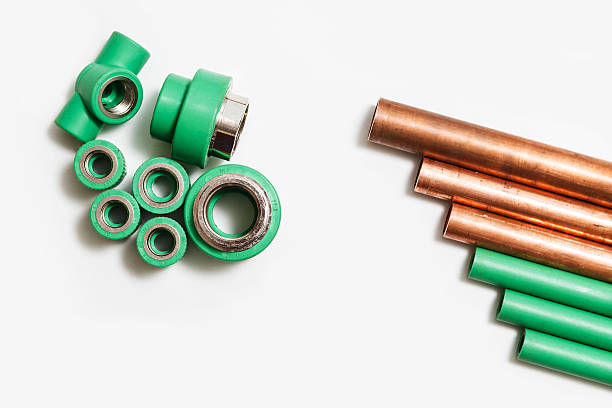
Heat fusion welding is the primary method for connecting PPR pipes
أنابيب البولي بروبيلين are widely used in building water supply, hot and cold water transport, and heating systems, with heat fusion welding serving as the most common connection method. Compared to traditional threaded or adhesive connections, heat fusion welding fuses the pipe and fitting into a single unit, creating a secure, leak-proof joint. This method offers ease of installation and effectively minimizes the risk of water leakage, making it a standard choice for various water supply projects.
PPR material possesses excellent thermoplastic properties
The reliability of heat fusion welding is closely linked to the inherent characteristics of PPR material. PPR is a thermoplastic polypropylene material; when heated to a specific temperature range, it gradually softens and enters a malleable state. Upon cooling, the material re-solidifies and regains its strength. This thermoplastic nature allows PPR pipes to form secure connections through heating without compromising their functional performance.
Heating and softening are critical steps in the welding process
Heat fusion welding requires the use of a specialized fusion machine to heat both the pipe and the fitting simultaneously. The machine’s heating die is typically maintained at approximately 260°C. As the outer wall of the pipe and the inner wall of the fitting contact the heating die, the surface material begins to soften. Once the required heating time is reached, a layer of molten plastic forms at the interface, preparing the surfaces for joining.
Fusion creates a unified structure
After heating, the installer must quickly insert the pipe into the fitting to the correct depth. At this stage, the molten surface layers come into contact and fuse together. Because the materials are identical in composition, the molten sections undergo intermolecular bonding, creating a continuous structure. This process is analogous to two pieces of wax melting and re-solidifying into a single whole; consequently, the joint strength often matches or even exceeds that of the pipe itself.
Cooling and solidification ensure a secure connection
Once connected, the assembly must remain undisturbed to cool naturally. During cooling, the molten PPR material solidifies, and the molecular structure stabilizes. After thorough cooling, the welded joint and the pipe form a seamless, integrated structure. The resulting joint possesses excellent mechanical strength and is capable of withstanding normal operating pressures and temperature fluctuations.
Heating Time Affects Welding Quality
Although heat-fusion welding is simple to perform, heating time must be strictly controlled. If the heating time is too short, the material will not soften sufficiently to achieve full fusion, leading to potential “cold welds” (incomplete bonding). Conversely, if the heating time is too long, the material may melt excessively, compromising the pipe’s internal diameter or even reducing the joint’s strength. Therefore, during installation, heating and joining times must be strictly controlled according to specifications based on the pipe diameter.
Welding Temperature Determines Joint Quality
In addition to timing, welding temperature is a critical factor affecting quality. If the heat-fusion machine’s temperature is too low, the material cannot reach the ideal molten state; if it is too high, the material may decompose or deform. Heat-fusion equipment typically maintains a stable temperature range suitable for processing PPR material, ensuring a uniform and reliable joint with every weld.
Proper Installation Extends Service Life
To ensure welding quality, pipe ends must be cut cleanly and be free of burrs and oil residue before installation. Additionally, the heating tool’s dies must be kept clean to prevent impurities from compromising the joint. Pipes and fittings should not be rotated during the joining process, as this could disrupt the newly formed molten layer. Standardized installation practices not only improve efficiency but also extend the service life of the entire piping system.
Heat-Fusion Welding Enhances Piping System Safety
Because heat-fusion creates a monolithic structure, the joints do not suffer from the loosening issues often associated with traditional mechanical connections. This integrated joining method offers excellent sealing and pressure resistance, effectively minimizing the risk of leaks. Whether in residential water supply, commercial buildings, or industrial transport systems, heat-fusion welding ensures reliable pipeline operation.
خاتمة
The principle of PPR heat-fusion welding relies on the thermoplastic nature of the material: heating softens and melts the surfaces of the pipe and fitting, which are then quickly joined and allowed to cool and solidify, ultimately forming a robust, integrated structure. Heating, fusion, and cooling are the core stages of the process, while temperature control. Heating duration, and proper installation techniques directly determine the quality of the joint. Thanks to its superior sealing, high joint strength, and long-term stability. Heat-fusion welding has become one of the most reliable and widely used methods for installing PPR piping. Providing a vital safeguard for the safe operation of modern water supply systems.
اتصال
IFAN شركة تصنيع محترفة بخبرة 30 عامًا، متخصصة في إنتاج الأنابيب والوصلات والصمامات البلاستيكية عالية الجودة. تشمل منتجاتنا صمامات النحاس، وصمامات البولي بروبيلين (PPR)، بالإضافة إلى مجموعة متنوعة من الأنابيب والوصلات لتلبية احتياجات العملاء المختلفة. سواءً كنتم بحاجة إلى أنابيب السباكة والصرف الصحي أو منتجات الصمامات، فإن IFAN قادرة على توفير مجموعة متنوعة من المنتجات عالية الجودة وبأسعار معقولة لدعم مشاريعكم. تجدون أدناه معلومات الاتصال بنا.
سوف نقوم بالرد على بريدك الإلكتروني أو الفاكس الخاص بك خلال 24 ساعة.
يمكنك الاتصال بنا في أي وقت إذا كان هناك أي سؤال حول إنتاجنا.
لمزيد من المعلومات، يرجى زيارة موقعنا على شبكة الإنترنت https://www.ifanplus.com/
يرجى إرسال بريد إلى: [email protected]
واتساب: +86 19857948982
معيار IFAN الدولي
تتوافق منتجات IFAN مع مجموعة واسعة من المعايير الدولية، مما يضمن السلامة والموثوقية والتوافق العالمي. وتشمل هذه المعايير ASTM 2846، وDIN 8079/8080، وASTM F441/F441M SCH80، ومواصفات DIN متعددة، ومعايير سلسلة GB/T 18993، وAS/NZS 1477، وCSA B137.6، وNSF/ANSI 14، بالإضافة إلى TIS 17-2532/1131-2535. ومن خلال استيفائها لهذه المعايير المعترف بها، تضمن IFAN جودة وأداءً ثابتين في مختلف المناطق والتطبيقات.























