


مقدمة
In modern plumbing and industrial piping systems, selecting the right material is crucial. Among the many options available, تجهيزات PVC الزرقاء stand out for their versatility, durability, and cost-effectiveness. However, one critical factor that often requires careful consideration is temperature resistance. Understanding how blue PVC fittings behave under different thermal conditions is vital to ensure system reliability and safety.
This article provides a detailed examination of the temperature resistance of blue PVC fittings. It covers how temperature affects performance, the material properties involved, relevant standards, application limits, and installation best practices. By the end, you will have a clear understanding of how temperature influences the effectiveness of these fittings and how to choose and use them appropriately.
ما هي تجهيزات PVC الزرقاء؟
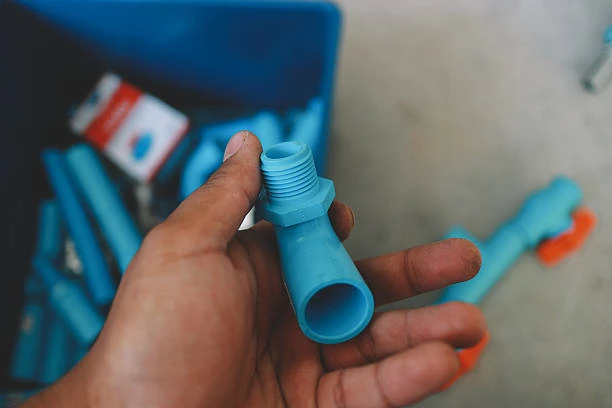
Blue PVC fittings are connectors made from polyvinyl chloride, a thermoplastic polymer widely used in water supply systems. The blue color typically designates cold potable water applications, especially in municipal and residential plumbing. Although color alone does not alter the core physical properties of the PVC material, it often includes UV stabilizers or additives that make it suitable for outdoor use.
These fittings come in various forms such as elbows, tees, couplings, caps, and adapters. They are manufactured to meet specific standards and are generally lightweight, corrosion-resistant, and easy to install. But when exposed to different temperatures, the behavior of PVC fittings can change significantly.
Why Temperature Resistance Is Important
Temperature resistance is one of the most essential performance characteristics of any piping component. If a fitting cannot withstand the temperature of the transported fluid or its surrounding environment, it may deform, lose pressure integrity, or even fail completely.
In both residential and industrial systems, fluid temperatures can vary widely. For example, cold water may be near freezing in winter, while chemical solutions in factories may exceed normal room temperature. If blue PVC fittings are exposed to temperatures beyond their limits, the consequences can include leaks, burst pipes, or contamination.
Therefore, understanding the temperature limitations of blue PVC fittings helps prevent costly system failures and ensures long-term performance.
The Thermal Properties of PVC
To fully grasp how blue PVC fittings handle temperature, we must first understand the thermal properties of the material. PVC, or polyvinyl chloride, is a type of thermoplastic, meaning it softens when heated and hardens when cooled. This property is both an advantage and a limitation.
Heat Distortion Temperature
The heat distortion temperature (HDT) of standard PVC is around 60–65°C (140–149°F). This is the point at which the material begins to soften under a specified load. If exposed to temperatures above this range, the structural integrity of the fitting may degrade.
Glass Transition Temperature
The glass transition temperature (Tg) of PVC is around 80°C (176°F). Beyond this point, the material becomes rubbery and loses its rigidity. Operating the system near or above Tg can severely compromise mechanical performance.
نقطة الانصهار
While PVC does not have a sharp melting point, it starts to degrade thermally at around 140°C (284°F). At this temperature, the material begins to break down, releasing harmful gases such as hydrogen chloride.
Temperature Ratings of Blue PVC Fittings
Most blue PVC fittings are designed to operate within a specific temperature range. Typically, they are rated for continuous service at temperatures between 0°C and 60°C (32°F to 140°F). Operating outside this range is not recommended and may void manufacturer warranties.
Below 0°C, PVC becomes brittle and more prone to cracking. Above 60°C, the material softens, causing reductions in pressure handling, impact resistance, and dimensional stability.
These limitations make blue PVC fittings ideal for cold water systems but unsuitable for hot water applications unless specially formulated.
تأثير درجة الحرارة على تصنيفات الضغط
One key effect of temperature is its impact on pressure ratings. As the temperature increases, the ability of PVC to withstand internal pressure decreases. This relationship is so critical that manufacturers provide de-rating charts to adjust pressure ratings based on temperature.
Here are some typical de-rating factors:
- At 73°F (23°C): 100% of rated pressure
- At 90°F (32°C): 90% of rated pressure
- At 100°F (38°C): 78% of rated pressure
- At 120°F (49°C): 62% of rated pressure
- At 140°F (60°C): 50% of rated pressure
As an example, a blue PVC fitting rated for 400 psi at 73°F would only be rated for 200 psi at 140°F. This illustrates the importance of temperature in system design.
Cold Temperature Behavior
Low temperatures can also influence the performance of blue PVC fittings. Below freezing, PVC becomes less flexible and more brittle. While the material itself does not absorb water or freeze, the water inside the piping can expand when frozen, creating internal pressure that may cause fittings to crack or burst.
In cold climates, insulation is often recommended to protect exposed fittings from sudden temperature drops. Furthermore, proper drainage and system design can help prevent freeze-related damage.
معايير الصناعة والاختبار
To ensure performance and safety, blue PVC fittings are manufactured under strict standards that include thermal performance criteria. Common standards include:
- ASTM D1784: Classification of rigid PVC compounds
- ASTM D2466: Specifications for Schedule 40 PVC fittings
- ASTM D2467: Specifications for Schedule 80 PVC fittings
- NSF/ANSI 61: Drinking water system components
Testing typically includes exposure to elevated temperatures and pressure to determine the failure point, dimensional changes, and long-term performance.
Common Applications and Temperature Considerations
Blue PVC fittings are used in many settings, each with different thermal requirements.
السباكة السكنية
In homes, cold water is usually below 60°F and rarely exceeds 100°F. Blue PVC is ideal in these systems. However, it should not be used on the hot water side of the system, where temperatures can exceed 120°F.
أنظمة الري
Outdoor irrigation systems must handle both cold winter temperatures and warm summer conditions. Blue PVC fittings often include UV stabilizers, but they still require insulation and drainage to avoid freeze damage.
أنظمة التبريد الصناعية
For circulating cool fluids in factories, blue PVC fittings work well, provided the fluid temperature remains within the acceptable range. When systems include both hot and cold lines, CPVC or metal alternatives are typically used for high-temperature areas.
مرافق معالجة المياه
In treatment plants, chemical processes may generate heat. Therefore, blue PVC fittings are only used where fluid temperatures stay below the material’s limits. Otherwise, CPVC, PE, or PP components are selected.
Installation Best Practices for Thermal Performance
Proper installation is key to maximizing the temperature resistance of blue PVC fittings. Here are a few guidelines:
- Avoid sunlight exposure: UV light can degrade PVC over time. Use protective covers or bury pipes underground.
- Allow thermal expansion: PVC expands and contracts with temperature. Use expansion joints or design loops in long runs.
- Support properly: Use pipe hangers that accommodate thermal movement.
- Use compatible cement: Ensure the solvent cement matches the temperature requirements of the application.
By following these practices, you can significantly reduce the risk of thermal damage.
التمدد والانكماش الحراري
Like all materials, PVC expands when heated and contracts when cooled. This change in length, though small, can add stress to joints and supports if not properly managed. For every 100 feet of pipe, PVC may expand approximately 3.6 inches when the temperature rises from 40°F to 140°F.
To mitigate these effects:
- Include expansion joints or offsets.
- Use flexible couplings where movement is expected.
- Install during moderate temperatures to minimize stress.
Proper planning ensures temperature changes do not compromise system integrity.
مقارنة مع مواد أخرى
To determine whether blue PVC is suitable for your application, consider how it compares with other piping materials in terms of temperature resistance.
سي بي في سي
Chlorinated PVC can handle up to 90°C (194°F), making it suitable for hot water systems. However, it is more expensive and slightly more brittle than standard PVC.
بورصة بي إي إكس
PEX tubing handles a wide temperature range (-40°C to 93°C), offering excellent flexibility and freeze resistance. But it requires special fittings and is not suitable for all chemical applications.
نحاس
Copper is highly heat-resistant, handling temperatures over 200°C. Still, it is costly, heavy, and prone to corrosion in certain environments.
الفولاذ المقاوم للصدأ
Ideal for extreme temperatures, both hot and cold, stainless steel is durable and reliable. However, it is the most expensive and labor-intensive option.
In many cases, blue PVC fittings provide the best balance of cost, chemical resistance, and sufficient temperature tolerance for cold and moderate-temperature applications.
الأخطاء الشائعة التي يجب تجنبها
Using Blue PVC for Hot Water
Despite its versatility, blue PVC is not rated for hot water applications. Using it above 60°C can result in warping, leaks, or system failure.
Ignoring Thermal Expansion
Installing long runs of pipe without considering expansion can lead to cracking or joint separation. Always design with movement in mind.
Improper Insulation
In cold climates, failing to insulate outdoor PVC fittings can result in freeze damage. Simple foam sleeves or buried installation can prevent this.
العوامل البيئية
Temperature fluctuations caused by seasonal changes or daily sun exposure can stress blue PVC systems. For example, outdoor pipes exposed to midday heat may expand and contract significantly by nightfall.
To counteract this:
- Install UV-resistant pipe when available
- Use darker colors only when needed
- Provide shaded or buried routes for outdoor runs
Planning ahead helps prevent thermal-related failures.
Final Thoughts and Recommendations
Blue PVC fittings are a dependable, affordable solution for water distribution systems that operate within a moderate temperature range. Their thermal performance, while limited compared to materials like CPVC or metal, is sufficient for many applications—especially cold water plumbing and irrigation.
To get the best results:
- Stay within the recommended temperature range (0°C to 60°C).
- Account for pressure de-rating at higher temperatures.
- Design systems with thermal expansion in mind.
- Use proper insulation for cold weather protection.
- Avoid hot water applications unless the fitting is specifically rated.
خاتمة
Temperature resistance is a key consideration when working with blue PVC fittings. While they excel in cold and moderate conditions, they are not designed for high-temperature use. By understanding their thermal limits and following best practices, you can design safe, efficient systems that stand the test of time.
Whether you’re planning a residential water supply, an agricultural irrigation system, or an industrial cooling loop, choosing the right fittings based on temperature resistance will ensure your project succeeds. Blue PVC remains a smart, cost-effective choice—as long as its thermal limitations are respected.
معيار IFAN الدولي
تلتزم شركة IFAN بمجموعة شاملة من المعايير لضمان الجودة والأداء في مختلف التطبيقات. تشمل هذه المعايير BS 3505 وBS 4346، بالإضافة إلى معايير ASTM مثل D1785 SCH40 وD1785 SCH80 وD2665 وD2241 وD2729 وF441/F441M. وتعزز هذه المجموعة معايير دولية من DIN وGB وDWV، بالإضافة إلى سلسلة ISO 1452 ومعيار EN ISO 1452 المكافئ لها. كما تم دمج معايير محددة مثل DIN 8061/8062 وسلسلة GB/T 10002 وAS/NZS 1477 وJIS K6741 وCSA B137.3 وNSF/ANSI 14 وTIS 17-2532/1131-2535. وتضمن هذه المعايير مجتمعة أن تلتزم منتجات وعمليات IFAN بمعايير الأداء الصارمة ومعايير الجودة، وبالتالي تعزيز السلامة والموثوقية والتشغيل البيني على نطاق عالمي.
اتصال
IFAN شركة تصنيع محترفة بخبرة 30 عامًا، متخصصة في إنتاج الأنابيب والوصلات والصمامات البلاستيكية عالية الجودة. تشمل منتجاتنا صمامات النحاس، وصمامات البولي بروبيلين (PPR)، بالإضافة إلى مجموعة متنوعة من الأنابيب والوصلات لتلبية احتياجات العملاء المختلفة. سواءً كنتم بحاجة إلى أنابيب السباكة والصرف الصحي أو منتجات الصمامات، فإن IFAN قادرة على توفير مجموعة متنوعة من المنتجات عالية الجودة وبأسعار معقولة لدعم مشاريعكم. تجدون أدناه معلومات الاتصال بنا.
سوف نقوم بالرد على بريدك الإلكتروني أو الفاكس الخاص بك خلال 24 ساعة.
يمكنك الاتصال بنا في أي وقت إذا كان هناك أي سؤال حول إنتاجنا.
لمزيد من المعلومات، يرجى زيارة موقعنا على شبكة الإنترنت https://www.ifanplus.com/
يرجى إرسال بريد إلى: [email protected]
واتساب: +86 19857948982























