


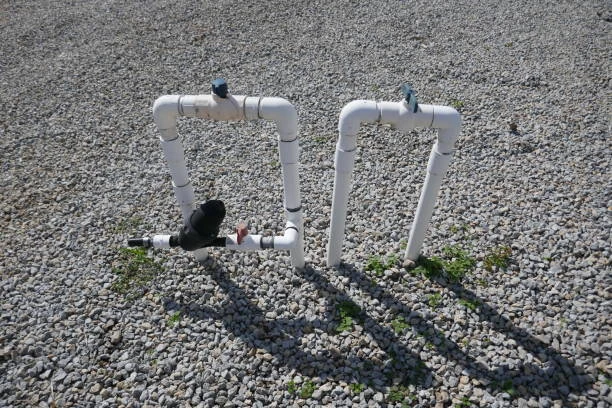
In fluid control systems across residential, agricultural, and industrial applications, material selection plays a critical role in long-term performance. Among the key concerns in these systems, corrosion remains a persistent threat to component integrity and function. Fortunately, صمامات الكرة البلاستيكية المصنوعة من مادة PVC offer excellent resistance to corrosion, making them a popular choice for both aggressive and non-aggressive environments.
Corrosion resistance refers to the ability of a material or component to withstand degradation caused by chemical reactions with its environment. Unlike metals that are often susceptible to rust and oxidation, PVC offers a unique chemical structure that resists many corrosive agents. This article explores the corrosion resistance of PVC plastic ball valves in detail. We will examine the underlying material science, advantages, types of corrosion, performance in different media, maintenance considerations, and practical usage scenarios.
فهم التآكل في أنظمة الأنابيب
Before discussing the advantages of PVC, it is essential to understand the nature of corrosion in fluid systems. Corrosion is typically associated with the electrochemical reaction between metal surfaces and their surrounding environment. It leads to material loss, surface damage, and eventually system failure.
Corrosion manifests in several forms, including:
- Uniform corrosion: A general degradation across the surface.
- Pitting corrosion: Localized holes or cavities on a surface.
- Crevice corrosion: Occurs in shielded areas like joints.
- Galvanic corrosion: Arises when two dissimilar metals interact.
- Chemical attack: Caused by acids, alkalis, or salts reacting with the material.
While these issues are commonly associated with metal valves, non-metallic alternatives like PVC are often immune to such degradation.
Why PVC Resists Corrosion
Polyvinyl chloride (PVC) is a synthetic polymer composed of repeating vinyl chloride units. Its chlorine content and stable carbon backbone make it inherently resistant to most corrosive agents. Moreover, PVC is non-conductive, meaning that electrochemical corrosion—like galvanic or stray current corrosion—cannot occur.
Unlike metal alloys, PVC does not rely on protective oxide layers to resist corrosion. Instead, its polymer structure is impervious to water and many chemicals, preventing corrosive agents from penetrating the surface.
PVC Ball Valve Construction and Its Role in Corrosion Resistance
A typical PVC ball valve includes a valve body, a rotating ball with a bore, two seats, seals, and a handle. Each component plays a part in resisting corrosion:
- Valve body: Made of durable PVC, this part withstands most chemicals and environmental conditions.
- Ball: Also typically PVC, designed to resist both chemical and mechanical wear.
- Seals and seats: Often made of materials like EPDM or PTFE, selected for their compatibility with various chemicals.
- Stem and handle: Designed with corrosion-resistant materials or coated with plastic to prevent degradation.
Every aspect of the valve is designed to provide protection against corrosive conditions, ensuring long service life.
Corrosion Performance in Various Media
One of the most compelling advantages of PVC ball valves is their ability to operate reliably in diverse chemical environments. Below are some common fluids and substances where PVC exhibits excellent corrosion resistance.
ماء
PVC valves are widely used in water supply and irrigation systems due to their stability in both potable and non-potable water. They do not rust, calcify, or degrade with long-term exposure to water.
الأحماض
PVC exhibits strong resistance to many acids, such as hydrochloric acid, sulfuric acid, and nitric acid at moderate concentrations. This makes it suitable for chemical dosing and laboratory applications.
Alkalis
Many bases, including sodium hydroxide and potassium hydroxide, do not attack PVC, making it useful in industrial fluid transport where alkaline solutions are common.
Salts
PVC resists damage from many saline environments, including seawater and brine, making it a viable choice for coastal installations and saltwater aquariums.
Organic Compounds
While PVC resists alcohols and glycols well, it may not be compatible with certain solvents like ketones or aromatic hydrocarbons. Therefore, it is essential to check chemical compatibility charts before application.
Advantages of Corrosion Resistance in PVC Valves
The corrosion-resistant properties of PVC plastic ball valves offer numerous benefits in real-world applications:
عمر خدمة طويل
Because corrosion is a leading cause of valve failure, resistance to this threat naturally extends the operational lifespan of PVC valves.
صيانة مخفضة
Valves that do not corrode require less frequent replacement, cleaning, or recoating. This significantly reduces labor and operational downtime.
أمان
Corroded valves can leak hazardous fluids. With PVC valves, the risk of leaks due to corrosion is minimized, enhancing overall system safety.
Aesthetic and Structural Integrity
Corrosion can not only impair function but also lead to ugly discoloration or structural collapse. PVC valves maintain a consistent appearance and mechanical strength.
Cost-Effective Operation
Although PVC valves are less expensive than metal counterparts, their corrosion resistance ensures that they offer equal or superior performance in many environments over the long term.
Limitations of PVC’s Corrosion Resistance
While PVC performs well in many corrosive environments, it does have some limitations:
- Solvent Sensitivity: Some organic solvents, including acetone and benzene, can dissolve or swell PVC.
- مقاومة درجات الحرارة العالية: PVC loses mechanical strength at elevated temperatures, which may accelerate chemical degradation.
- UV Degradation: Prolonged exposure to sunlight can cause embrittlement and color change unless UV stabilizers are used.
- Low Impact Resistance at Cold Temperatures: PVC can become brittle when exposed to freezing temperatures, potentially compromising its integrity if impacted.
For these reasons, proper material selection and environmental assessment remain crucial before choosing a PVC valve for corrosive applications.
Best Practices for Maximizing Corrosion Resistance
To ensure that PVC ball valves retain their corrosion-resistant properties over time, several practices should be followed:
1. Ensure Proper Installation
Avoid cross-threading or over-tightening when connecting PVC valves. Stress cracks can create weak points vulnerable to chemical attack.
2. Check Chemical Compatibility
Always review fluid compatibility charts. Even though PVC resists many substances, certain chemicals can cause unexpected degradation.
3. Use in Approved Temperature Ranges
Do not exceed the manufacturer’s recommended temperature limits. Excessive heat can soften PVC, leading to structural weakness and chemical reactivity.
4. Protect from UV Exposure
Use pipe insulation, shielding, or specially formulated PVC with UV stabilizers for outdoor installations to prevent surface degradation.
5. Inspect Periodically
Regular visual inspections help detect early signs of wear, chemical attack, or mechanical stress. Replacing damaged valves early prevents system failures.
Applications Benefiting from PVC Corrosion Resistance
Due to its impressive chemical resilience, PVC plastic ball valves are used across a wide range of applications:
الري الزراعي
PVC ball valves are ideal for irrigation systems that use fertilizers and chemical additives. Their resistance to saline and acidic fertilizers ensures durability.
المعالجة الكيميائية
In laboratories and chemical plants handling acids and alkalis, PVC valves offer a reliable, corrosion-resistant fluid control solution.
معالجة المياه
Municipal water treatment facilities often rely on PVC valves for dosing and distributing chlorine-based disinfectants without corrosion-related issues.
Swimming Pools and Aquariums
Because of their resistance to salt and chlorinated water, PVC ball valves are commonly used in pools and marine systems.
صناعة الأغذية والمشروبات
Non-toxic PVC valves are used in food-grade applications where hygiene and chemical resistance are critical.
Comparing PVC With Other Valve Materials
To better understand the value of PVC’s corrosion resistance, it helps to compare it with alternative materials:
الفولاذ المقاوم للصدأ
While stainless steel is corrosion-resistant in many environments, it is vulnerable to pitting and crevice corrosion in chloride-rich settings. PVC, by contrast, remains unaffected by chloride ions.
نحاس
Brass valves can corrode due to dezincification in aggressive water conditions. PVC does not suffer from such issues and is often more chemically stable.
سي بي في سي
Chlorinated PVC (CPVC) offers enhanced temperature resistance while retaining corrosion resistance. It is preferable for hot water systems or slightly more aggressive environments.
البولي بروبيلين
Like PVC, polypropylene resists many chemicals. However, it is generally more expensive and less rigid than PVC, making PVC a more cost-effective choice in many cases.
Innovations in Corrosion-Resistant PVC Valves
As industries demand higher performance, manufacturers are improving PVC valve technology. Some of the latest developments include:
- UV-Stabilized PVC: Enhances outdoor durability and slows down photodegradation.
- Reinforced Valve Designs: Incorporate fiberglass or structural elements to resist mechanical and chemical stresses better.
- Improved Sealing Materials: Use of PTFE and advanced elastomers to complement PVC’s chemical resistance.
- أنظمة المراقبة الذكية: Integration with sensors to detect leaks or wear before failure occurs.
These innovations extend the applicability and performance of PVC valves in challenging environments.
خاتمة
Corrosion resistance is a defining feature of PVC plastic ball valves, making them a preferred choice in many corrosive environments. Their immunity to rust, acids, alkalis, and saline fluids enables long service life, lower maintenance, and improved safety across various industries.
Although PVC has some limitations, particularly with temperature and solvent resistance, it remains a reliable and cost-effective material for fluid control where corrosion is a concern. By following best practices in installation, maintenance, and chemical compatibility, users can maximize the benefits of PVC ball valves and ensure consistent performance over time.
As industries continue to push for more durable, efficient, and eco-friendly solutions, the role of corrosion-resistant components like PVC plastic ball valves becomes increasingly important. Their ability to stand up to harsh environments without compromise reaffirms their place in the future of fluid handling systems.
معيار IFAN الدولي
تتوافق منتجات IFAN مع مجموعة واسعة من المعايير الدولية، مما يضمن الجودة والموثوقية في مختلف الأسواق. تشمل هذه المعايير ASTM D2846، وDIN 8079/8080، وASTM F441/F441M SCH80، ومواصفات DIN متنوعة، ومعايير سلسلة GB/T 18993، وAS/NZS 1477، وCSA B137.6، وNSF/ANSI 14، وTIS 17-2532/1131-2535. ويُظهر هذا الامتثال الشامل التزام IFAN بتلبية المتطلبات العالمية وتقديم منتجات تُلبي أعلى معايير الأداء والسلامة.
اتصال
IFAN شركة تصنيع محترفة بخبرة 30 عامًا، متخصصة في إنتاج الأنابيب والوصلات والصمامات البلاستيكية عالية الجودة. تشمل منتجاتنا صمامات النحاس، وصمامات البولي بروبيلين (PPR)، بالإضافة إلى مجموعة متنوعة من الأنابيب والوصلات لتلبية احتياجات العملاء المختلفة. سواءً كنتم بحاجة إلى أنابيب السباكة والصرف الصحي أو منتجات الصمامات، فإن IFAN قادرة على توفير مجموعة متنوعة من المنتجات عالية الجودة وبأسعار معقولة لدعم مشاريعكم. تجدون أدناه معلومات الاتصال بنا.
سوف نقوم بالرد على بريدك الإلكتروني أو الفاكس الخاص بك خلال 24 ساعة.
يمكنك الاتصال بنا في أي وقت إذا كان هناك أي سؤال حول إنتاجنا.
لمزيد من المعلومات، يرجى زيارة موقعنا على شبكة الإنترنت https://www.ifanplus.com/
يرجى إرسال بريد إلى: [email protected]
واتساب: +86 19857948982























