


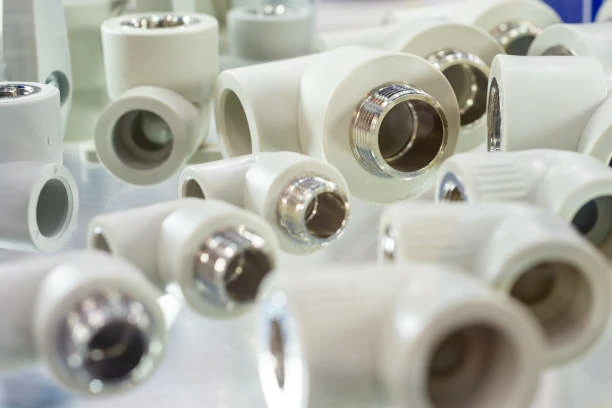
CPVC (Chlorinated Polyvinyl Chloride) pipe fittings provide strong resistance to acids, making them ideal for chemical processing, industrial piping, and wastewater treatment. Their molecular structure prevents chemical degradation, ensuring long-term durability in harsh environments. Compared to metal pipes, CPVC fittings resist corrosion and require less maintenance.
Chemical Resistance of CPVC
CPVC withstands various acidic substances without losing strength or integrity. Many strong acids, including sulfuric acid, hydrochloric acid, and nitric acid, do not affect CPVC fittings. Unlike metal pipes, which corrode when exposed to acids, CPVC remains unaffected. This chemical resistance ensures safe fluid transport in industrial settings.
The chlorine content in CPVC enhances its ability to resist acid attacks. The molecular structure prevents acids from breaking down the material, allowing it to maintain its physical properties. Even in highly concentrated acid environments, CPVC fittings retain their strength.
Applications in Acidic Environments
Many industries use CPVC pipe fittings for handling acidic substances. Chemical plants transport aggressive chemicals through CPVC piping without worrying about degradation. These fittings provide a safe and long-lasting solution for acid-based manufacturing processes.
In wastewater treatment facilities, CPVC pipes handle acidic waste streams effectively. The material prevents leaks and contamination, ensuring a reliable system for processing industrial waste. Unlike metal pipes, which require coatings or liners, CPVC functions without additional protection.
Laboratories also benefit from CPVC’s acid resistance. Many scientific applications require pipes that can transport corrosive chemicals safely. CPVC provides a durable and cost-effective solution for lab-grade piping systems.
Advantages Over Metal Pipes
Metal pipes often suffer from acid corrosion, leading to leaks and system failures. CPVC fittings eliminate these risks by offering natural resistance to acidic conditions. This advantage reduces maintenance costs and extends the lifespan of piping systems.
Unlike stainless steel, which requires expensive alloys to resist acids, CPVC provides an affordable alternative. Many industries choose CPVC over costly metal piping because it offers similar durability without the high expense. Additionally, CPVC eliminates the need for protective coatings, further reducing costs.
Copper and iron pipes corrode quickly in acidic environments, leading to contamination and structural failure. CPVC maintains purity by preventing reactions with transported fluids. This feature ensures clean chemical processing and reliable fluid delivery.
Long-Term Performance in Acidic Conditions
CPVC pipe fittings offer long-term performance even when exposed to strong acids. The material does not degrade over time, maintaining its shape and mechanical properties. Many piping systems operate for decades without significant wear, ensuring cost-effective operation.
Thermal stability further enhances CPVC’s acid resistance. Even at high temperatures, CPVC fittings withstand acidic substances without losing strength. This feature makes CPVC suitable for high-temperature chemical transport applications.
Unlike thermoplastics that become brittle over time, CPVC retains its flexibility. This property reduces the risk of cracking and breaking in corrosive environments. Many industries prefer CPVC for its ability to handle both chemical exposure and mechanical stress.
Ease of Installation in Acid-Resistant Systems
CPVC pipe fittings install easily using solvent welding. This method creates strong, leak-free joints that hold up in acidic conditions. Unlike metal pipes, which require welding or threading, CPVC connections form quickly and securely.
The lightweight nature of CPVC simplifies handling and installation. Workers transport and assemble CPVC piping systems faster than metal alternatives. This advantage reduces labor costs and speeds up project completion.
Modifications and repairs remain simple with CPVC systems. Unlike metal pipes, which require specialized tools, CPVC fittings allow quick adjustments. Industries benefit from reduced downtime and lower maintenance expenses.
Performance in Acidic Industrial Applications
CPVC pipe fittings handle strong acids in many industrial settings. Chemical manufacturing plants rely on CPVC piping to transport acids safely. The material prevents leaks and contamination, ensuring a controlled chemical process.
Electronics manufacturing facilities use CPVC for transporting etching solutions. These highly acidic substances require non-corrosive piping to maintain product quality. CPVC provides a reliable solution for handling aggressive chemicals in production environments.
Battery production plants also depend on CPVC for acid-resistant piping. Sulfuric acid, a key component in battery manufacturing, does not degrade CPVC. This property ensures safe and efficient battery production processes.
Durability Against Acid-Induced Degradation
CPVC pipe fittings resist oxidation and acid-induced degradation. Many materials weaken when exposed to acidic solutions, but CPVC remains stable. This durability ensures long-lasting performance in chemical processing and industrial applications.
Even after prolonged exposure, CPVC does not lose its mechanical strength. Many facilities operate CPVC piping systems for decades without major failures. This long-term reliability makes CPVC a preferred choice in acid-resistant applications.
Unlike traditional plastics, which soften under chemical exposure, CPVC retains its rigidity. This structural stability prevents sagging and deformation, ensuring continuous flow in piping systems. Many industries choose CPVC for its ability to withstand harsh chemical environments.
Comparing CPVC to Other Acid-Resistant Materials
Several materials offer acid resistance, but CPVC provides the best balance of cost, durability, and ease of installation.
- Aço inoxidável: While resistant to some acids, stainless steel corrodes over time and requires expensive alloys for full protection. CPVC eliminates corrosion issues and provides a more affordable alternative.
- Tubos revestidos de vidro: These pipes resist acids but require careful handling due to fragility. CPVC offers a shatterproof solution with equal chemical resistance.
- Tubos de polipropileno (PP): While PP handles some acids, it lacks CPVC’s pressure resistance and high-temperature stability. CPVC provides superior mechanical properties.
- Tubos de PVDF (Fluoreto de Polivinilideno): PVDF resists strong acids but costs significantly more than CPVC. Many industries prefer CPVC for its affordability and durability.
CPVC outperforms these materials in many applications, making it the best choice for acid-resistant piping systems.
Benefícios de segurança e ambientais
CPVC pipe fittings enhance safety in acidic environments. Unlike some plastics, CPVC does not release harmful chemicals when exposed to acids. This feature ensures safe fluid transport in sensitive applications.
Fire-resistant properties add another layer of safety. CPVC does not sustain combustion and self-extinguishes when removed from a flame. This characteristic makes it suitable for industrial plants handling flammable acids.
Environmental benefits also support CPVC’s widespread use. Unlike metal pipes, which require energy-intensive production, CPVC manufacturing consumes less energy. The lightweight nature of CPVC reduces transportation emissions, contributing to sustainability.
Additionally, CPVC does not leach harmful substances into transported fluids. Many industries use CPVC to maintain chemical purity in production processes. This property ensures high-quality output in pharmaceutical and food processing applications.
Conclusão
CPVC pipe fittings provide exceptional acid resistance, making them ideal for chemical processing, industrial piping, and wastewater treatment. Their ability to withstand strong acids ensures long-term durability in harsh environments.
Compared to metal pipes, CPVC eliminates corrosion issues and reduces maintenance costs. The material’s resistance to acid-induced degradation ensures reliable performance over time. Many industries choose CPVC for its superior chemical resistance, affordability, and ease of installation.
CPVC pipe fittings offer long-term reliability, safety, and environmental benefits. Their ability to handle aggressive chemicals without degradation makes them a preferred solution for acid-resistant piping systems.
Norma internacional IFAN
Os produtos de PEAD da IFAN atendem a diversas normas internacionais, garantindo qualidade, durabilidade e confiabilidade. Essas normas incluem a ASTM D3035 e a ASTM D3350, que definem especificações para tubos e materiais de polietileno (PE). As séries ISO 4427 e EN 12201 estabelecem referências globais para tubos de PE utilizados em sistemas de abastecimento de água. Além disso, as normas DIN 8074/8075 e GB/T 13663 estabelecem requisitos de desempenho e dimensões para tubos de PEAD nos mercados europeu e chinês. Outras normas reconhecidas, como a AS/NZS 4130 (Austrália/Nova Zelândia), JIS K6760 (Japão), BS 6572 (Reino Unido) e CSA B137.1 (Canadá), demonstram ainda mais o compromisso da IFAN em atender às regulamentações do setor em todo o mundo.
Contato
A IFAN é uma fabricante profissional com 30 anos de experiência, dedicada à produção de tubos, conexões e válvulas de plástico de alta qualidade. Nossos produtos incluem válvulas de latão, válvulas de PPR, além de diversos tubos e conexões para atender às diferentes necessidades dos clientes. Seja para tubos de encanamento e drenagem ou válvulas, a IFAN oferece uma gama diversificada de produtos de alta qualidade e custo-benefício para apoiar seus projetos. Abaixo, você encontra nossos dados de contato.
Responderemos seu e-mail ou fax em até 24 horas.
Você pode nos ligar a qualquer momento caso tenha alguma dúvida sobre nossa produção.
Para mais informações, visite nosso site https://www.ifanplus.com/
Por favor, envie um e-mail para: [email protected]
Whatsapp: + 86 19857948982























