


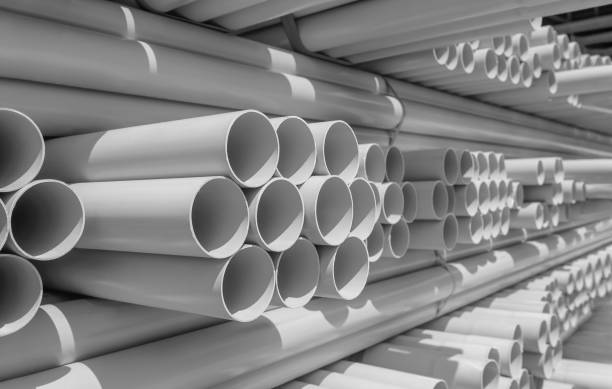
Introduction: The Foundation of Modern Infrastructure
Pipa polivinil klorida, commonly known as PVC pipes, form the backbone of modern water and sanitation systems worldwide. Their journey from a novel plastic to an essential infrastructure component hinges on one critical factor: quality. High-quality PVC pipes provide reliable, long-lasting service, while substandard products can lead to system failures and costly repairs. Understanding what defines superior quality in PVC pipes is crucial for engineers, contractors, and homeowners alike. This article explores the key attributes that separate exceptional PVC pipes from the rest, ensuring you can make an informed decision for your next project.
The Core of Quality: Superior Raw Materials
The journey to a high-quality PVC pipe begins with the raw materials. Manufacturers use a specific type of PVC resin known as PVC-U, or unplasticized PVC, for pipe production. Top-tier producers source virgin, high-purity resin to ensure optimal strength and durability. They then compound this resin with carefully selected stabilizers, lubricants, and impact modifiers. These additives protect the pipe from degradation during extrusion and throughout its service life. The precise formulation is a closely guarded secret for many leading brands, forming the fundamental basis of the product’s performance and longevity.
Precision in Production: The Extrusion Process
Quality is meticulously engineered into every length of PVC pipe through a controlled extrusion process. In this stage, the compounded PVC material is melted and continuously shaped through a die to form the pipe. State-of-the-art manufacturing equipment maintains exact temperature and pressure controls. This precision ensures the pipe has a consistent wall thickness, a uniform diameter, and a smooth, flawless surface both inside and out. Advanced online monitoring systems constantly check for defects, ensuring that only pipe meeting strict dimensional tolerances proceeds to the next stage.
Ensuring Structural Integrity: The Importance of Ring Stiffness
For buried applications, a pipe’s ability to resist deflection under soil and traffic loads is paramount. This property is called ring stiffness. Quality PVC pipes achieve high ring stiffness through intelligent design and precise manufacturing. Engineers optimize the pipe’s diameter-to-wall-thickness ratio and often incorporate structural elements like ribbing. A pipe with high ring stiffness will maintain its shape underground, safeguarding the integrity of the pipeline and ensuring consistent flow capacity for decades without collapsing or deforming.
The Smoother the Better: Hydraulic Efficiency
A key advantage of quality PVC pipes is their exceptionally smooth interior surface. This smoothness minimizes friction as water flows through the pipe, a property known as hydraulic efficiency. Compared to rougher alternatives like concrete or old corroded metal, high-quality PVC pipes experience significantly less resistance. This allows for the use of pipes with smaller diameters while maintaining the same flow rate, reducing material costs. Furthermore, the smooth surface resists scaling and biofilm buildup, helping to maintain water quality and flow efficiency over the pipe’s entire lifespan.
Built to Last: Exceptional Durability and Impact Resistance
Durability is a hallmark of quality PVC pipes. They are inherently immune to galvanic and electrochemical corrosion, a major failure point for metallic pipes. Furthermore, high-quality formulations exhibit excellent resistance to aggressive chemicals and solvents found in soil and industrial effluents. Manufacturers also test pipes for impact resistance. A quality pipe can withstand physical blows during handling, installation, and service without cracking or breaking. This durability translates into a lower risk of failures and a significantly longer service life, often exceeding 100 years for water applications.
Safety and Compliance: Meeting International Standards
Reputable PVC pipe manufacturers do not produce in a vacuum; they adhere to rigorous international standards. Standards like ASTM D1785, ISO 1452, and EN 1452 specify requirements for dimensions, performance, and safety. Quality pipes undergo extensive testing in certified laboratories to verify their pressure ratings, impact strength, and chemical resistance. Compliance with these standards provides an independent verification of quality and performance. Always look for certification marks and proof of testing to ensure the pipes meet the necessary requirements for your specific application.
Consistency is Key: Uniformity Across the Batch
Quality is not just about a single perfect pipe; it is about consistency across an entire production batch and from one batch to the next. A reliable manufacturer will have a robust Quality Assurance (QA) program in place. This involves frequent sampling and testing of raw materials, in-process checks during extrusion, and rigorous final inspections on finished pipes. This meticulous approach guarantees that every pipe you receive has the same high performance characteristics, ensuring predictable and reliable outcomes in your project.
The Environmental Quality: Sustainability and Lifecycle
The quality of a product also encompasses its environmental footprint. High-quality PVC pipes contribute to sustainability in several ways. Their long service life means fewer replacements and reduced resource consumption over time. Their smooth walls reduce pumping energy requirements, lowering operational carbon emissions. Additionally, the PVC industry actively promotes recycling programs, grinding post-consumer pipes for use in new, non-pressure applications. Choosing a quality pipe from a manufacturer committed to sustainable practices makes for an environmentally responsible choice.
Identifying Quality: A Practical Guide for Buyers
For a buyer, identifying quality PVC pipes involves a few practical checks. First, examine the pipe’s surface; it should be smooth, consistent, and free of visible defects like bubbles or discolorations. Check the printing on the pipe; it should clearly display the manufacturer’s name, the standard it meets, its size, pressure rating, and production date. The pipe should feel sturdy, not brittle, and its cut ends should be clean and smooth. Finally, always source pipes from reputable suppliers and manufacturers with a proven track record.
Conclusion: Investing in Long-Term Performance
In conclusion, the quality of Polyvinyl Chloride pipes is not a single feature but a combination of superior materials, precision engineering, and rigorous testing. It manifests in their strength, durability, efficiency, and consistency. While initial cost is always a factor, selecting high-quality PVC pipes is an investment in long-term performance and reliability. It minimizes maintenance costs, reduces the risk of catastrophic failure, and ensures the infrastructure we build today will continue to serve generations to come. Prioritizing quality is ultimately a commitment to safety, sustainability, and value.
Hubungi IFAN untuk Katalog dan Sampel
Butuh dokumen teknis, katalog, atau contoh produk? Hubungi IFAN hari ini.
📧 Surel: [email protected]
📱 Whatsapp: +86 19857948982
Tim kami merespons dengan cepat dan menyediakan dukungan profesional untuk semua kebutuhan pipa Anda.
Standar internasional IFAN
Sistem perpipaan IFAN mematuhi berbagai standar internasional untuk memastikan kualitas dan kinerja yang tinggi. Standar ini mencakup ASTM F1974 dan ASTM F1281 untuk sistem perpipaan multilapis, CSA B137 untuk aplikasi perpipaan Kanada, DIN 16836 untuk spesifikasi teknis Jerman, GB18997 untuk standar Cina, dan ISO 21003, yang mencakup sistem perpipaan multilapis yang digunakan untuk instalasi air panas dan dingin. Cakupan sertifikasi yang luas ini menyoroti komitmen IFAN terhadap kepatuhan global dan keandalan produk.























