


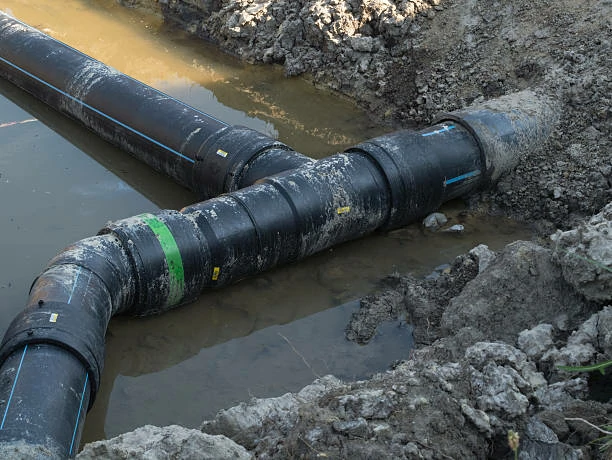
Pipa Polietilen Densitas Tinggi (HDPE) dikenal karena ketahanan abrasinya yang impresif, menjadikannya pilihan ideal untuk aplikasi yang melibatkan pengangkutan material abrasif atau operasi dalam kondisi yang keras. Esai ini membahas faktor-faktor yang berkontribusi terhadap ketahanan abrasi pipa HDPE, kinerjanya di berbagai lingkungan, dan implikasi praktisnya bagi berbagai industri.
Intrinsic Properties of HDPE
HDPE’s molecular structure significantly contributes to its abrasion resistance. The polymer consists of long chains of ethylene molecules with minimal branching, creating a dense and robust material. This high density provides HDPE with exceptional mechanical strength and resilience, allowing it to withstand abrasive forces without significant wear. The material’s toughness ensures that it can endure repeated contact with rough or sharp particles without deteriorating quickly.
Perbandingan dengan Material Lain
Compared to other materials commonly used in piping systems, such as metal, PVC, or concrete, HDPE offers superior abrasion resistance. Metal pipes, while strong, are prone to corrosion and can wear down quickly when exposed to abrasive materials. PVC pipes, though resistant to corrosion, lack the mechanical strength and flexibility of HDPE, making them more susceptible to damage from abrasive particles. Concrete pipes, on the other hand, are brittle and can crack or erode under abrasive conditions. HDPE pipes combine strength, flexibility, and resistance to corrosion, making them particularly well-suited for abrasive applications.
Impact of Environmental Factors
HDPE pipes maintain their abrasion resistance under various environmental conditions, contributing to their versatility. Temperature fluctuations, for instance, do not significantly affect HDPE’s performance. The material remains flexible at low temperatures, avoiding brittleness and reducing the risk of cracking. In high-temperature environments, HDPE retains its structural integrity, ensuring consistent abrasion resistance. Additionally, HDPE’s resistance to UV radiation means that prolonged exposure to sunlight does not degrade its surface, preserving its ability to withstand abrasive forces.
Applications in Different Industries
Several industries benefit from the abrasion resistance of HDPE pipes, particularly those involving the transport of abrasive materials. Here are a few examples:
1.Mining Industry: In mining operations, slurry pipelines transport a mixture of water and finely ground rock. These slurries are highly abrasive, and the pipelines must endure constant wear. HDPE pipes are ideal for this application due to their ability to resist abrasion and maintain a smooth internal surface, reducing friction losses and ensuring efficient transport of materials.
2.Dredging Operations: Dredging involves removing sediment from the bottom of water bodies and transporting it to a different location. The sediment often contains sand, gravel, and other abrasive particles. HDPE pipes are commonly used in dredging because they can handle the abrasive nature of the material being transported, ensuring long-term reliability and reducing the frequency of pipe replacement.
3.Agricultural Applications: In agriculture, HDPE pipes are used for irrigation systems that transport water mixed with soil, sand, and fertilizers. The abrasion resistance of HDPE ensures that the pipes can withstand the harsh conditions and maintain their performance over extended periods, contributing to the efficiency and durability of irrigation systems.
4.Industrial Processes: Many industrial processes involve the transport of abrasive chemicals and materials. HDPE pipes are used in these applications due to their resistance to chemical attack and abrasion. This makes them suitable for conveying chemicals, slurry, and other abrasive substances in manufacturing and processing plants.
Design Considerations
When designing piping systems that will be exposed to abrasive materials, several factors must be considered to maximize the benefits of HDPE’s abrasion resistance:
1.Wall Thickness: Increasing the wall thickness of HDPE pipes can enhance their abrasion resistance. Thicker walls provide more material to absorb the impact and wear from abrasive particles, extending the lifespan of the pipes.
2.Flow Velocity: Controlling the flow velocity of abrasive materials can help reduce wear. Higher velocities increase the impact force of particles against the pipe walls, accelerating abrasion. Designing systems to operate at optimal flow rates can minimize wear and prolong the life of the pipes.
3.Installation Practices: Proper installation practices are crucial to maintaining the integrity of HDPE pipes. Ensuring that pipes are correctly supported and aligned can prevent excessive stress and wear, particularly at joints and bends where abrasion is more likely to occur.
Testing and Standards
The abrasion resistance of HDPE pipes is evaluated through standardized testing methods. These tests simulate real-world conditions to determine the material’s ability to withstand wear over time. One common test involves rotating a pipe sample against a rotating abrasive surface under controlled conditions. The amount of material lost during the test provides a measure of the pipe’s abrasion resistance.
International standards, such as those from ASTM (American Society for Testing and Materials) and ISO (International Organization for Standardization), outline the procedures for testing and certifying the abrasion resistance of HDPE pipes. Compliance with these standards ensures that the pipes meet the required performance criteria for their intended applications.
Economic and Environmental Benefits
The abrasion resistance of HDPE pipes offers both economic and environmental benefits. Economically, the durability and long lifespan of HDPE pipes reduce the need for frequent replacements and repairs, lowering maintenance costs. The efficiency of HDPE pipes in abrasive applications also minimizes downtime, enhancing productivity in industrial processes.
Environmentally, the long service life of HDPE pipes means fewer materials are required for replacements, reducing the overall consumption of raw materials. Additionally, HDPE is recyclable, and pipes at the end of their life cycle can be processed and reused, contributing to sustainable practices.
Kesimpulan
HDPE pipes are renowned for their exceptional abrasion resistance, making them a reliable and cost-effective choice for various applications involving abrasive materials. Their molecular structure, combined with their resistance to environmental stressors, ensures long-term performance and durability. Industries such as mining, dredging, agriculture, and industrial processing benefit significantly from the use of HDPE pipes, enjoying reduced maintenance costs and improved operational efficiency. By adhering to design considerations and testing standards, HDPE pipes can provide optimal performance in even the most demanding conditions.
Kontak
JIKA adalah produsen profesional dengan pengalaman 30 tahun, yang didedikasikan untuk memproduksi pipa, fitting, dan katup plastik berkualitas tinggi. Produk kami meliputi katup kuningan, katup PPR, serta berbagai pipa dan fitting untuk memenuhi berbagai kebutuhan pelanggan. Baik Anda membutuhkan pipa ledeng dan drainase atau produk katup, JIKA dapat menyediakan berbagai macam produk berkualitas tinggi dan hemat biaya untuk mendukung proyek Anda. Berikut adalah informasi kontak kami.
Kami akan membalas email atau faks Anda dalam waktu 24 jam.
Anda dapat menghubungi kami kapan saja jika ada pertanyaan tentang produksi kami.
Untuk informasi lebih lanjut, silakan kunjungi situs web kami https://www.ifanplus.com/
Silakan Kirim Email ke: [email protected]























