


1. Introduction
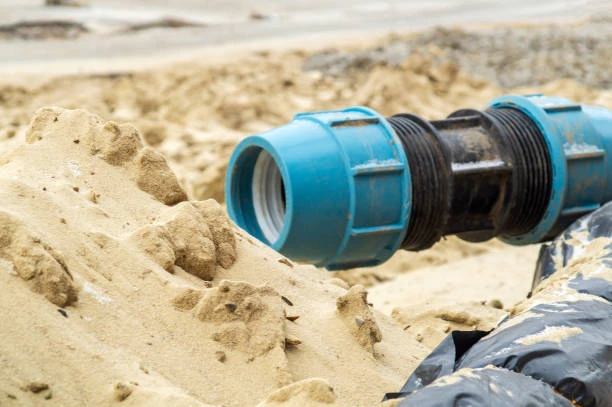
HDPE couplings are essential components for connecting high-density polyethylene (HDPE) pipes in a safe, leak-proof, and efficient way. Whether in water supply, gas distribution, or industrial systems, couplings simplify the process of joining two pipe ends securely. Unlike other joining techniques that require special tools or heat fusion, couplings—especially mechanical and compression types—offer a straightforward solution. This guide explains what HDPE couplings are, how they work, their common uses, and best practices for selection and installation.
2. Foire aux questions (FAQ)
1. What is an HDPE coupling?
It’s a fitting used to join two HDPE pipe ends together, either permanently or temporarily, depending on the type.
2. Are couplings reusable?
Yes, mechanical and compression couplings can often be reused, making them ideal for flexible piping systems.
3. What types of HDPE couplings are available?
Common types include butt fusion couplings, electrofusion couplings, compression couplings, and mechanical couplings.
4. Do I need special tools to install an HDPE coupling?
That depends on the type. Butt and electrofusion require specialized equipment, while compression couplings do not.
5. Can I use HDPE couplings underground?
Yes, as long as they are rated for underground use and installed according to manufacturer guidelines.
3. Définition et caractéristiques principales
An HDPE coupling is a short fitting designed to connect two HDPE pipes end-to-end. Couplings come in several forms, each suited to specific pressure ratings, installation environments, and user skill levels.
Types of couplings:
- Butt fusion coupling: Welded using heat fusion for permanent joints
- Electrofusion coupling: Uses embedded heating coils for strong, automated welds
- Compression coupling: Assembled manually with compression nuts
- Mechanical coupling: Uses bolts and seals to clamp around pipes without welding
Key features:
- Leak-resistant joints
- Tolérance à haute pression
- Corrosion and chemical resistance
- Durable lifespan (up to )
- Available in various diameters and materials
4. Applications courantes
HDPE couplings are used across many industries and infrastructures:
- Municipal water supply and distribution
- Systèmes d'irrigation agricole
- Gas transportation networks
- Industrial chemical pipelines
- Drainage and sewage systems
- Mining and slurry pipelines
- Conduit protection in telecom systems
Thanks to their flexibility and easy installation, couplings are widely used in both permanent and temporary applications.
5. Guide d'achat : éléments à prendre en compte
Choosing the right HDPE coupling depends on several important factors:
- Diamètre du tuyau: Ensure the coupling matches pipe size (metric or imperial)
- Material compatibility: Use HDPE-compatible materials like PE100 or PE80
- Pressure rating: Match the fitting to the system pressure (e.g., PN10, PN16)
- Coupling type: Select based on skill level, environment, and permanence
- Certification: Look for ISO, EN, ASTM, or national compliance
- Temperature range: For hot or cold applications, select accordingly
6. Installation Guidelines
Compression or mechanical couplings:
- Cut pipe ends clean and straight
- Deburr and clean pipe surfaces
- Insert pipe ends fully into the coupling body
- Tighten compression or clamp bolts evenly
- Test for leaks under operating pressure
Fusion couplings (butt or electrofusion):
- Use certified fusion equipment
- Prepare pipe ends according to fusion procedure
- Align pipes carefully before joining
- Allow proper cooling time after fusion
- Pressure test system before use
Proper installation is essential to ensure durability, safety, and efficiency.
7. HDPE Coupling vs. Other Joint Methods
| Fonctionnalité | HDPE Coupling | Soudage par fusion | Connexions à brides |
|---|---|---|---|
| Installation Time | Fast (except fusion) | Medium to long | Moyen |
| Tools Required | Few (for compression) | Spécialisé | Wrench, torque tools |
| Réutilisabilité | High (mechanical types) | Faible | Modéré |
| Coût | Modéré | Plus haut | Haut |
| Résistance aux fuites | Haut | Très élevé | Modéré |
| Flexibilité | Haut | Faible | Faible |
8. Conclusion
HDPE couplings offer an efficient and reliable way to connect polyethylene pipes in various systems. Whether you’re installing a water line, updating an irrigation system, or working in industrial settings, the right coupling ensures leak-proof performance and ease of maintenance. By understanding the types, features, and correct installation methods, you can make informed choices and extend the service life of your piping systems.
Normes IFAN
Les raccords de tuyauterie en PE sont conformes à de nombreuses normes internationales garantissant sécurité, performance et compatibilité. Parmi celles-ci :
- ASTM D3035 et ASTM D3350 pour les tuyaux en PE résistants à la pression
- ISO 4427 et EN 12201 pour les applications d'approvisionnement en eau
- DIN 8074/8075 pour les spécifications dimensionnelles et de qualité
- GB/T 13663 pour les normes nationales chinoises relatives aux tuyaux en PE
- AS/NZS 4130 pour les systèmes australiens et néo-zélandais
- JIS K6760 pour les normes japonaises de tuyauterie industrielle
- BS 6572 pour les systèmes d'alimentation en eau froide au Royaume-Uni
- CSA B137.1 pour les systèmes de tuyauterie en PE canadiens
Ces normes garantissent que les raccords répondent à des exigences élevées en matière de résistance, de résistance chimique et de durabilité à long terme dans une grande variété d'installations.
Contactez l'IFAN pour les catalogues et les échantillons
Besoin de documents techniques, de catalogues ou d'échantillons ? Contactez l'IFAN dès aujourd'hui.
📧 Courriel : [email protected]
📱 Whatsapp : +86 19857948982
Notre équipe répond rapidement et fournit un soutien professionnel pour tous vos besoins en matière de pipeline.























