


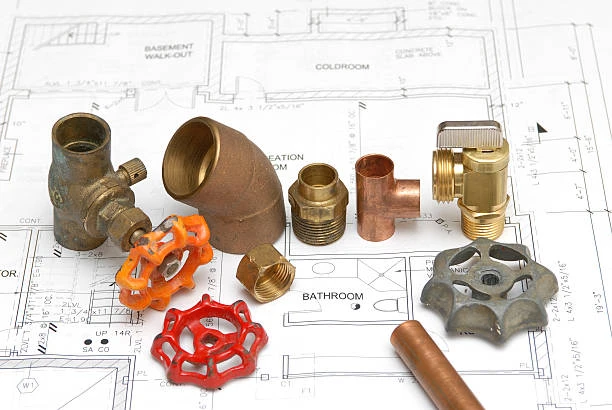
Copper globe valves have earned a solid reputation for their precision, strength, and reliability in plumbing and fluid control systems. Whether in residential, commercial, or industrial installations, they provide trustworthy performance by regulating water flow effectively and resisting corrosion over time. Choosing a valve that won’t fail is essential for safety and cost-efficiency, and that’s exactly why trusted copper globe valves remain a go-to solution for many professionals. This article explores everything you need to know to confidently select, use, and maintain copper globe valves.
Foire aux questions (FAQ)
Q1: What makes copper globe valves reliable?
Copper globe valves offer excellent corrosion resistance, precision flow control, and long-lasting durability under varying pressures and temperatures.
Q2: Where are copper globe valves typically used?
These valves appear in plumbing systems, HVAC networks, industrial fluid control, and water heating systems due to their consistent performance.
Q3: How do copper globe valves prevent leakage?
The tight sealing mechanism between the valve seat and disc minimizes the risk of internal or external leakage.
Q4: Can I use copper globe valves in hot water systems?
Yes, copper materials handle high temperatures very well, making them ideal for both hot and cold water applications.
Q5: Are copper globe valves easy to install?
Absolutely. With the right tools and techniques, installation is straightforward, especially for sweat or threaded connections.
Définition et caractéristiques principales des robinets à soupape en cuivre
A copper globe valve is a type of control valve designed to regulate or stop fluid flow through a piping system. Unlike ball valves, which provide quick shut-off, globe valves allow gradual control through the movement of a disc against a stationary ring seat.
Notable Features
1. Flow Control Accuracy
The design of copper globe valves allows for fine-tuned adjustment, making them ideal where precise regulation is necessary.
2. Durable Construction
Made from solid copper or brass alloys, these valves stand up to years of use in both low- and high-pressure systems.
3. Résistance à la corrosion
Copper naturally resists rust and chemical degradation, which helps maintain internal cleanliness and valve responsiveness.
4. Heat Tolerance
Because copper conducts heat well and maintains structural integrity at high temperatures, these valves perform reliably in hot water systems.
5. Leak Protection
The valve’s internal disc presses firmly against the seat, providing a secure seal that prevents water loss and system inefficiency.
Applications et industries courantes
Trusted copper globe valves appear in a wide variety of water systems due to their versatility and performance.
Residential Settings
In homes, these valves serve functions such as:
- Regulating water pressure in showers and faucets
- Controlling flow to water heaters
- Isolating outdoor hose bibs
- Managing underfloor heating zones
Installations commerciales
Office buildings, hospitals, and schools rely on copper globe valves in:
- HVAC systems and boiler control
- Potable water distribution lines
- Sprinkler systems and fire protection lines
- Cooling and heating loops
Systèmes industriels
Factories and manufacturing facilities install these valves for:
- Chemical process control
- Steam line regulation
- Water purification systems
- Machinery cooling lines
In all these environments, the trust placed in copper globe valves comes from their consistent reliability and ease of maintenance.
Buyer’s Guide: How to Select the Right Copper Globe Valve
Before purchasing a copper globe valve, consider several factors to ensure the product meets your system’s demands.
1. Choose the Right Material Grade
Opt for lead-free copper or brass alloys if the valve will be used in drinking water systems. Look for certifications such as NSF/ANSI 61 for potable water safety.
2. Match the Size and Type
Ensure the valve’s diameter matches the piping system. Residential applications commonly use ½” or ¾”, while industrial settings may require larger sizes.
3. Evaluate the Flow Pattern
Select a flow pattern that fits your system:
- Directement valves allow flow in one direction.
- Angle globe valves provide a 90-degree turn, saving space and fittings.
- Y-pattern valves reduce pressure drop and suit higher flow requirements.
4. Check Pressure and Temperature Ratings
Make sure the valve meets your system’s demands. A good copper globe valve handles pressures of up to 200 PSI and temperatures beyond 200°C.
5. Look for Quality Indicators
Reliable brands include pressure testing certificates, manufacturing standards (ISO, ANSI), and product serial numbers for traceability.
6. Inspect the Handle Design
A wide handwheel offers better grip and easier operation. Color-coded handles can help identify hot and cold lines quickly during maintenance.
7. Consider Manufacturer Reputation
Stick with brands known for consistent quality, availability of replacement parts, and helpful technical support.
Installation Tips for Trusted Performance
To ensure leak-free operation and long-term reliability, follow these important steps during installation.
1. Prepare the Pipes
Cut the pipe ends cleanly and remove burrs. Clean all surfaces to ensure solid contact during soldering or sealing.
2. Use Proper Sealing Techniques
For sweat valves, apply flux evenly and use lead-free solder. For threaded valves, wrap threads with PTFE tape or apply pipe thread sealant.
3. Align with Flow Direction
Follow the arrow on the valve body to install it in the correct orientation. Incorrect flow direction can reduce efficiency or damage the valve.
4. Tighten Appropriately
Avoid overtightening, which could deform parts or damage threads. Hand-tighten first, then use tools to finish snugly.
5. Test for Leaks
After installation, open the valve gradually and inspect all joints. Use pressure testing to verify the valve’s performance under normal operating conditions.
Copper Globe Valves vs Other Valve Materials
When selecting valves, it helps to understand how copper globe valves compare with alternatives like PVC, stainless steel, and cast iron.
| Fonctionnalité | Robinets à soupape en cuivre | Vannes en PVC | Vannes en acier inoxydable | Vannes en fonte |
|---|---|---|---|---|
| Résistance aux fuites | Excellent | Équitable | Excellent | Bien |
| Contrôle de précision | Haut | Faible | Moyen | Moyen |
| Résistance à la corrosion | Très élevé | Low (limited by chemicals) | Excellent | Modéré |
| Tolérance à la chaleur | Haut | Faible | Très élevé | Haut |
| Durée de vie | Long | Modéré | Très long | Long |
| Poids | Lumière | Très léger | Lourd | Très lourd |
| Coût | Modéré | Faible | Haut | Modéré |
| Facilité d'installation | Facile | Très facile | Modéré | Difficile |
Clearly, copper globe valves offer a strong middle ground—lightweight yet robust, cost-effective but reliable, and suitable for both basic and advanced systems.
Conclusion
Trusted copper globe valves offer unmatched performance in both residential and industrial water control applications. Thanks to their corrosion resistance, temperature tolerance, and precise flow regulation, they remain a top choice for professionals who value long-term reliability. When installed correctly and chosen with care, these valves prevent leaks, reduce maintenance, and enhance overall system performance.
Instead of risking failure with inferior components, choose copper globe valves for your next project and experience dependable, trouble-free operation. Whether you’re building a new system or upgrading an existing one, these valves deliver the consistency and control you can trust.
Contactez l'IFAN pour les catalogues et les échantillons
Besoin de documents techniques, de catalogues ou d'échantillons ? Contactez l'IFAN dès aujourd'hui.
📧 Courriel : [email protected]
📱 Whatsapp : +86 19857948982
Notre équipe répond rapidement et fournit un soutien professionnel pour tous vos besoins en matière de pipeline.
Norme internationale IFAN
Les raccords et tubes à compression en PEHD d'IFAN sont conformes à un large éventail de normes internationales, garantissant des performances élevées et une compatibilité mondiale. Parmi celles-ci figurent les normes ASTM D3035 et ASTM D3350 des États-Unis, les normes ISO 4427 et EN 12201 d'Europe, les normes DIN 8074/8075 d'Allemagne, GB/T 13663 de Chine, AS/NZS 4130 d'Australie et de Nouvelle-Zélande, JIS K6760 du Japon, BS 6572 du Royaume-Uni et CSA B137.1 du Canada. Le respect de ces normes garantit d'excellentes propriétés mécaniques, une résistance chimique et une durabilité à long terme pour diverses applications industrielles et d'approvisionnement en eau.























